
Ask “who’s leading the electric truck market in 2026?” and you’ll get a different answer depending on whether you’re talking about pickups parked in American driveways, heavy-duty semis hauling freight across Europe, or the massive commercial fleets rolling out across China. The truth is, there’s no single winner this year — just a handful of surprising leaders in very different corners of the market.
Pickup Trucks: A New Leader by Default
The biggest story in the U.S. electric pickup world this year isn’t who’s winning — it’s who dropped out. Ford confirmed in December 2025 that it’s ending production of the all-electric F-150 Lightning, shifting instead toward a next-generation extended-range electric version that pairs a battery with a gas engine acting as a generator. Ford is taking a $19.5 billion charge on its EV programs through 2027 as part of a broader pullback from large battery-electric vehicles toward hybrids and EREVs.
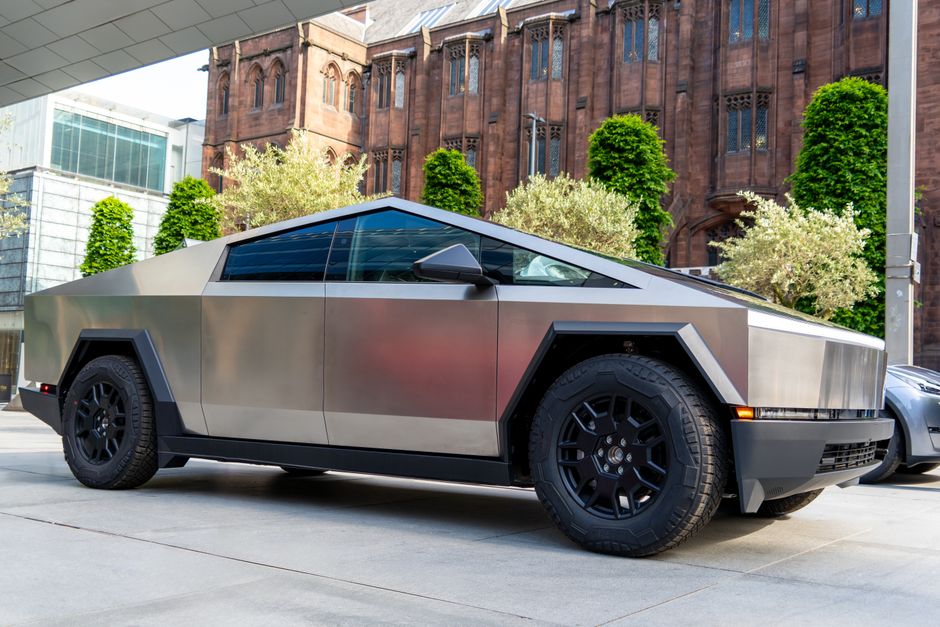
That’s cleared the path for Tesla’s Cybertruck, which led U.S. battery-electric truck sales in the first quarter of 2026 with 5,000 deliveries, followed by the Rivian R1T, which outsold GM’s Chevy Silverado EV and GMC Sierra EV individually with 2,000 units. GM’s two electric trucks combined for 2,694 sales, edging out the outgoing F-150 Lightning’s 2,060 units.
It’s worth remembering that all of these numbers are tiny compared to gas-powered pickups. Electric models like the Cybertruck and R1T remain a small percentage of total pickup sales, with gasoline still dominating the segment and diesel continuing to power heavy-duty work trucks. The F-Series as a whole remains America’s best-selling truck by a mile — the electric pickup race is really a battle for scraps at this point.
Globally, It’s BYD’s Show — With an Asterisk
Zoom out to the global pickup market, though, and a Chinese automaker is quietly running away with it. BYD’s Shark — technically a plug-in hybrid rather than a pure EV — has become a breakout hit in markets like Australia and Mexico, and BYD recently brought it to the UK and Europe priced from about $63,000 with roughly 56 miles of pure electric range. BYD’s Shark exports did cool somewhat in the first half of 2026, dropping to just over 20,000 units amid rising competition from other Chinese brands, even as BYD’s overall global sales climbed past 397,000 vehicles for the half.
That plug-in hybrid approach — electric power for daily driving, gas as backup for long hauls — is increasingly looking like the pragmatic path for trucks worldwide, especially as automakers like Ford retreat from pure battery-electric pickups for similar reasons.
Heavy-Duty Semis: Volvo’s Lead, Tesla’s Long-Awaited Arrival
In the world of big rigs, Volvo has quietly built a commanding position. Volvo Group entered volume production of its electric trucks back in 2019 and has become the global leader in e-truck manufacturing by units shipped, currently leading both the European and North American electric truck segments. In Europe specifically, Mercedes-Benz’s eActros has been a standout, emerging as the top-selling zero-emission heavy truck and earning International Truck of the Year honors.
Meanwhile, Tesla’s Semi — first unveiled back in 2017 and delayed repeatedly — finally began high-volume production at a dedicated factory next to Gigafactory Nevada in April 2026. It’s a milestone seven years later than Elon Musk’s original timeline, but analysts still expect only 5,000 to 15,000 Semi deliveries this year, a fraction of the volumes Volvo and Daimler have already placed with fleet customers. Tesla is pricing the truck aggressively, though, quoting around $260,000 for the Standard Range version and $290,000 for the 500-mile Long Range model, positioning it as the least expensive Class 8 battery-electric tractor on the market.
The Bigger Picture: China Owns the Volume
Step back far enough and the real leader isn’t any single brand — it’s China. Electric truck sales more than doubled worldwide in 2025 compared with 2024, reaching 9% of all truck sales globally, and the vast majority of that growth came from China, where roughly one in four trucks sold last year was electric. Electric heavy freight truck sales in China nearly tripled year-on-year, and Chinese electric truck sales are dominated almost entirely by domestic manufacturers using Chinese-made batteries and chassis.
For American and European shoppers, that means the electric truck story in 2026 is really two stories: a slow, cautious pivot toward plug-in hybrids and range-extended trucks in the West, and an all-out electrification sprint happening in China that’s reshaping the global supply chain in the background.
The Bottom Line
If you’re shopping for an electric pickup today, the Cybertruck currently wears the crown in the U.S. by default, with the Rivian R1T and GM’s twins fighting for second. Globally, BYD’s Shark is the volume king, even if it’s not a pure EV. And in the heavy-duty world, Volvo remains the truck to beat, with Tesla’s Semi only just now entering the race for real. Nobody’s declared a permanent winner yet — and given how fast this market is shifting, that’s unlikely to change anytime soon.