
An EV that costs $6,000 more upfront than a comparable gas car can still save you money by year four. But only if you know which numbers actually move the needle. The federal $7,500 tax credit is gone. Purchase prices haven’t fully converged, and depreciation on some EVs is still ugly. Yet when you add up fuel, maintenance, insurance, and resale together, the EV total cost of ownership math still tilts electric for most drivers who keep a car five years or longer. Here’s every piece of that math, broken down by price segment, with real 2026 numbers.
What actually counts toward EV total cost of ownership?
Total cost of ownership means everything you spend to buy, fuel, insure, maintain, and eventually sell a vehicle. It’s not just the sticker price or the monthly payment. For EVs specifically, that means purchase price after incentives, home and public charging costs, insurance premiums, maintenance and repairs, and depreciation tied partly to battery health.
Skip any one of those categories and you’ll get a misleading answer. A cheap-to-fuel EV that depreciates hard can still lose to a boring gas commuter car. A pricier EV that holds its value can beat a gas car you’d never expect it to beat. You have to run all five categories together.
How much more does an EV actually cost to buy in 2026?
The purchase-price gap has narrowed but hasn’t closed. A compact gas sedan or crossover typically runs $26,000 to $32,000 before fees. A comparable new EV lands around $32,000 to $40,000 before any incentives. That’s a meaningful gap, and it just got harder to close.
The federal EV purchase credit offered up to $7,500 for new EVs and $4,000 for used ones. That credit ended for any vehicle acquired after September 30, 2025, under the One Big Beautiful Bill Act. Only buyers with a binding purchase contract and a payment made before that date can still claim it. For everyone else shopping in 2026, that discount is simply off the table. Some states, utilities, and dealers still offer their own rebates, so it’s worth checking before you sign anything.
Here’s roughly where things stand across the three price tiers CarDoggo readers ask about most:
| Segment | Example gas vehicle | Example EV | Typical price gap |
|---|---|---|---|
| Budget | Compact gas crossover ($26K–$28K) | Chevy Equinox EV, Nissan Leaf ($34K–$36K) | $6K–$10K |
| Mid-range | Midsize gas sedan/SUV ($30K–$35K) | Tesla Model 3, Hyundai Ioniq 6 ($40K–$46K) | $8K–$14K |
| Luxury | Luxury gas SUV ($65K–$80K) | Macan Electric, Cadillac Escalade IQ ($75K–$100K+) | $5K–$20K+ |
If you’re shopping the budget end specifically, our Chevy Bolt vs. Nissan Leaf comparison breaks down which cheap EV actually makes financial sense right now. And if new-car premiums feel too steep, know that used EV prices are rising in 2026 too. Waiting isn’t automatically the money-saving move it used to be.
Is home charging really cheaper than filling up with gas?
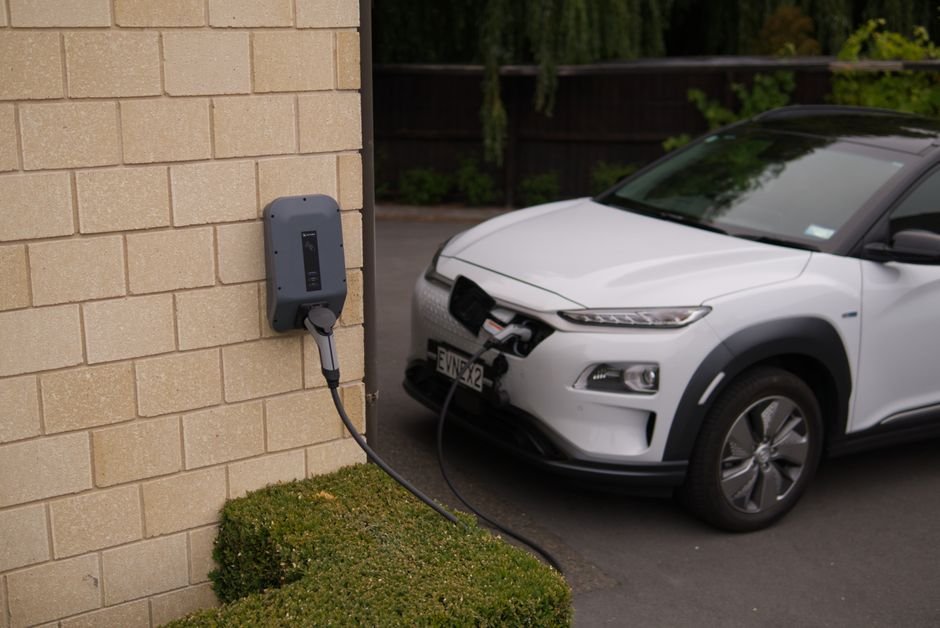
Yes, and it isn’t close. Home charging runs roughly $0.04 to $0.06 per mile in 2026. A gas car typically runs $0.10 to $0.15 per mile. That usually works out to $35–$60 a month on electricity versus $120–$180 a month on gasoline.
That gap compounds fast. Over a year of average driving, a home-charging EV owner can save well over $1,000 on fuel alone compared to a gas-only driver. That’s before factoring in any gas price spikes. Install a Level 2 home charger (typically $500–$1,500 including basic electrical work) and you’re topping off overnight for just a few dollars per full charge.
What about public fast-charging — does it wipe out the savings?
Public DC fast charging is where EV economics get shakier. Prices at major networks have settled around $0.13 to $0.20 per mile. At $0.40–$0.55 per kWh, a public fast-charge session can cost about the same as fueling an efficient hybrid.
If you can charge at home most nights and only use fast chargers on road trips, this barely matters. But if you’re apartment-dwelling and rely on public charging for most of your miles, run the numbers first. An EV might not save you much money in that specific situation.
Do EVs really cost more to insure?
Usually, yes. Insurance for EVs runs roughly 10-20% higher than for comparable gas vehicles. That translates to about $200-400 more per year for a mid-range EV. Higher vehicle prices raise comprehensive and collision coverage costs, and battery packs can be expensive to repair even after minor collisions.
Some repair shops still lack EV-specific technicians and parts. That pushes labor rates and claim payouts higher. That gap is narrowing as more EV-trained shops open and insurers build better loss data. For now, budget for a modest insurance premium above what you’d pay on the gas equivalent.
How much do you actually save on maintenance?
This is where EVs claw back most of that insurance gap and then some. NREL data puts EV maintenance costs at roughly $0.061 per mile versus $0.101 per mile for gas vehicles. That’s about a 40% reduction, and it adds up to real money fast.
Over five years and 75,000 miles, that’s around $1,500 in total maintenance for a mid-size EV. A comparable gas car runs roughly $4,500 over the same period. That’s a $3,000 swing in the EV’s favor. No oil changes, no transmission service, no spark plugs, and no exhaust system to worry about.
It’s not zero-cost, though:
- Tires: EVs are heavier and deliver instant torque. Tires often wear 20-30% faster and cost more to replace.
- Brakes: Regenerative braking actually extends brake pad life dramatically in most EVs. That offsets the tire penalty.
- Cabin filters and coolant: These still need periodic service, just less often than a gas engine’s fluid list.
- 12-volt battery: Every EV still has one. It still eventually needs replacing, just like in a gas car.
If you’re weighing an EV against a hybrid instead of a straight gas car, our hybrid vs. EV sales data breakdown is worth a read. It’ll help before you decide which powertrain fits your driving pattern.
Do EVs lose value faster than gas cars?
Most non-Tesla EVs still depreciate faster. That’s typically 45-55% over three years versus 35-45% for comparable gas vehicles. On a $45,000 EV, a 10-point depreciation gap works out to about $4,500. That’s often more than three years of fuel savings can offset.
There’s real nuance here, though. A typical EV loses around 22% of its value in year one, then roughly 10% a year after that. That lands a 3-year-old EV at about 60-65% of its original MSRP, and a 5-year-old one around 50%. Tesla’s Model 3 and Model Y have historically held value better than the segment average thanks to brand pull and charging network access. Older short-range models like the pre-2022 Bolt and Leaf have depreciated hardest.
The end of the federal tax credit is reshaping this further. New EVs are no longer artificially discounted at the point of sale. That’s starting to prop up used-EV values instead of undercutting them, and it’s one more reason used EV prices are climbing rather than falling in 2026. If depreciation worries you most, buying a one- to three-year-old EV is usually the smarter move. Let someone else eat the steepest drop instead of buying new or leasing.
Does battery degradation actually tank an EV’s long-term value?
Less than most shoppers fear. Real-world fleet data from Geotab, tracking over 22,700 vehicles, found average battery degradation of about 2.3% per year. The typical EV still retains roughly 81.6% of its original capacity after eight years. That’s well above the 70% threshold most automakers guarantee under warranty.
Degradation isn’t linear. Most packs lose a bit more in the first year or two, often 3-5%. Then the curve flattens out considerably. Charging habits matter a lot: EVs that rely heavily on high-power DC fast charging degrade roughly twice as fast, around 3.0% a year. Those charged mostly at home on Level 2 degrade around 1.5% a year.
For buyers, this means a well-maintained 5-year-old EV usually still has plenty of usable range left. A battery health report should matter more to your resale calculation than the odometer alone. If you want the full rundown on what’s actually covered when a pack does degrade too far, check our guide on how EV battery warranties actually work.
So which actually wins: EV or gas, segment by segment?
Here’s how the full picture tends to shake out over a typical 5-year, 75,000-mile ownership period. This stacks purchase price, fuel, maintenance, insurance, and depreciation together.
| Segment | 5-yr fuel/energy savings (EV) | 5-yr maintenance savings (EV) | Insurance penalty (EV) | Net verdict |
|---|---|---|---|---|
| Budget | ~$4,000–$6,000 | ~$2,500–$3,000 | ~$1,000–$1,500 | EV usually wins if kept 4+ years |
| Mid-range | ~$5,000–$8,000 | ~$3,000 | ~$1,000–$2,000 | EV wins clearly if depreciation gap stays under ~10 points |
| Luxury | ~$6,000–$10,000 | ~$3,500–$4,500 | ~$1,500–$2,500 | Depends heavily on model; steep depreciation can erase the edge |
My honest take: for budget and mid-range shoppers who charge at home and keep a car five years or more, the EV total cost of ownership advantage is real. It’s worth chasing. The fuel and maintenance savings simply outrun the purchase premium and insurance gap. Luxury EVs are a tougher call. Models with weak resale, like some non-native-EV luxury nameplates, can lose that battle entirely. That’s exactly why comparisons like Macan Electric vs. Cayenne Electric matter more at that price point than the sticker price alone.
If depreciation risk worries you regardless of segment, buying used rather than new is the single biggest lever you can pull. You skip the steepest first-year drop entirely.
What should you actually do with this information?
Run your own numbers before assuming either side wins by default. Check your local electricity rate, your actual insurance quote, and the specific model’s 3-year residual value before you sign anything.
If you drive under 10,000 miles a year and rarely use public fast charging, the EV math gets even better. Fixed costs like insurance matter more relative to fuel at low mileage. If you road-trip constantly and can’t charge at home, a hybrid may genuinely beat both options. It’s worth comparing against our plug-in hybrid deep dive before you commit either way.
FAQ
Is an EV still cheaper to own than a gas car without the tax credit?
Often yes, but the margin is thinner than it was in 2023-2024. Fuel and maintenance savings still typically outweigh the higher purchase price and insurance premium over a 5-7 year ownership period. That’s especially true if you charge mostly at home.
How many years does it take for an EV to “pay off” its higher price?
Most total cost of ownership studies put the break-even point somewhere between 3 and 7 years. It depends on local electricity and gas prices, how much you drive, and which specific vehicles you’re comparing.
Do EV batteries need to be replaced during typical ownership?
Rarely. With average degradation around 2.3% per year, most EV batteries still retain well over 80% of their original capacity after eight years. That’s long enough that most owners sell or trade in the car before a replacement is ever necessary.
Are used EVs a better value than new ones right now?
Generally, yes. New EVs no longer get a federal discount at purchase. Someone else has already absorbed the steep first-year depreciation hit. A 2-3 year old EV with a documented battery health report is usually the smarter buy in 2026.