
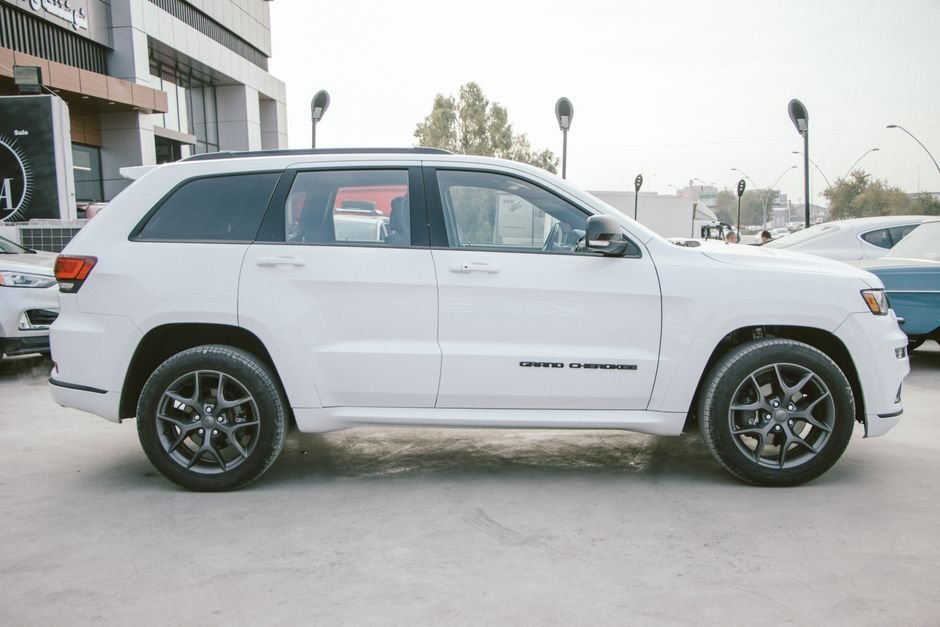
Three recalls, one part, same failure mode. That’s the track record on the Grand Cherokee coil spring recall, and it’s why this one deserves more scrutiny than the average safety notice. Stellantis has now gone after this same rear suspension defect three separate times since 2023. This latest campaign covers 328,381 SUVs — more than four times the size of the recall it replaces.
If you own one, or you’re shopping for a used Grand Cherokee, this isn’t a “check a box and move on” situation. Here’s what’s actually happening under the back end of these Jeeps. And here’s whether it should scare you off the model entirely.
What is the Grand Cherokee coil spring recall actually about?
Chrysler says a rear coil spring on certain fifth-generation Grand Cherokees may have been seated incorrectly at the factory. That lets it shift out of position and potentially detach entirely while the SUV is being driven. A spring flying loose at speed is a hazard not just to the driver, but to anyone following behind.
The new campaign, filed with NHTSA as 26V562, covers 2021-2023 Grand Cherokee L, 2022-2023 Grand Cherokee, and 2022-2023 Grand Cherokee 4xe models. All were built with standard coil springs. Vehicles with the optional Quadra-Lift air suspension are excluded. They never used the affected part.
Why has this happened three times?
Chrysler issued the first fix in June 2023. It issued a second one in January 2026 after springs kept working loose, even on repaired trucks. Then came a third in September 2026, because the problem still hadn’t gone away. Each round, the company thought it had solved the issue. And each round, new complaints proved it hadn’t.
The culprit, according to the filing, isn’t a bad spring. It’s the lower isolator that positions and cushions it against the suspension, supplied by AirBoss. This time, dealers are skipping visual inspections. They’re simply replacing both rear coil spring lower isolators outright, a more thorough fix than the earlier campaigns attempted. Crucially, even Jeeps already “fixed” under the 2023 or January 2026 recalls are back in scope. They need this new repair regardless of what work was done before.
How serious is the actual risk?
It’s real but statistically rare. Stellantis estimates the defect shows up in roughly 0.1% of the recalled population. As of early August 2026, the company had logged 406 warranty claims and 29 customer assistance records, with zero reported accidents or injuries. There’s no “do not drive” advisory attached. That tells you Jeep isn’t treating this as an imminent, park-it-now emergency.
Still, do the math. 0.1% of 328,381 vehicles works out to roughly 330 SUVs with a genuinely detaching spring. That’s already lower than the number of warranty claims filed, which suggests the real number could run higher once every vehicle gets inspected.
| Recall | Date | Vehicles Covered | Fix |
|---|---|---|---|
| 23V413 | June 2023 | Original population (unspecified) | Inspection / reposition spring |
| 26V051 | January 2026 | ~80,000 | Inspection / reposition spring |
| 26V562 | September 2026 | 328,381 | Replace both rear lower isolators |
Should you still buy a Grand Cherokee?
Yes, but only if you insist on confirming the repair yourself. Don’t take a dealer’s word that a Jeep was already fixed under a prior recall. Run the VIN through NHTSA’s lookup tool before you sign anything. If you already own one, book the appointment even if you’ve been through this before.
The redesigned Grand Cherokee for 2024 and later isn’t part of any of these three campaigns. That suggests Jeep corrected the assembly issue in the newer generation. If you’re shopping used and want to sidestep this whole saga, a 2024-or-newer model is the cleaner buy. Buyers set on a 2021-2023 model should treat this as a must-do dealer visit, not an optional inspection. The fix is free either way, so there’s no financial reason to skip it.
This is also a good reminder: “recall completed” on a Carfax report doesn’t always mean the problem is actually gone. If you want a broader gut check on how much weight to put on recall history versus a certified pre-owned badge, our deep dive on whether CPO is still worth it in 2026 is worth a read before you buy secondhand.
Jeep’s recall record lately hasn’t been confidence-inspiring across the board. The Wagoneer just went through its own third roof rack fix in a year. The Wrangler and Gladiator combined recently crossed a million vehicles recalled. None of that is a dealbreaker on its own. But it’s worth factoring into your negotiating leverage on price.
FAQ
How do I know if my Grand Cherokee is included in this recall?
Enter your VIN at NHTSA.gov/recalls once it becomes searchable — VINs went live in the system on September 9, 2026. Don’t assume you’re clear just because you had spring work done under an earlier recall.
Is the fix free?
Yes. Dealers will replace both rear coil spring lower isolators at no cost to the owner. That applies even if the vehicle was previously repaired under the 2023 or January 2026 campaigns.
When will I get a recall notice?
Chrysler plans to mail interim owner letters between September 29 and October 7, 2026. A second letter will follow once dealerships have full parts inventory for the repair.
Does this affect the newer Grand Cherokee?
No. The recall only covers 2021-2023 model year Grand Cherokee, Grand Cherokee L, and Grand Cherokee 4xe SUVs with standard coil springs. Nothing from the 2024 model year forward is included.