
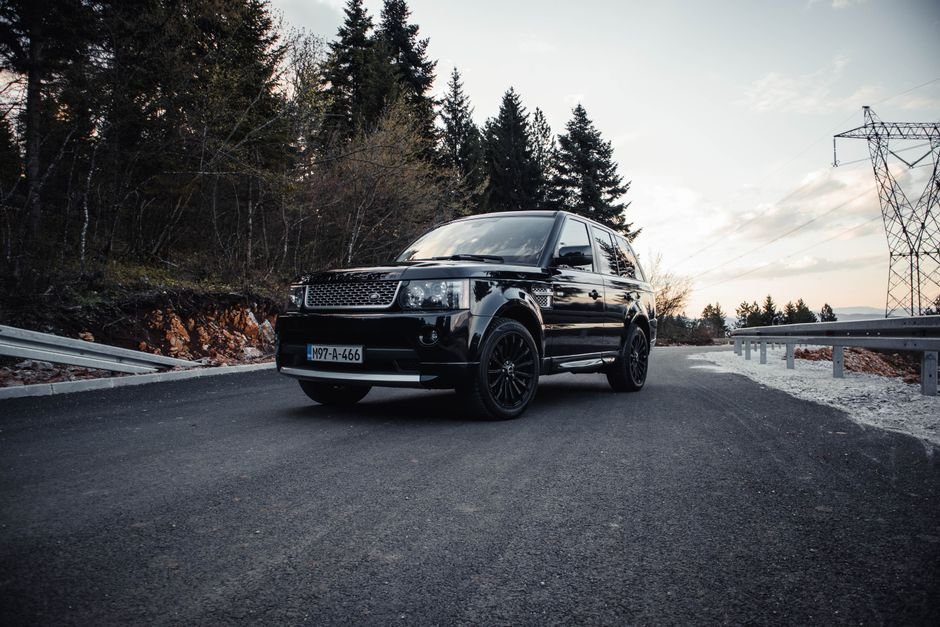
Land Rover just put a real price tag on its first-ever electric Range Rover. The answer to the obvious question is yes: it costs about $25,000 more than the base gas model. The Range Rover Electric SE starts at $138,000 before destination. That lands at $140,450 out the door. The entry-level gas SE runs on a mild-hybrid six-cylinder. It starts at $113,300 with destination included.
That’s a gap of roughly $24,700 to $25,000, depending on how you round it. So the real question in the Range Rover Electric vs gas debate isn’t whether the EV costs more. It does. The real question is whether the extra money buys you something worth having.
How much more does the Range Rover Electric actually cost?
The Range Rover Electric costs about $25,000 more than the base six-cylinder gas SE. But it’s only about $9,100 more than the plug-in hybrid. And it costs the same as the V8 once you climb the trim ladder. In other words, the premium shrinks fast depending on which gas Range Rover you’re actually cross-shopping.
| Model | Powertrain | Price (w/ destination) | 0-60 mph |
|---|---|---|---|
| Range Rover SE | 3.0L I6 mild hybrid | $115,750 | ~6.1 sec |
| Range Rover P550e SE | Plug-in hybrid | $131,350 | ~5.3 sec |
| Range Rover P530 SE | 4.4L V8 | ~$140,450 | 4.5 sec |
| Range Rover Electric SE | Dual-motor EV | $140,450 | 4.3 sec |
Once you move up to Autobiography or SV trims, the gap disappears entirely. Land Rover prices the EV and V8 the same at those levels. So the electric powertrain really only costs extra at the entry level.
What do you actually get for the extra $25,000?
You get more torque than any Range Rover ever built. You also get quieter cruising, quicker acceleration, and fast-charging speed that rivals the best EVs on sale. Whether that’s worth $25,000 over a capable six-cylinder SUV depends on how you drive and where you charge.
The Electric’s dual motors put out a combined 542 horsepower and 627 lb-ft of torque. That’s more twist than even the V8 or plug-in hybrid manage. It’ll hit 60 mph in 4.3 seconds, a hair quicker than the V8’s 4.5. And it does it in near-total silence. The 118.5-kWh battery is rated for up to 333 miles by the EPA. Land Rover says a 350-kW DC fast charger can take it from 10 to 80% in about 22 minutes.
US buyers also get a native NACS port with access to the Tesla Supercharger network. That matters a lot if you’re planning road trips instead of just neighborhood errands. If you’re weighing which charging network actually delivers in 2026, check our breakdown of the best EV charging network in 2026 before you commit.
Is the Range Rover Electric worth $25,000 more than the gas model?
For most buyers, no. The plug-in hybrid is the smarter $9,100 upgrade over the EV. It gives you a taste of electric driving with zero range anxiety. The full EV only makes sense if you genuinely drive enough miles to benefit from instant torque and near-silent cruising, and you have reliable home charging.
The base gas SE isn’t a consolation prize, either. It’s still a genuinely excellent luxury SUV with the same cabin, same tech, and same off-road hardware. It just comes with a traditional engine instead of a battery pack. If your budget tops out around $115,000, you’re not settling for less Range Rover. You’re just getting it with a gas tank.
Where the math gets interesting is at the top of the lineup. Land Rover prices the Autobiography, SV, and SV Ultra trims identically across EV and V8. So buyers who were always going to spend $175,000-plus have zero financial reason to skip the electric version. That’s a very different calculus than the $25,000 gap at the entry level.
This mirrors a pattern we’ve seen play out with other luxury EV siblings, like the price gap between the Escalade IQ and IQL. The premium for going electric often shrinks or vanishes the higher up the trim ladder you go. It’s also worth running the numbers on fuel and maintenance savings before writing off the EV entirely. See our full guide on EV total cost of ownership for how charging costs and reduced maintenance can claw back some of that upfront premium over a few years.
My honest take: skip the base EV unless you’re set on going electric for its own sake. The plug-in hybrid gets you 90% of the smoothness for a third of the price premium. And the V8 gives you Range Rover’s signature soundtrack at the exact same price as the electric once you’re spending real money. Full technical details on the EV’s specs and battery are available from InsideEVs’ first drive coverage.
FAQ
When does the Range Rover Electric go on sale?
Order books opened in September 2026. Land Rover hasn’t confirmed an exact delivery date yet. Expect the first customer deliveries to trickle in over the following months as production ramps up at the Solihull plant.
Does the Range Rover Electric qualify for any tax credits?
No. At well over $80,000, it exceeds the price cap for federal EV incentives. Most state rebate programs cap out far below its starting price, too.
Is the plug-in hybrid a better buy than the full EV?
For most drivers, yes. The P550e costs about $9,100 less than the EV. It still offers real electric-only driving for short trips and eliminates any worry about charging on long road trips.
How does the Range Rover Electric’s range compare to rivals?
Its 333-mile EPA range is solid but not class-leading. The BMW iX5 60 AWD, for example, is rated closer to 435 miles. If maximum range is your top priority, it’s worth cross-shopping before you sign.