
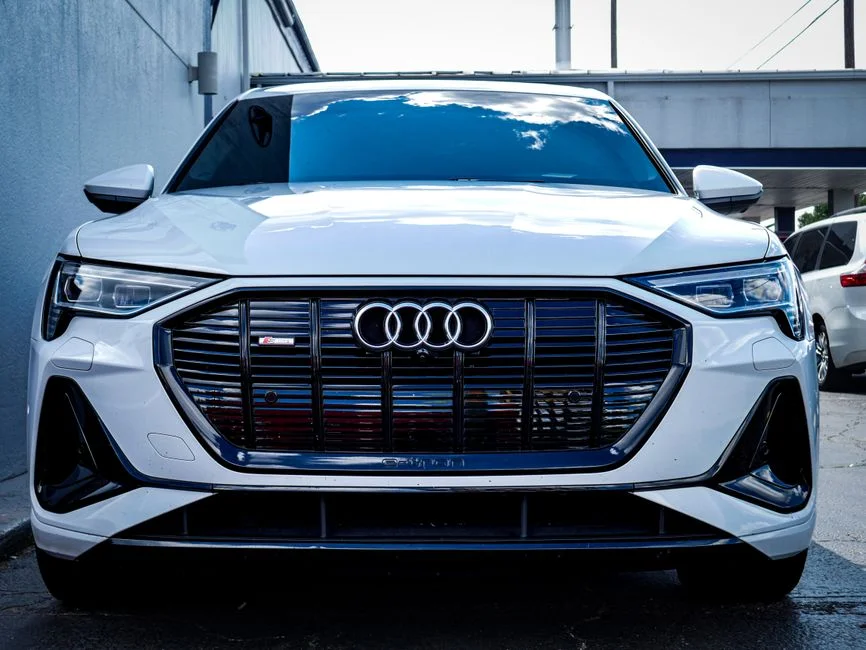
Here’s the uncomfortable truth: if you’re shopping a used VW ID.4 or Audi Q4 e-tron right now, you’re looking at two vehicles recalled for the exact same battery defect. Both come from the exact same supplier, too. Neither one is “the safe one.” But one of them handles the fallout better, and it’s worth knowing which before you sign anything.
Volkswagen Group of America confirmed in October 2026 that both EVs share high-voltage battery cells made by SK Battery. Both carry the identical warning: don’t charge past 80% until a permanent fix exists. That’s not a coincidence. The ID.4 and Q4 e-tron ride on the same MEB platform and pull batteries from the same supply chain.
What exactly triggered the VW ID.4 and Audi Q4 e-tron recalls?
Volkswagen recalled 22,524 ID.4s in October 2026. The cause: certain charging patterns combined with a state of charge above 80% can trigger thermal propagation inside the battery pack. Audi followed weeks later with a recall covering 9,048 Q4 e-tron and Q4 Sportback e-tron SUVs for the identical defect, traced to the same battery supplier.
This wasn’t VW’s first rodeo with this battery, either. The automaker had already recalled the ID.4 earlier in 2026 for a related battery issue. The two January 2026 campaigns alone covered nearly 44,000 more units. Audi’s Product Safety Committee only started digging after hearing about battery thermal events in other Volkswagen Group vehicles on September 21, 2026. That timing tells you this problem was flagged internally before it ever became public.
How many cars are actually affected?
The scale difference matters for your odds of buying an affected VIN. Here’s how the two recalls stack up:
| Detail | VW ID.4 | Audi Q4 e-tron |
|---|---|---|
| Vehicles recalled (Oct. 2026 campaign) | 22,524 | 9,048 |
| Model years covered | 2023–2026 | 2024–2025 |
| Estimated defect rate | ~0.1% | ~0.1% |
| Prior related recalls in 2026 | Yes (two in January, ~44,551 units) | No |
| Known fires/injuries reported | 22 U.S. claims since Jan. 2024 | None reported as of recall filing |
| Interim fix | 80% charge cap | 80% charge cap |
Volkswagen also says it still hasn’t nailed down the root cause of the latest ID.4 issue. A permanent repair isn’t available yet. Audi is in the same boat. A fix is “under development,” with interim notification letters going out mid-December 2026.
Is the Audi Q4 e-tron actually the safer bet right now?
On paper, yes. Fewer vehicles are affected, there are no prior recalls for this battery issue, and zero fires or injuries have been reported so far. But “safer” here is a matter of degree, not kind. The underlying defect and the advised workaround are identical on both cars.
The ID.4’s track record is messier. This is its third battery-related recall campaign in under a year. Volkswagen has also logged actual field complaints — 22 of them between January 2024 and August 2026 — connected to overheating cells. That’s a real pattern, not a one-off filing. If you’re deciding between a used example of each with similar mileage and price, the Q4 e-tron’s cleaner recall history is a genuine point in its favor. Still, that’s cold comfort given both cars need the same 80% charging discipline for now.
Does the price gap make up for the extra recall risk?
Not really, and that’s the part buyers overlook. A used Audi Q4 e-tron typically runs in the mid-$30,000s to mid-$50,000s depending on year and mileage. A comparable ID.4 often lands several thousand dollars cheaper. You’re not just paying Audi’s badge premium here. You’re paying it on top of a less-resolved software workaround, since both cars currently rely on the same interim 80% cap rather than a true fix.
- ID.4: Cheaper to buy. More range and charging speed in most trims. But it has a longer, messier recall history on this exact battery supplier.
- Q4 e-tron: Nicer cabin, quieter ride, smaller recall population. But it costs more and shares the identical unresolved defect.
Should you still buy either one used in late 2026?
I’d lean ID.4, and mainly because of money, not bravery. Pay close attention to charging habits before you buy. Confirm the VIN against NHTSA’s recall lookup. And don’t let a dealer wave away the 80% charging limit as a formality — it’s a real mitigation, not boilerplate.
If you want a broader comparison of which EVs are actually holding their battery health and resale value right now, our guide to used EVs under $25,000 and the full used EV buying guide cover exactly how to vet a battery before you hand over cash. It’s also worth checking how these two stack up in the broader resale conversation. See our breakdown of EV resale value in 2026 for the full picture. And if VW’s charging restrictions have you second-guessing the brand generally, we’ve also looked at whether VW’s 80% charge cap hurts resale value long-term.
FAQ
Can I still charge my ID.4 or Q4 e-tron to 100%?
Volkswagen and Audi both advise against it until a permanent fix arrives. Sticking to 80% is the manufacturer-recommended workaround. It does reduce usable range in the meantime.
Will the recall repair be free?
Yes. Federal law requires manufacturers to perform recall repairs at no cost once a remedy is developed. Neither VW nor Audi has one finalized for this specific defect yet.
How do I check if a specific used car is part of the recall?
Run the 17-character VIN through NHTSA’s recall lookup tool before you buy. Both VW’s and Audi’s recalled VINs are searchable. A dealer should be able to confirm recall status as part of any pre-purchase inspection.
Has this battery issue caused any actual fires?
Volkswagen has logged 22 related U.S. claims tied to the ID.4 since January 2024. Audi says it has no confirmed fires, crashes, or injuries connected to its Q4 e-tron recall as of the filing.