
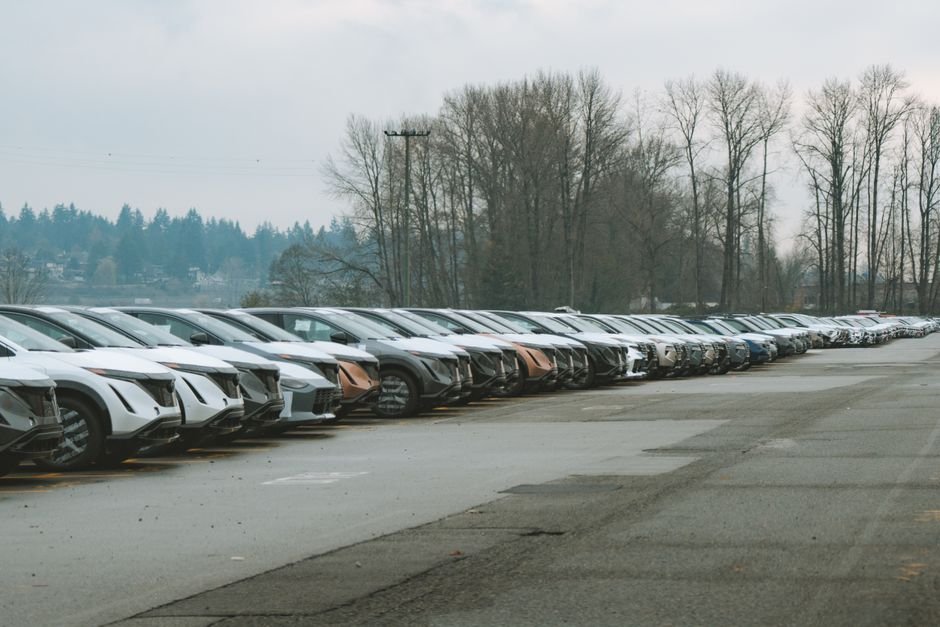
Here’s the uncomfortable truth: the average EV loses more than half its value in five years. The typical new vehicle, by contrast, loses closer to 42 percent. But EV resale value isn’t one-size-fits-all. A handful of models are beating that trend by a wide margin. A few others are getting crushed on the used market.
If you’re shopping new or deciding whether to keep your current EV another year, this matters. Depreciation is the single biggest hidden cost of owning any car. With EVs, it’s been especially brutal.
Which EV actually holds its resale value best?
According to iSeeCars’ latest analysis of millions of used-vehicle transactions, the Porsche Taycan wagon currently tops the EV resale value rankings. It retains 55.5 percent of its original price after five years. That’s well above the roughly 39 percent average for electric vehicles as a category.
The Taycan isn’t alone near the top. The Maserati GranTurismo electric coupe retains about 52.1 percent of its value. The electric Dodge Charger holds around 51.7 percent. Both are comfortably ahead of the EV average.
Among mainstream, non-luxury EVs, the Tesla Model 3 remains the benchmark. It consistently lands near the top of resale studies. Why? A huge used-buyer pool and Supercharger access help a lot.
Among electric SUVs specifically, the Toyota bZ4X has emerged as a surprising leader. Some resale trackers put its five-year retention above 57 percent. That’s likely a byproduct of slow new-car sales keeping used supply tight.
Which EVs lose the most value the fastest?
The Nissan Leaf sits at the bottom of nearly every depreciation study. It loses roughly 63 percent of its value after five years. That’s the steepest drop of any vehicle iSeeCars tracks, gas or electric. Older battery chemistry and limited DC fast-charging compatibility hurt its used-market appeal.
The Tesla Model S isn’t far behind, losing around 62 percent of its value. The Hyundai Kona Electric and Kia Niro EV both land in the mid-to-high 50s for depreciation. The Jaguar I-Pace is in a league of its own on the downside. Some trackers put its five-year loss above 70 percent. If you’re curious how bad it’s gotten, we broke down the used Jaguar I-Pace price crash in detail.
EV resale value at a glance
| Model | 5-Year Value Retained | Category |
|---|---|---|
| Porsche Taycan (wagon) | ~55.5% | Best overall |
| Dodge Charger EV | ~51.7% | Strong early performer |
| Toyota bZ4X | ~57.6% | Best SUV |
| Tesla Model 3 | ~45-50% | Best mainstream sedan |
| Ford F-150 Lightning | ~47.6% | Best truck |
| Hyundai Kona Electric | ~43.5% | Middle of pack |
| Kia Niro EV | ~42.7% | Below average |
| Nissan Leaf | ~36.9% | Worst |
Why do EVs depreciate faster than gas cars in general?
EVs depreciate faster for three main reasons: rapid tech turnover, shifting federal incentives, and buyer anxiety over battery life. New EVs keep getting more range and faster charging for similar money. That makes older models look outdated fast, while a gas sedan barely changes year to year.
Fast-changing incentive programs also distort used pricing overnight. A new model’s effective price can drop sharply, but used examples don’t get the same discount. Battery degradation fears — even when overblown for most modern packs — still scare off casual used-car shoppers. That pushes prices down further. If you want the full math on how this plays out over years of ownership, see our full guide on EV total cost of ownership.
Do electric trucks hold value better than electric cars?
Yes, electric trucks are currently outperforming the broader EV category on resale. The segment averages around 45.3 percent value retention after five years. The Ford F-150 Lightning leads that group at roughly 47.6 percent. The GMC Sierra EV and Hummer EV follow at around 45.9 percent. The Rivian R1T sits close behind at 45.5 percent.
That’s a meaningfully better picture than sedans and crossovers. It’s likely because electric truck buyers skew toward loyal brand fans and fleet or utility use cases, not price-sensitive commuters.
What should you actually buy if resale matters to you?
If resale value is a top priority, I’d point you toward a Tesla Model 3 or a Toyota bZ4X. If budget allows, a Porsche Taycan is worth a look too. All three are holding value well above the EV average. I’d steer clear of the Nissan Leaf and older Kona Electric unless you plan to drive the car into the ground rather than trade it in.
Shopping used instead of new sidesteps a lot of this risk. Someone else already absorbed the steepest depreciation hit. Check our used EV buying guide before you commit. If you’re set on a used car under $25,000, we’ve also covered which used EVs under $25,000 actually hold their battery.
Leasing is another smart hedge against bad EV resale value. It hands the depreciation risk back to the automaker at lease-end. If you’re nearing that decision point, our breakdown of EV lease buyout options in 2026 walks through when buying out makes sense versus walking away.
Still torn on whether an EV is the right move for your situation at all? Our EV decision framework for 2026 breaks down the full picture beyond just resale numbers.
FAQ
What is a good resale value percentage for an EV?
Anything above 45 percent after five years is strong for an EV. That’s well above the roughly 39 percent category average. The Porsche Taycan, Tesla Model 3, and Toyota bZ4X all clear that bar comfortably.
Does battery degradation really affect EV resale value?
It affects buyer perception more than actual battery performance in most cases. Modern EV batteries typically retain the bulk of their capacity well past 100,000 miles. Still, the fear alone softens used prices, especially on older or less proven models.
Is it smarter to lease or buy an EV given how fast they depreciate?
Leasing shifts depreciation risk to the automaker. That makes it the safer bet given fast-changing EV tech and uncertain resale value. Buying only makes more sense if you choose a proven strong resale performer, like the Model 3 or Taycan, and plan to keep it for years.
Why do Tesla models hold value better than most other EVs?
Tesla benefits from a huge used-buyer pool and strong brand loyalty. It also has exclusive access to its Supercharger network. That combination keeps demand — and prices — higher than rivals with similar range and features.