
Here’s the honest answer: buy an EV in 2026 if you can charge at home and drive fewer than roughly 150 miles most days. Lean toward a hybrid instead if you don’t have home charging. The same goes if you live somewhere with brutal winters, or drive long distances without a firm charging plan. That’s not a cop-out. It’s the actual line that separates people who love their EV a year later from people who quietly trade it in.
The math changed this year, too. The federal $7,500 new EV credit and $4,000 used EV credit both expired for good on September 30, 2025. That means the decision now rests almost entirely on your own driving habits and home setup, not a government discount. Let’s walk through exactly how to figure out which side of that line you’re on.
What actually changed for EV incentives in 2026?
The federal EV tax credit is gone, full stop. It’s not coming back for most buyers, and no new law has replaced it. If you’re shopping for an EV in 2026 and expecting a $7,500 discount off the top, recalculate your budget right now.
Here’s what happened and what’s left standing:
- $7,500 new EV credit (Section 30D): Ended for any vehicle acquired after September 30, 2025, under the One Big Beautiful Bill Act. The only exception is if you signed a binding contract and made a payment before that date.
- $4,000 used EV credit (Section 25E): Also expired September 30, 2025. Any used EV purchased after that date doesn’t qualify, and nothing has replaced it.
- Home charger credit (Section 30C): Still alive, covering 30% of installation costs up to $1,000. It’s scheduled to expire for equipment placed in service after June 30, 2026.
- State and utility incentives: Still very much in play. More than a dozen states offer rebates or tax credits worth up to several thousand dollars. Many utilities kick in $500 to $5,500 more.
- New auto loan interest deduction: A federal deduction of up to $10,000 a year now applies to interest on loans for new, U.S.-assembled vehicles. That includes EVs, and it runs through 2028.
With the purchase credit gone, automakers have quietly shifted their playbook. Instead of federal money, you’re now seeing bigger manufacturer cash-back offers and juicier lease deals to keep EVs moving off lots. Our roundup of the best EV cash-back deals tracks which brands are discounting the hardest right now. It’s also worth checking whether you qualify for the $10,000 car loan interest deduction. It can apply whether you buy electric or gas.
Does an EV make sense for your commute?
If your round-trip commute is under 40 miles, almost any current EV handles it easily. That’s true even with winter range loss factored in. The average American commutes about 41 miles round-trip per day. That’s well inside the real-world range of even budget EVs. Daily driving is rarely the actual obstacle. Home charging access is.
Where it gets more complicated is the long-tail commuter. Roughly one in ten American workers has a one-way commute of 60 minutes or more. Those “super commuters” are concentrated in expensive metros like New York, Maryland, and New Jersey. If that’s you, a longer-range EV (300+ miles EPA-rated) still works fine on most days. But you’ll want a real charging plan for the days traffic or weather eats into your buffer.
How much range do you actually lose in winter?
Expect to lose somewhere between 20% and 40% of your EV’s rated range near or below freezing. The exact number depends on the model, and cold snaps make it worse. This isn’t a defect. It’s physics — and gas cars lose efficiency in the cold too, just less dramatically.
The best independent data comes from Recurrent’s ongoing winter study, which tracks over 30,000 real-world vehicles. Their most recent numbers show the average EV retains about 78% of its maximum range at 32°F. That gap widens fast as temperatures keep falling. A separate AAA dynamometer test found an average 39% range reduction at 20°F. Some models handle it far better than others:
| Model (or category) | Approx. winter range retained |
|---|---|
| Tesla Model X | ~89% |
| Polestar 2 | ~85% (mid-teens % loss) |
| Chevrolet Silverado EV | ~86% |
| Typical EV with heat pump | 75–80% |
| Volkswagen ID.4 (no U.S. heat pump) | ~63% |
| Nissan Leaf | ~62% (38% loss reported) |
The takeaway: if you live somewhere with real winters, prioritize a model with a heat pump. Check independent winter data before you buy — don’t just trust the EPA sticker. Preconditioning your car while it’s still plugged in is the single easiest way to claw back a few percentage points of real-world range.
Do you have real access to home charging?
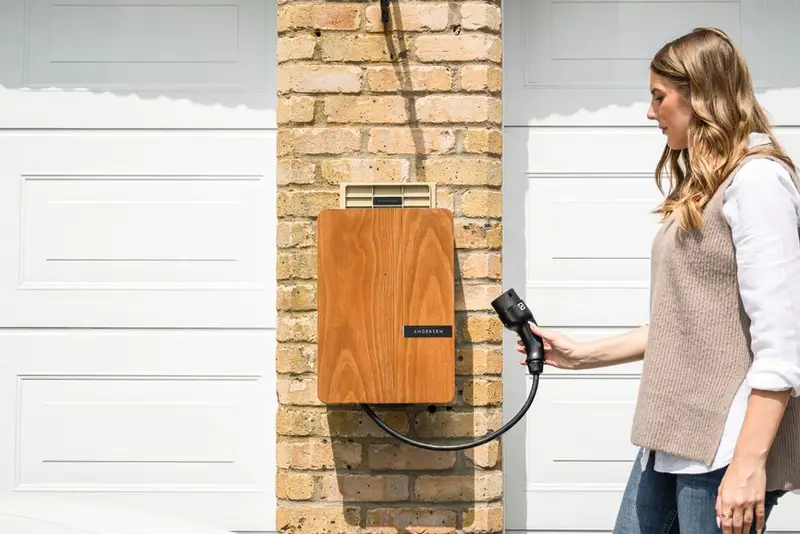
If you can’t reliably plug in overnight at home, an EV gets meaningfully harder to live with. You’re not stranded, but you’re now dependent on public charging. That’s slower, pricier, and less predictable. About 80% of all EV charging in the U.S. happens at home. That tells you how central this is to the ownership experience.
The tricky part is that access isn’t universal. Around 31% of U.S. households live in multi-family housing like apartments and condos. Installing a charger there is often difficult or impossible without landlord or HOA cooperation. Even among single-family homeowners, plenty end up needing an electrical panel upgrade before they can add a proper Level 2 charger.
Ask yourself these questions before you commit:
- Do you own (or can you get permission to modify) a garage or driveway spot with electrical access?
- Is your home’s electrical panel modern enough to handle a 240-volt Level 2 charger, or will you need an upgrade?
- If you rent or live in a condo, has your building or HOA installed — or agreed to install — charging infrastructure?
- Is there a reliable public fast-charging station within a reasonable detour of your daily routine, as a backup?
If you answered “no” to the first two and don’t have a strong “yes” to the last two, an EV is going to be a genuine hassle for you. Not impossible — just a hassle. That’s exactly the profile of buyer who tends to be happier in a hybrid instead.
What about road trips — will an EV ruin your vacation?
A modern EV can absolutely handle road trips. But it will add planning time and occasional 20-30 minute charging stops that a gas car simply doesn’t require. If you take two or three long road trips a year and don’t mind the extra stops, that’s a manageable trade-off. If you road-trip constantly or drive for work across long distances, the math tips back toward gas or hybrid.
Fast-charging networks have expanded a lot. Tesla’s Supercharger network opening to other brands via the NACS connector has made this far less stressful than it was even two years ago. Still, charging speed drops in cold weather. Rural stretches of the country have noticeably sparser coverage than interstates near major cities. Before a big trip, map your charging stops in advance the same way you’d check gas station locations on a remote route. Our road trip apps roundup covers tools that make this easier.
EV vs. hybrid vs. gas: which one is actually right for you?
Hybrids remain the safest all-around choice if you want fuel savings without changing a single habit. No charger, no range anxiety, no winter penalty. EVs win decisively on cost-per-mile and daily convenience if you have home charging and a moderate commute. Gas cars still make sense if you tow heavy loads regularly, live somewhere with zero charging infrastructure, or simply drive very high annual mileage across sparse rural roads.
| Buyer profile | Best fit | Why |
|---|---|---|
| Home charging + under 40-mile daily commute | EV | Lowest running cost, plug in overnight, rarely visit public chargers |
| Apartment/condo, no charging access | Hybrid | No infrastructure needed, still saves on gas |
| Frequent long road trips or towing | Hybrid or gas | No charging stops, no range/payload penalty |
| Severe winter climate, no garage | Hybrid | Avoids the worst-case cold-weather range hit |
| High annual mileage, rural routes | Hybrid or PHEV | Sparser fast-charging coverage outside metros |
| Want lowest total cost of ownership, urban/suburban | EV | Lower fuel and maintenance costs over time |
Our deeper dive into what the 2026 sales data actually shows backs this up. Hybrids are quietly outselling EVs in a lot of markets. That’s precisely because they ask nothing of the buyer’s home setup. If you want the plug-in middle ground, our piece on whether plug-in hybrids are finally worth the hype is worth reading too. A PHEV lets you drive electric-only for short trips and never worry about long ones.
Should you buy new, buy used, or wait?
Buy used if you want the biggest savings and don’t mind a smaller model-year selection. Buy new only if you specifically want the latest range, tech, or a model that hasn’t been on the used market long enough yet. With the federal credit gone, the new-vs-used price gap has narrowed somewhat. But used EVs still typically depreciate faster than gas cars, which works in your favor as a buyer.
Before you buy used, get familiar with battery health reporting and warranty terms. Our used EV buying guide walks through exactly how to avoid overpaying for a car with a degraded pack. Our guide to how EV battery warranties actually work explains what’s covered and what isn’t. If you’re weighing timing, our analysis of whether used EV prices are rising in 2026 lays out whether waiting will actually save you money or just cost you time.
One more number worth knowing before you sign anything: run the full ownership math, not just the sticker price. Our EV total cost of ownership breakdown compares insurance, maintenance, electricity, and depreciation side by side with gas and hybrid equivalents. The results aren’t always what people assume.
The CarDoggo decision checklist
Run through this list honestly before you sign any paperwork. The more boxes you check, the stronger the case for going electric right now.
- I have a garage, driveway, or dedicated parking spot where I can install or already have charging access.
- My daily round-trip driving is under 100 miles most days.
- I take fewer than four multi-day road trips a year, or I don’t mind planning charging stops when I do.
- I don’t regularly tow heavy trailers or haul maximum payloads.
- I live somewhere with mild-to-moderate winters, or I’m buying a model with a proven heat pump.
- I’ve priced out state and utility incentives in my area, since the federal credit no longer applies.
- I plan to keep the car long enough (5+ years) to benefit from lower running costs offsetting any higher purchase price.
If you checked five or more, an EV is a smart move for you in 2026. If you checked three or fewer, seriously consider a hybrid instead. You’ll get most of the fuel savings with none of the lifestyle changes.
FAQ
Is the federal EV tax credit still available in 2026?
No. Both the $7,500 new EV credit and the $4,000 used EV credit expired for vehicles acquired after September 30, 2025. Neither has been reinstated. Some state and utility incentives are still active, so check your local programs before you buy.
Do EVs really lose that much range in cold weather?
Yes, but it’s temporary and not damaging to the battery. Expect roughly a 20-40% range reduction near or below freezing depending on the model. Vehicles with efficient heat pumps — like the Tesla Model X or Polestar 2 — lose noticeably less than older or budget models without one.
Is a hybrid a better choice than an EV if I don’t have a garage?
In most cases, yes. Without a driveway or garage for home charging, you’ll depend on public charging. That costs more per mile and takes far longer than plugging in overnight. A hybrid delivers real fuel savings with zero infrastructure requirements, which makes it the lower-friction choice for apartment and condo dwellers.
Should I buy an EV now or wait for prices to drop further?
If you’ve found a model and deal that fits your budget and driving needs, buying now makes sense. Incentive shrinkage and rising used EV demand mean waiting doesn’t guarantee a better price. If you’re on the fence, read our breakdown of whether used EV prices are rising in 2026 before deciding. The trend line matters more than any single month’s price tag.