
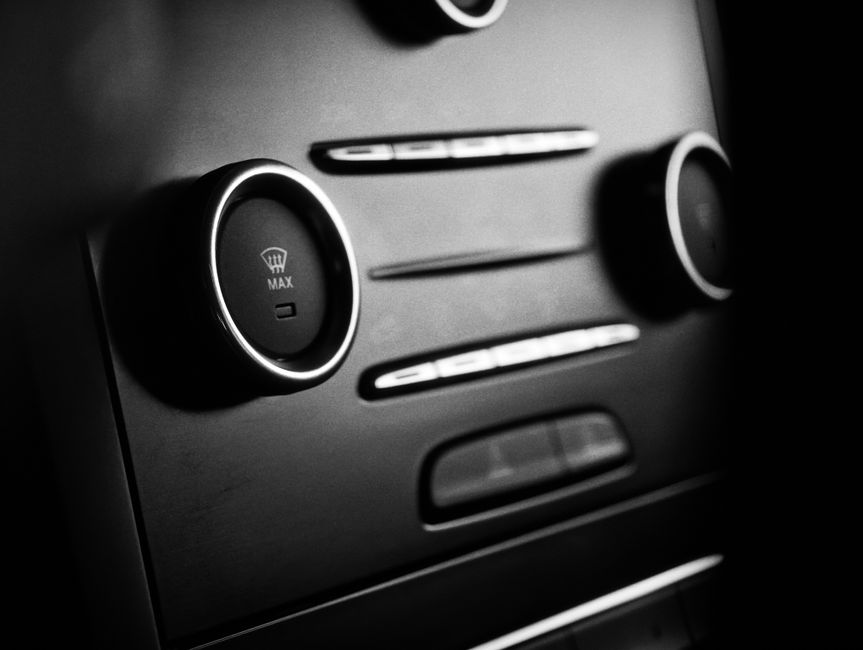
For the better part of the last decade, car interiors have been on a quiet but relentless march toward one destination: the giant touchscreen. Buttons vanished, knobs disappeared, and in their place came slabs of glass controlling everything from climate to cruise control. Now, that trend is reversing course, and fast.
Volkswagen, Mercedes-Benz, Hyundai, Subaru, Audi, and even Ferrari are all walking back some version of the touch-everything cockpit. It’s a rare industry-wide about-face, and it’s being driven by a mix of angry customers, new safety rules, and a growing realization that not everything in a car needs to be a phone.
How We Got Here
Tesla is largely credited with kicking off the touchscreen craze. The company
didn’t invent touchscreens in cars, but it did pioneer the use of them when, in 2012, it released the Model S with its 17-inch touchscreen and hardly any buttons
. Rivals took notice, and soon
carmakers with their 7 or 8-inch touchscreens developed screen envy, and before long, nearly every manufacturer started replacing easy-to-use buttons with touchscreens and touch pads on the steering wheels
.
The appeal wasn’t purely aesthetic. As one industry analysis points out,
the sheer prevalence of touchscreens means they’re cheaper to produce and update than complex button arrays, giving manufacturers an added financial incentive to opt for all-screen designs
. Fewer physical parts meant simpler assembly lines and easier over-the-air updates.
The Backlash
The problem is that daily driving isn’t a lab demo.
Every day frustrations mounted because burying climate controls or seat heating in submenus made common tasks unnecessarily complex and frustrating for owners.
Volkswagen felt this most acutely. When it redesigned the Golf and ID.4 with touch-sensitive steering wheel controls and sliders, the backlash was immediate and loud. VW’s own leadership eventually admitted the mistake, with design boss Andreas Mindt telling Autocar last year,
“We will never, ever make this mistake anymore… Honestly, it’s a car. It’s not a phone: it’s a car.”
Volkswagen has already begun the fix. According to reporting from InsideEVs,
Volkswagen will bring back key controls in physical form starting with the ID.2, with all future models having key controls in button form and ditching touch panes on the steering wheel
.
Mercedes-Benz, long known for pushing digital cockpits to their limit, is taking a similar path. Software chief Magnus Ostberg confirmed that
new and existing models—including the GLC and next-gen CLA—will feature steering wheels with rollers, rockers, and buttons instead of purely haptic controls, and the company plans to retrofit this design across current models to improve usability
.
Hyundai’s Middle Path
Hyundai never fully abandoned buttons in the first place, and it’s now doubling down. The redesigned 2026 Palisade shows this balance clearly:
the large twin screens are still present, but the center stack shows buttons and knobs for climate and audio
. The refreshed Santa Cruz pickup followed a similar path,
now offering physical knobs and buttons for climate and audio, after widespread complaints about earlier versions burying simple adjustments inside touchscreen menus
.
Regulators Are Forcing the Issue
Consumer complaints are only part of the story. A major regulatory shift in Europe is accelerating the return of buttons across the board.
Euro NCAP will soon reward cars that keep physical controls for essentials like wipers, hazards, and lights, and starting in January 2026 will require tactile controls for core functions in order for vehicles to qualify for top safety ratings.
Specifically,
if a car doesn’t have physical controls for the horn, windshield wipers, turn signals, hazard lights and SOS functions, it won’t be able to achieve the maximum five-star rating.
The safety concern behind these rules isn’t abstract. NCAP’s director of strategic development told Politico that
“What we now see is we have more and more… crashes where people are having collisions because they’re being distracted.”
China is moving in a similar direction, with regulators there set to require
physical buttons for safety-related functions, pushing back on the proliferation of using screens for everything in modern cars
.
Even the Exotics Are Reversing Course
It’s not just mainstream brands. Ferrari, after experimenting with touch-sensitive steering wheel controls, is walking it back too. The brand recently introduced
a new steering-wheel center retrofit featuring physical buttons for functions such as the phone, cruise control, and directional arrows for navigating menus
. Subaru has followed a similar trajectory,
bringing back physical knobs and buttons in vehicles like the newer Outback, after flirting with touchscreen dominance
.
What This Means for Shoppers
If you’ve been holding off on a new car because you couldn’t stand hunting through menus to turn on your seat heater, relief is on the way. The emerging formula seems to be a hybrid dashboard: big screens for navigation and infotainment, paired with dedicated buttons and knobs for the things you need to control without looking—volume, temperature, hazards, and defrost.
When you’re shopping, it’s worth actually sitting in the car and testing the controls that matter most to your daily routine, rather than assuming a shiny screen means a better experience. The industry spent years learning that lesson the hard way—now it’s finally giving buttons their due.