
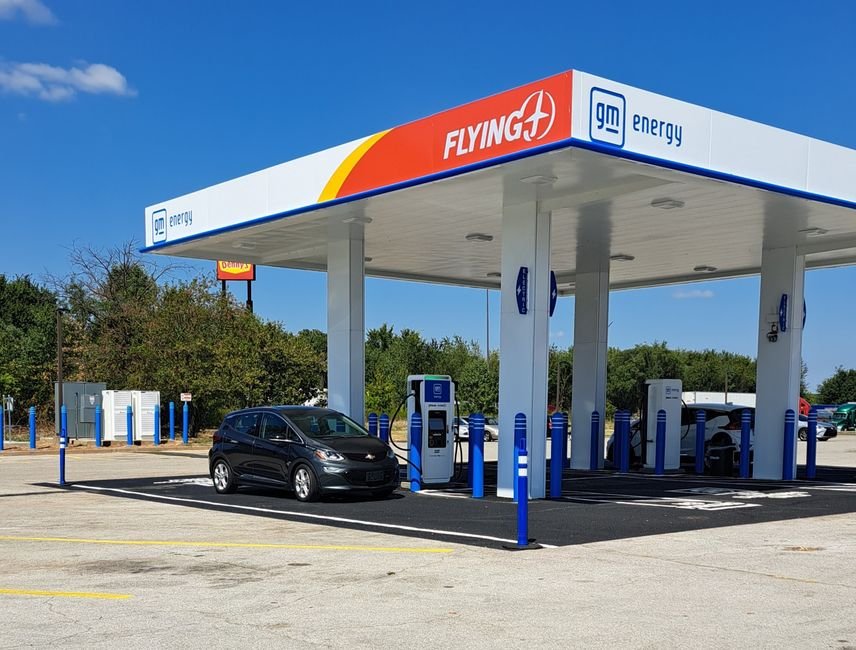
GM is only going to build about 35,000 copies of the reborn Chevy Bolt. The original plan called for 150,000. That’s the Chevy Bolt production cut making headlines this week, and it changes the math for anyone shopping one of America’s cheapest EVs.
Internal UAW documents obtained by Reuters show GM’s Fairfax Assembly plant in Kansas is tracking toward a total run of just 35,000 Bolts. Production is set to shut down in the first quarter of 2027. That’s a 75% cut from the original target. It comes less than a year after the Bolt made its comeback.
Why did GM slash Chevy Bolt production?
GM cut Bolt production because demand collapsed after the federal EV tax credit disappeared. The smaller EV segment never recovered its footing either. Sales simply didn’t justify the original volume, so GM scaled output down to match actual orders instead of eating the cost of unsold inventory.
The numbers back that up. GM sold just 4,224 new Bolts in the first half of 2026. Kelley Blue Book pegs monthly sales around 1,400 to 1,600 units. That pace puts the Bolt on track for roughly 28,800 total sales over its planned run. Even a 35,000-unit production target may be generous relative to actual buyer interest. The Detroit News reports the pullback reflects several policy shifts at once. The $7,500 federal EV credit is gone. CAFE fuel economy rules have also loosened, easing pressure on automakers to chase high EV volumes just to hit emissions targets.
This isn’t an isolated story, either. GM, Ford, and Stellantis have all booked billions in EV-related writedowns since mid-2025. All three are retooling plants back toward gas-powered models. Fairfax itself will pivot to building the gas Chevy Equinox and Buick Envision once Bolt production winds down.
What exactly are you getting with the new Bolt?
The revived Bolt is a genuinely improved car, not just a nostalgia play. It starts under $30,000. It runs a 65-kWh LFP battery good for an EPA-rated 255 miles. It charges on native NACS hardware at up to 150 kW, a big jump from the old model’s charging speeds.
- Starting price: under $29,000
- Range: 255 miles EPA-rated
- Power: 210 horsepower
- Charging: native NACS port, 10–80% in about 26 minutes
- Battery: 65-kWh LFP, shared with the Chevy Equinox EV
It shares its motor and battery with the Chevy Equinox EV platform. That’s partly why it’s such a capable budget EV despite its small footprint and price tag.
Should you buy a Chevy Bolt before production ends?
Yes, if you want one. Buy soon. The production cut means dealer lots will thin out faster than expected, and allocation to individual stores will shrink. With total output capped near 35,000 units nationwide, popular trims and colors could sell out regionally well before the official end-of-production date in early 2027.
That said, don’t buy out of panic. The Bolt isn’t disappearing from the used market the way a recalled model might. It’s a limited production run winding down on schedule, similar to what we saw with the Volvo EX40’s discontinuation. If you’re comfortable with GM no longer actively marketing the nameplate afterward, the car itself remains a smart, affordable EV choice today.
What does this mean for resale value?
Limited-production vehicles can go two ways on resale. Some gain collector appeal and hold value. Others depreciate faster once parts and support dry up. Given GM is keeping the Equinox EV in long-term production and sharing components with the Bolt, parts availability shouldn’t be a major worry for years to come.
Is this a sign GM is giving up on affordable EVs?
Not entirely, but it’s a clear signal. GM is prioritizing profitable gas trucks and SUVs over low-margin small EVs right now. GM CEO Mary Barra has publicly called EVs the industry’s “end game.” She’s also acknowledged that tax credit expiration, charging infrastructure gaps, and shifting regulations have slowed adoption in the near term.
If you’re trying to decide whether an EV makes sense for your budget at all, our full decision framework on buying an EV in 2026 walks through the tradeoffs in more detail than any single-model story can.
How does the Bolt compare to other cheap EVs right now?
| Model | Starting Price | EPA Range | Status |
|---|---|---|---|
| Chevy Bolt (2027) | ~$29,000 | 255 mi | Production ending Q1 2027 |
| Nissan Leaf | ~$29,000 | 212–259 mi (trim-dependent) | Ongoing production |
| Chevy Equinox EV | ~$35,100 | 315 mi | Ongoing production |
At this price point, the Bolt and the Leaf are the two most obvious cross-shops. We broke that matchup down in detail in our Bolt vs. Leaf comparison. If you’re weighing a used option instead, check our used EV buying guide before you sign anything. Timing and incentive stacking still matter a lot on affordable EVs.
FAQ
When does Chevy Bolt production actually end?
GM expects Fairfax Assembly in Kansas to stop building the Bolt in the first quarter of 2027. The plant then shifts to gas-powered Equinox and Buick Envision production.
Is the new Bolt the same as the old one?
No. The revived Bolt uses a new 65-kWh LFP battery and native NACS charging. It also shares its platform with the Chevy Equinox EV, making it meaningfully more capable than the original 2016–2023 Bolt.
Will Bolt prices go up because of the production cut?
It’s possible, especially on popular trims as dealer inventory tightens. GM hasn’t announced pricing changes. But shrinking supply combined with steady demand typically pushes transaction prices higher toward the end of a model’s run.
Can I still get tax incentives on a new Bolt?
The federal $7,500 EV tax credit ended in September 2025 and no longer applies. Some state-level EV rebate programs may still apply depending on where you live. Check your state’s current rules before you buy.