
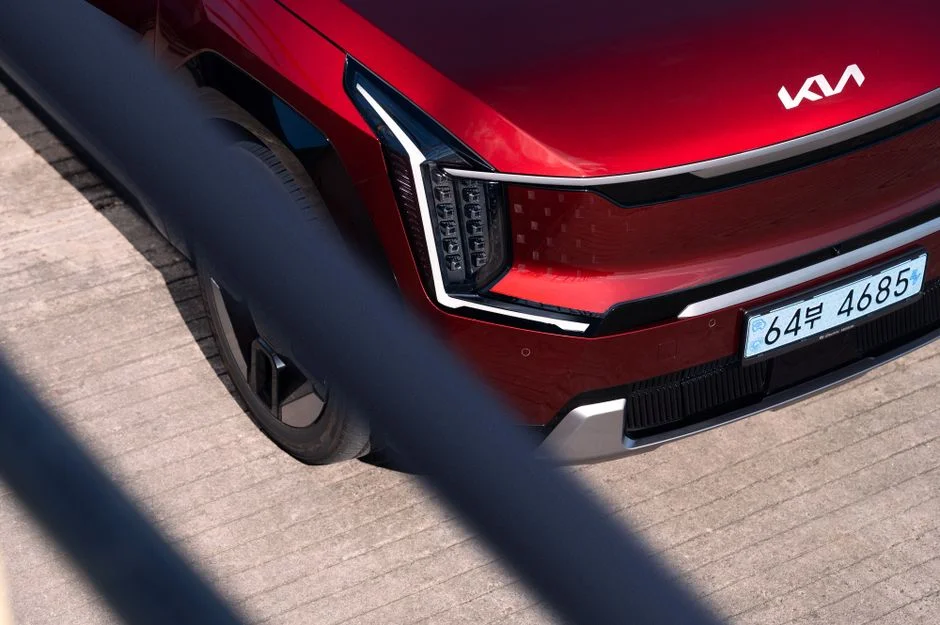
Seven recalls in about two years is a lot for any vehicle. The Kia EV9’s list keeps growing, too. If you’re shopping used and wondering whether Kia EV9 recalls are a dealbreaker or just new-model growing pains, here’s the honest answer: it depends entirely on which recall you’re talking about, and whether it’s already been fixed.
The EV9 launched for 2024 as Kia’s first three-row electric SUV. It’s been a genuine hit — roomy, quick-charging, and priced well below rivals like the Rivian R1S. But rapid growth has come with rapid recall activity. The newest one, covering an airbag sensor, is the most concerning yet.
What Kia EV9 recalls have actually happened so far?
Since the EV9 launched, Kia has issued seven separate recall campaigns. They touch everything from missing seat bolts to a fire-risk battery defect. Most affect a specific slice of production, not every EV9 ever built. So your first move is always a VIN check.
| Recall (Kia Code) | Model Years | Issue | Fix |
|---|---|---|---|
| SC329 | 2024-2025 | Missing 2nd/3rd row seat mounting bolts | Bolt inspection and install |
| NHTSA 24V757 | 2024 | Instrument cluster software could go blank | OTA software update |
| SC337 | 2025 | Rear drive motor shaft weld defect, loss of power | Replace rear gear drive unit |
| — | 2024 | Headliner impact protection non-compliance | Dealer inspection/replacement |
| SC361 | 2025-2026 | Instrument panel display software error | OTA or dealer software update |
| SC375 | 2024 (plus EV6) | Misaligned battery electrodes, fire risk | Replace high-voltage battery assembly |
| SC379 | 2025-2026 | Airbag sensor may not deactivate for a child seat | Inspect/replace ODS mat and tube |
The seat bolt recall alone covered more than 23,000 EV9 SUVs. Kia traced the defect to a single assembly-line worker at its Korean plant. The battery fire recall is the scariest on paper. It tells owners to park away from structures and cap charging at 80% until repaired.
The newest campaign was filed with NHTSA in late August 2026. It covers 21,290 EV9s over an occupant detection system tube that can get pinched. That could let the front airbag deploy on a child in a car seat.
How serious is the airbag recall specifically?
It sounds alarming, but Kia estimates only about 6% of the recalled vehicles actually have the defect. The company will inspect every unit regardless. The fix is free and doesn’t require replacing major components. It’s just a matter of correcting how a small tube is routed.
Notification letters go out starting October 20, 2026. The repair itself is quick once you’re in the service bay. Kia’s campaign number is SC379. The NHTSA campaign number is 26V545 if you want to look it up yourself.
Should you still buy a used Kia EV9?
Yes, but only if you confirm every open recall has already been closed before you sign anything. A used EV9 with a clean recall history and documented fixes is a genuinely good buy. One with unresolved campaigns is a walk-away, or at least a serious price-negotiation opportunity.
Recall repairs are always free, even for a third or fourth owner. So an open recall isn’t really a cost issue. It’s a hassle, and in the battery case, a real safety issue until it’s addressed. Before you buy, run the VIN through NHTSA’s lookup tool. Ask the seller for repair orders proving the work was done. Our used EV buying guide walks through exactly what documentation to request.
Is the EV9 less reliable than other new EVs?
Not dramatically. A flurry of early recalls is normal for a brand-new nameplate. Kia has been fast to issue them rather than sit on known defects. Compare it with the Chevy Silverado EV’s nine recalls, or Ford’s Mustang Mach-E, which has already racked up four recalls in a single year. The EV9’s pace looks less like an outlier and more like the current norm for fast-moving EV programs.
Where the EV9 does stand out is depreciation, and that actually works in a used buyer’s favor. A 2024 model now averages in the low-to-mid $40,000s against an original sticker as high as $73,900. That’s a steep drop, but it has nothing to do with the recalls. It’s mostly typical first-year EV depreciation. The 2026 EV9 starts at $54,900 new. So a well-priced used 2024 or 2025 with recalls closed can save you real money, while still getting nearly the same tech and range.
What should you check before signing?
Beyond the recall list, verify battery health. Confirm the seat bolt and gear drive unit recalls show as “completed” in the vehicle history. Get a pre-purchase inspection from an independent EV-savvy shop. If the seller can’t produce repair orders for the open items, negotiate the price down or move to the next listing. There’s no shortage of EV9s on the market right now.
FAQ
Are all Kia EV9 recalls fixed for free?
Yes. Federal law requires manufacturers to perform recall repairs at no charge, regardless of whether you’re the original owner or bought the vehicle used.
Which EV9 recall is the most serious?
The high-voltage battery recall for misaligned electrodes is the most serious. It carries a fire risk while parked or driving, and Kia told owners to limit charging to 80% until repaired.
How do I check if a used EV9 has open recalls?
Enter the vehicle’s 17-digit VIN into NHTSA’s free recall lookup tool at nhtsa.gov. You can also call any Kia dealer with the VIN and ask them to run a check.
Does a recall history hurt resale value?
Not much, once the repairs are documented and completed. Buyers and appraisal tools like KBB care far more about mileage, battery health, and accident history than a resolved recall.