
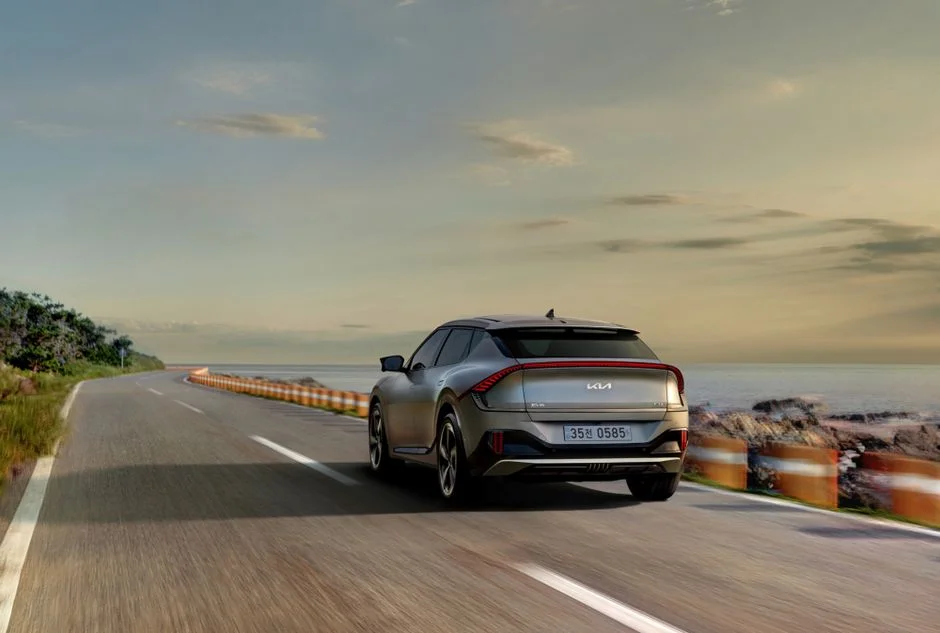
The base 2027 Kia EV3 starts at $29,890. The base 2027 Kia EV6 starts at $37,900. That’s a gap of exactly $8,010, and it’s the headline number everyone’s citing right now.
But the real question isn’t the sticker price difference. It’s whether the bigger, faster-charging EV6 actually delivers $8,000 more car. I dug into both lineups trim by trim, and my take is simple: most buyers should save the money and buy the EV3. There’s a real case for the EV6 if you road-trip often or need more interior room. Let’s break down where each one wins.
What do you actually get for the extra $8,000?
You’re paying mostly for size, charging speed, and motor output. You’re not paying for a dramatically better EV. The EV6 is a larger, 800-volt crossover built for faster highway charging. The EV3 is a smaller, 400-volt SUV tuned for efficient daily driving and a lower price.
Kia’s electrical architecture is the biggest technical divide between these two. The EV6’s 800V system charges from 10% to 80% in about 18 minutes. The EV3’s 400V setup takes roughly 30 minutes for the same charge window. If you regularly drive long distances and rely on DC fast chargers, that gap adds up fast on a road trip.
The EV6 also carries over its familiar dual-motor AWD option. It has a wider trim spread, topping out at the GT-Line AWD for $53,000. The EV3 is an all-new model that effectively replaces the Niro EV. If you’ve been eyeing that outgoing model, it’s worth reading how the Niro EV’s discounts stack up against waiting for the EV3.
Does the EV3 actually go farther than the EV6?
Yes, in top trims. The EV3 Wind and Land FWD models both hit an EPA-estimated 321 miles. That slightly beats the EV6’s best rating of 319 miles on the Light Long Range RWD trim, despite costing thousands less.
That’s a genuinely surprising result. Kia managed to squeeze a competitive 81.4-kWh battery into the smaller EV3 body. The front-wheel-drive configuration keeps weight and drag down enough to match the larger EV6’s range numbers. Step up to all-wheel drive on either model, though, and range drops on both. The EV3 AWD trims land around 280 miles. The EV6 AWD trims range from 270 to 295 miles depending on trim.
2027 Kia EV6 vs EV3: trim-by-trim comparison
Here’s how the two lineups stack up side by side, using Kia’s official pricing for the 2027 model year.
| Trim | Price (MSRP) | Battery | EPA Range |
|---|---|---|---|
| EV3 Light FWD | $29,890 | 58.3 kWh | 221 mi |
| EV3 Wind FWD | $34,990 | 81.4 kWh | 321 mi |
| EV3 GT AWD | $45,890 | 81.4 kWh | 280 mi |
| EV6 Light SR RWD | $37,900 | 63 kWh | 237 mi |
| EV6 Light LR RWD | $41,200 | 84 kWh | 319 mi |
| EV6 GT-Line AWD | $53,000 | 84 kWh | 270 mi |
Notice the overlap. An EV3 Wind FWD at $34,990 nearly matches the range of an EV6 Light LR RWD at $41,200. That’s about $6,200 less, for nearly the same range. It’s the core value argument for the smaller SUV.
Is the EV6 worth it if you don’t road-trip much?
Probably not. If most of your driving is commuting, errands, and the occasional weekend trip, the EV3’s smaller battery and slower charging rarely matter in practice. You’ll pocket thousands of dollars instead.
The EV6’s real advantage shows up on the highway. Kia fitted the EV6 with an 800V architecture specifically for faster charging at high-power DC stations. That matters most if you’re regularly driving 300+ miles in a day, or living somewhere with sparse charging infrastructure. For everyone else, that speed advantage sits mostly unused in the driveway.
Still deciding whether an EV makes sense for your budget and driving habits at all? Our full EV buying decision framework walks through the math in more detail than any single model comparison can.
Does the EV6’s rough sales year change the calculus?
It’s worth factoring in. The EV6 has had a tougher sales stretch recently. That context matters when you’re choosing between a proven but aging platform and a brand-new one. We covered the sales slide and what it means for buyers in our breakdown of the EV6’s 57% sales drop.
Soft sales don’t necessarily mean a bad car. Kia actually cut EV6 pricing earlier this year before freezing it for 2027. But it does suggest the market is gravitating toward smaller, cheaper EVs like the EV3. That shift also tends to affect resale value down the road. It’s worth checking against our EV resale value rankings before you sign anything.
So which one should you actually buy?
Buy the EV3 unless you specifically need the EV6’s extra size, power, or charging speed. For most daily drivers, the EV3 Wind FWD at $34,990 is the smarter buy. It nearly matches the EV6’s best range for thousands less, and it’s the newer platform with Kia’s latest tech.
Spend the extra $8,000 on the EV6 only if you need the larger cargo area. It’s also worth it if you want quicker highway charging for frequent road trips, or prefer the EV6’s more established dual-motor AWD lineup. Both are solid vehicles — this isn’t a case of one being a bad car. It’s a case of most buyers overpaying for capability they won’t use.
FAQ
Does the 2027 Kia EV3 qualify for any EV tax credits?
Federal EV tax credit availability has changed significantly in 2026. Check current eligibility before assuming either model qualifies. Some states still offer their own rebates on top of or instead of federal incentives, so it’s worth checking local programs in your area.
Is the EV3 just a smaller version of the EV6?
Not exactly. The EV3 is built on a different, less expensive 400-volt platform than the EV6’s 800-volt architecture. It replaces the discontinued Niro EV as Kia’s entry-level electric SUV, rather than serving as a shrunken EV6.
Which one has more cargo space?
The EV6 is the larger vehicle overall. It offers more cargo and passenger room, which matters if you regularly haul gear, carry rear passengers comfortably, or need extra trunk space for road trips.
Should I wait for discounts on either model?
The EV6 carries over unchanged for 2027 with pricing frozen from last year, so dealer discounts are more likely to show up on it. The EV3 just launched and is still in high demand, so don’t expect deals there yet.