
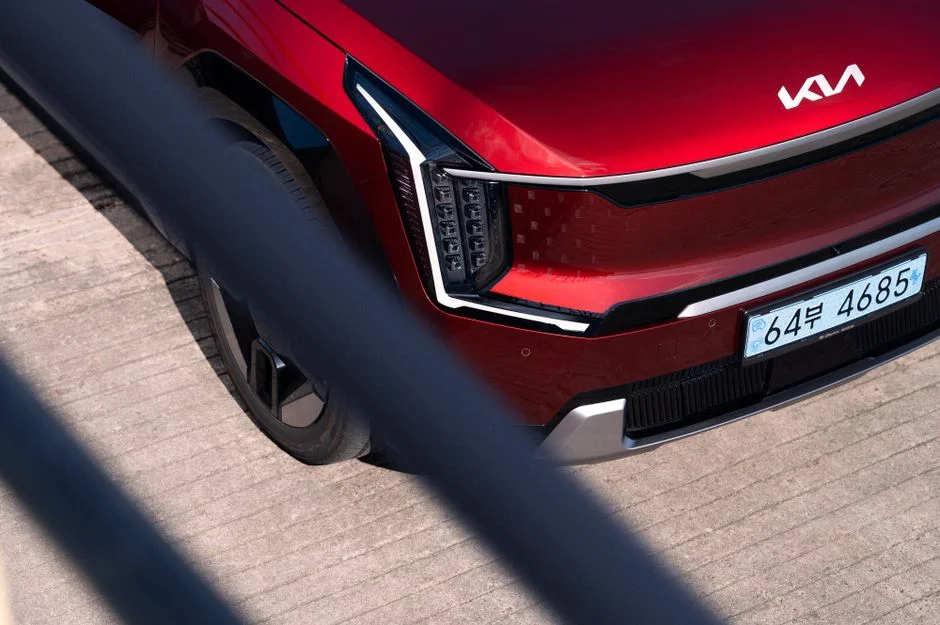
Yes, you can still buy a Kia EV9 in 2026. But not without doing your homework first. Kia just hit its three-row electric SUV with two separate recalls in the span of a few weeks. One covers a battery fire risk. The other involves a front passenger airbag defect. Neither one should scare you off outright, but both deserve a close look before you sign anything.
What are the two new Kia EV9 recalls about?
The first covers a high-voltage battery defect that can lead to a fire. The second involves an airbag sensor that might not deactivate properly when a child sits in the front seat. Both stem from manufacturing issues, not a design flaw in the EV9 itself.
The battery recall is filed under Kia’s internal code SC375. It covers certain 2022-2024 EV6 and 2024 EV9 models. Kia says the high voltage battery cells may contain misaligned electrodes. That can lead to a fire while parked or driving. Owners are advised to park outside and away from structures. Kia also recommends limiting charge to 80% until the repair is done. Dealers will replace the entire high-voltage battery system assembly at no cost.
The second recall, campaign SC379, is newer. It covers 21,290 units of the 2025 and 2026 EV9 built at Kia’s Georgia plant. It stems from a supplier routing error in the Occupant Detection System. The tube feeding the sensor mat can get pinched after the front seat is adjusted repeatedly. Kia estimates only 6% of the affected EV9s actually have the defect. Still, every affected vehicle gets inspected.
| Recall | Model Years | Vehicles Affected | Issue | Fix |
|---|---|---|---|---|
| SC375 (battery) | 2022-2024 EV6, 2024 EV9 | Not yet finalized | Misaligned battery electrodes, fire risk | Full battery system replacement |
| SC379 (airbag) | 2025-2026 EV9 | 21,290 | ODS tube pinched, airbag may not deactivate for child | Inspect/replace ODS mat and tube |
Is the battery fire recall as scary as it sounds?
It’s serious, but manageable if you follow the guidance. Kia is telling owners to park outside and cap charging at 80% until a dealer swaps the entire battery pack. That’s about as thorough a fix as a recall gets.
This isn’t Kia’s first brush with high-voltage battery trouble. The related EV6 has dealt with similar high-voltage issues before. Kia is replacing the whole battery assembly rather than patching it with software. That suggests the company is treating this one seriously, not trying to paper over it.
Should parents worry about the airbag recall?
If you regularly put a child or a car seat in the front passenger seat of an EV9, yes. Get this one addressed as soon as the fix is available. Kia says the pinched tube can trick the sensor. That can leave the airbag active when it should switch off, raising injury risk in a crash.
The good news: this is a straightforward mechanical fix, not a redesign. Dealers will inspect the ODS mat and bladder tube. They’ll replace it and ensure proper routing as necessary, all free of charge. Owner notification letters go out starting October 20, 2026. VINs become searchable on NHTSA’s site on September 4.
Is this normal for a newer model, or is the EV9 unusually recall-prone?
It’s more normal than you’d think for a vehicle only in its third model year. The EV9 has racked up a handful of campaigns since its 2024 launch. There’s been a seat-mounting bolt recall, a blank-instrument-cluster software issue, a rear gear drive unit problem, and now these two. Most were caught early and fixed for free.
New EV platforms tend to attract more recalls in their first few years. There’s simply more untested hardware and software in play. We’ve seen the same pattern with the Silverado EV’s nine recalls and the Mustang Mach-E’s four recalls in a year. It’s frustrating, but it doesn’t automatically mean the vehicle is a lemon. It usually means the automaker is catching problems and fixing them under warranty rather than letting them slide.
Should you still buy a Kia EV9 in 2026?
I’d still buy one. But I’d wait until the recall repairs are actually completed before taking delivery. If buying used, I’d confirm both fixes on the VIN report first. The EV9 remains one of the few affordable three-row electric SUVs on the market. It starts in the mid-$50,000s and earns solid marks for space, charging speed, and standard safety tech.
Recall repairs are free by law. Kia is clearly proactive about issuing them rather than sitting on known defects. If you’re shopping used, run the VIN through NHTSA’s recall lookup tool before you buy. Ask the dealer to confirm both the SC375 and SC379 repairs are done. For a broader look at how to vet any secondhand electric vehicle, check out our used EV buying guide before you sign anything.
Still weighing whether an EV makes sense for your household at all? Our decision framework for buying an EV in 2026 walks through the bigger-picture math. And our EV total cost of ownership breakdown can help you figure out what an EV9 will really cost you over five years, recalls and all.
FAQ
How do I check if my Kia EV9 is affected by these recalls?
Enter your 17-character VIN into NHTSA’s official recall lookup tool or Kia’s owner portal. VINs for the battery recall became searchable in July 2026. Airbag recall VINs go live September 4, 2026.
Do I have to pay for the recall repairs?
No. Both repairs are free of charge, whether you’re the original owner or bought the EV9 used. Dealers handle the parts and labor at no cost under federal recall law.
Can I keep driving my EV9 while waiting for the repair?
For the battery recall, Kia advises parking outside and away from structures. Also cap your charge at 80% in the meantime. For the airbag recall, just avoid putting a child or car seat in the front passenger seat until the fix is done.
Does this affect resale value?
Not meaningfully once the repairs are completed and documented. Buyers should just confirm the recall history on the VIN report. That’s the same step you’d take with any other used EV before purchase.