
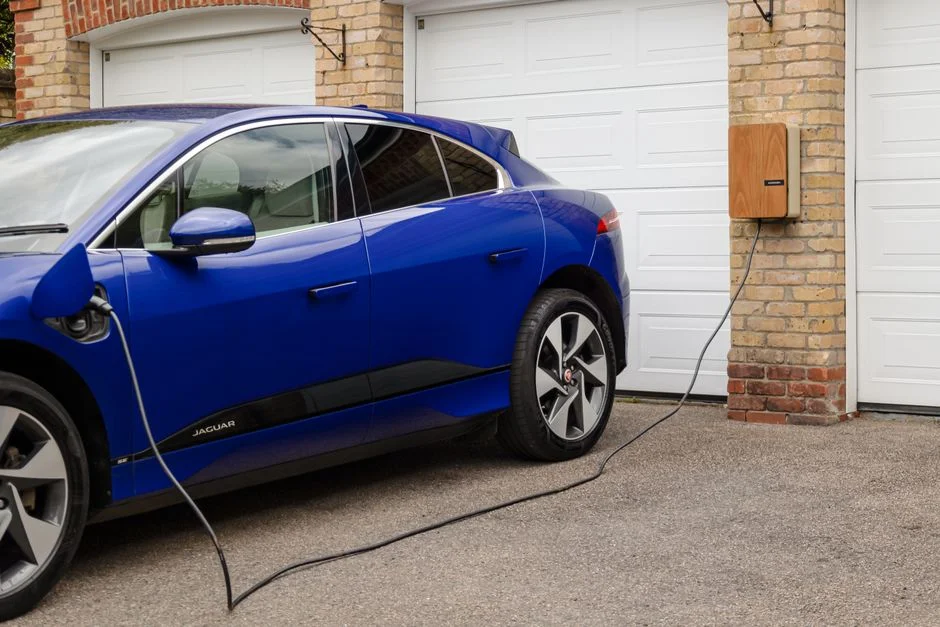
Home EV charger costs really did just go up. It’s not your imagination. Copper tariffs have pushed wiring and panel prices higher. On top of that, the federal tax credit that used to knock up to $1,000 off your installation quietly expired this summer. So is it still worth putting one in your garage? Yes, for most EV owners. But the math looks different than it did a year ago.
How much does a home EV charger cost right now?
A straightforward Level 2 home charger installation typically runs $749 to $2,500 in 2026. Most homeowners land around $1,700 once labor, permits, and hardware are added up. If your panel needs an upgrade, expect the total to climb into the $3,000 to $6,000+ range.
The spread comes down to two things. First, how much spare capacity your electrical panel has. Second, how far the charger sits from that panel. A garage right next to your panel with room to spare is a quick, cheap job. An older home with a maxed-out 100-amp panel is a different story entirely, especially if the charger goes on the far side of the house.
| Scenario | Typical cost | What’s involved |
|---|---|---|
| Simple install | $500–$1,200 | Short wire run, panel has capacity, no permit complications |
| Standard install | $1,200–$2,500 | Longer wire run, standard permitting, no panel upgrade |
| Panel upgrade required | $3,000–$6,000+ | 100A to 200A service upgrade, new meter base, extra permits |
Why did home EV charger costs go up this year?
Two forces collided at once. Material costs rose because of copper tariffs. At the same time, a federal incentive that used to soften the blow disappeared. Together, they’ve made a job that cost $1,200 out of pocket last year feel noticeably pricier today.
On the materials side, a Section 232 tariff structure took effect in spring 2026. It placed tariffs as high as 50% on primary copper products. Derivative electrical equipment like panel boards and transformers got caught in the mix too. Copper itself traded around $6.50 to $6.85 a pound through late summer, up roughly 45% year over year. Tight global supply and tariff-driven stockpiling both played a role. Electricians are passing that straight through to customers, since copper wire and panel components are the backbone of every EV charger install.
On the incentive side, the federal Section 30C tax credit expired on June 30, 2026, under the One Big Beautiful Bill Act. It used to cover 30% of installation costs, up to $1,000, in eligible census tracts. Anyone installing after that date gets zero federal credit toward the job. Full stop. That’s a real loss layered right on top of higher material costs.
Is installing a home EV charger still worth it?
Yes, if you plan to keep your EV and your home for more than a couple of years. Home charging still beats public fast-charging on cost per mile by a wide margin. That gap matters far more over time than a one-time installation bill. It matters even more if you drive a lot of daily miles.
Public DC fast charging typically costs two to three times what you’d pay charging overnight at home. That’s based on a normal residential electricity rate. If you’re doing 12,000 to 15,000 miles a year, that difference adds up fast. It’s real money every month, not just a one-time savings. For a full breakdown of what EVs actually cost to own year over year, our EV total cost of ownership guide walks through the numbers in detail.
There’s also a resale angle worth mentioning. A working Level 2 charger can add real value when you sell. That’s especially true in EV-heavy markets like California or the Pacific Northwest, where buyers increasingly expect it as a baseline feature rather than a bonus.
What if you missed the tax credit deadline?
You’re not entirely out of luck, but you do need to look locally instead of federally. Many utilities and states still offer their own EV charger rebates, typically in the $300 to $700 range. Those programs didn’t disappear along with the federal credit. Check your utility’s website directly, since these programs change often and aren’t always well advertised.
State-level EV incentives overall have gotten messier this year. If you’re weighing a purchase alongside the charger, it’s worth checking what’s changed where you live. Colorado, for instance, saw its EV tax credit shrink to $750. Meanwhile, Texas incentives disappeared entirely. If you haven’t settled on whether an EV even makes sense for your situation this year, our decision framework for buying an EV in 2026 is a good place to start before you spend a dime on a charger.
Should you wait for prices to come back down?
Don’t count on it. Copper supply constraints and tariff policy both look sticky through at least 2027. There’s no indication the federal charger credit is coming back anytime soon. If anything, prices are more likely to drift higher than lower over the next year or two.
If you already own an EV or have one on order, get quotes now. Don’t wait for a better deal that probably isn’t coming. Get two or three electrician quotes. Ask specifically whether a panel upgrade is needed before you commit. Check your local utility’s rebate page before you sign anything.
FAQ
Do I need a permit to install a home EV charger?
In most areas, yes. Permit fees typically run $50 to $300 depending on your city. Skipping this step can cause problems later with insurance claims or when you sell the home.
Is Level 1 charging enough instead of paying for Level 2 installation?
For plug-in hybrids or drivers doing under 30 miles a day, a standard household outlet and Level 1 charging can be enough. Most daily EV drivers find Level 1 too slow, though. Many end up wanting Level 2 within the first year.
Can I still get any tax credit for installing a charger in 2026?
The federal 30C credit expired June 30, 2026. Anything installed after that date gets no federal credit. State and utility rebates in the $300-$700 range still exist in many areas, so check locally.
Does a home charger increase my house’s resale value?
Studies suggest a working home EV charger can add somewhere between $1,000 and $5,000 to resale value. The biggest bump shows up in states where EV ownership is already common.