
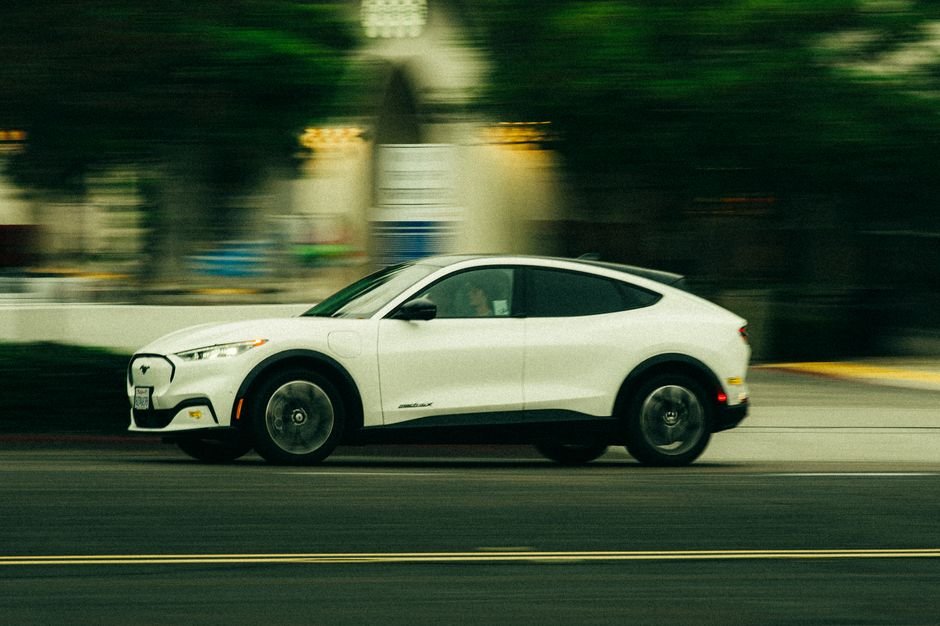
A brand-new Mustang Mach-E battery recall just landed. It’s a lot narrower than the headlines make it sound. Ford is only calling back 86 vehicles this time. But if you’re shopping the used market, this is a good moment to understand what’s actually going on with Mach-E battery issues. This isn’t the first rodeo.
The short version: there are two separate battery-related recall stories on the Mach-E. They matter differently depending on which used model year you’re eyeing. Let’s break down both.
What does the new Mustang Mach-E battery recall actually cover?
Ford’s latest recall affects just 86 examples of the 2023-2025 Mustang Mach-E. It only applies to cars with lithium iron phosphate (LFP) batteries that previously had their Battery Energy Control Module replaced. It’s tiny, specific, and easy to check by VIN.
The problem stems from a software error in replacement modules. Ford found that these replacement modules incorrectly set the battery’s State of Health to 100 percent, regardless of the battery’s actual condition. That false reading can lead to unexpected power limitation. Ford says it can also increase lithium plating in the cells. That creates a potential thermal venting condition, meaning fire risk in a worst-case scenario.
The good news is the fix is simple. Dealers update the BECM software, free of charge to Ford Mustang Mach-E owners. No parts, no long shop visit. If you’re looking at a 2023-2025 Mach-E and the seller mentions a prior battery module replacement, that’s your cue. Ask specifically about this campaign, filed as NHTSA number 26V582.
What about the older Mach-E battery contactor recall?
This is the one most used-Mach-E shoppers should actually worry about. It’s much bigger and covers more cars on used lots right now. Ford originally recalled roughly 48,924 model year 2021-2022 Mach-E vehicles in June 2022. The cause: DC fast charging and repeated wide open pedal events could cause the high voltage battery main contactors to overheat.
Overheating contactors can weld shut or fail to close. Either failure mode can mean a sudden loss of drive power while you’re on the road. Ford’s fix evolved over time. The first attempt was software-only, monitoring contactor temperature and resistance. But NHTSA later opened an investigation after owners reported repeat failures even after the software fix. Ford ended up replacing the high-voltage battery junction box hardware entirely on affected cars. That was under recall number 23S56, covering about 34,762 extended-range and GT vehicles built between May 2020 and May 2022. A small expansion of 239 more vehicles followed in 2025.
Mach-E battery recalls at a glance
| Recall | Model Years | Vehicles Affected | Issue | Fix |
|---|---|---|---|---|
| 22V-412 / 23S56 | 2021-2022 (ER/GT) | ~34,762-48,924 | Battery contactor overheating | Software + hardware junction box replacement |
| 25V441 expansion | 2022 (ER) | 239 | Same contactor issue, missed cutoff date | Junction box replacement |
| 26V582 / 26S68 | 2023-2025 (LFP) | 86 | BECM falsely shows 100% state of health | Software update |
Should this stop you from buying a used Mach-E?
No, but it should change how you shop. Both recalls have free, established fixes. Ford has been through this cycle enough times that dealers know exactly what to do. The bigger risk is buying a car where the recall was never actually completed.
Before you buy, run the VIN through NHTSA’s recall lookup tool. Ask the seller or dealer for proof the work was done, not just a promise that it was. If you’re buying from a private seller and the contactor recall hasn’t been addressed, don’t be afraid to ask. Ford can complete it before you close the deal, or you can price it into your offer. We’ve covered why a Ford’s recall history isn’t automatically a reason to walk away in our piece on 2026 Ford recalls. The same logic applies here.
If you’re worried about battery health more broadly, not just recalls, it’s worth checking how. The Mach-E’s pack tends to age compared to rivals before you commit real money. Our used EV battery health breakdown is a good next stop. For a full pre-purchase checklist, see our full used EV buying guide before you sign anything.
My honest take: I wouldn’t avoid a used Mach-E because of either recall. The contactor fix has years of real-world proof behind it now. And the new 86-car software issue is almost comically narrow. What I would avoid is a Mach-E with an open recall and a seller who gets vague when you ask about it.
FAQ
How do I check if a specific Mach-E has an open recall?
Go to NHTSA’s recall lookup site and enter the 17-character VIN. It pulls every open safety recall tied to that exact car, including both battery campaigns.
Does the recall cost anything to fix?
No. Recall repairs are free at any Ford dealer regardless of who currently owns the car, even if you’re the third owner.
Which Mach-E model years are most affected by battery issues?
The bigger contactor recall targets 2021-2022 extended-range and GT models. These were built between May 2020 and May 2022. The newer software recall only touches 2023-2025 LFP models that had a prior BECM replacement.
Will a completed recall show up on a vehicle history report?
Sometimes, but not always reliably. The safest move is checking the VIN directly through NHTSA. Also ask the dealer for a service record showing the recall was closed out.