
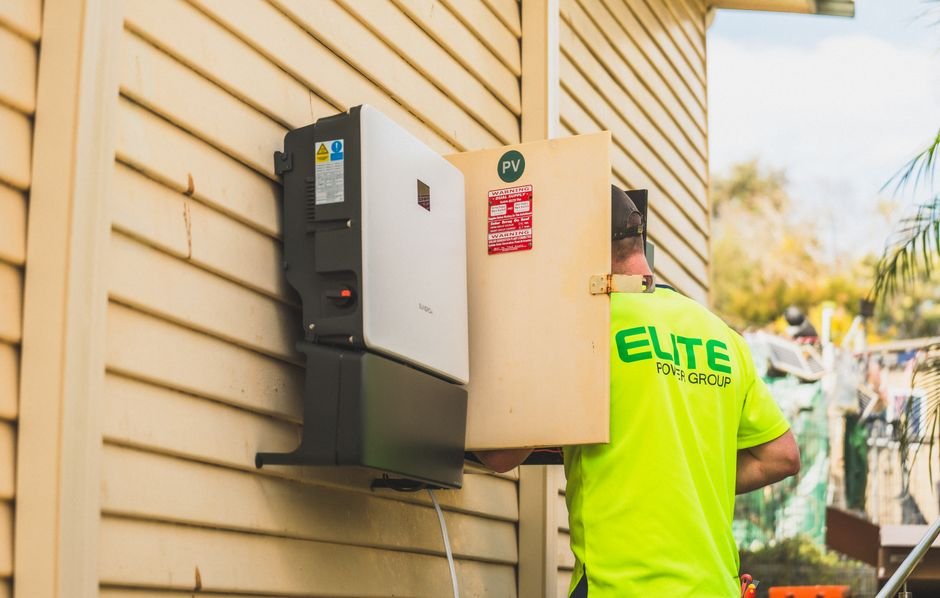
The federal EV charger tax credit is gone. Unless Congress changes its mind, you’re paying full price for that garage installation now. Section 30C used to hand homeowners back 30% of their charger and installation costs, up to $1,000. It expired for any equipment placed in service after June 30, 2026. If you’re buying an EV now and planning to charge at home, that $1,000 you were counting on simply isn’t there anymore.
What was the EV charger tax credit, and why did it disappear?
Section 30C covered 30% of the combined cost of a home EV charger and its installation. It was capped at $1,000 for homeowners in eligible census tracts. The One Big Beautiful Bill Act, signed in mid-2025, moved up its expiration date. It cut the credit off completely for residential installs after June 30, 2026.
It’s not an isolated cut, either. The same law also killed the $7,500 federal credit for new EVs. It ended the used EV credit too, for anything acquired after September 30, 2025. The charger credit was one of the last federal clean-energy incentives left for homeowners. Now it’s off the table as well.
How much does EV charger installation actually cost in 2026?
Without the credit, expect to pay somewhere between $800 and $3,000 for a straightforward Level 2 install. If your electrical panel needs an upgrade, that can climb to $3,000 to $6,000 or more. The exact number depends almost entirely on your home’s existing wiring. It has little to do with the charger brand you pick.
Here’s a rough breakdown of what drives that spread:
| Scenario | Typical Cost | Notes |
|---|---|---|
| Simple install, panel has capacity | $800 – $1,800 | Short wire run, charger near main panel |
| Standard hardwired Level 2 | $1,200 – $2,700 | Includes charger unit, labor, permit |
| Panel upgrade required | $3,000 – $6,000+ | Older homes, long wire runs, added 240V loads |
The charger hardware itself is usually the cheap part. Entry-level 32-amp units run $200 to $350. Premium options like a Tesla Wall Connector land closer to $600 to $900. Labor and electrical work make up the rest. Licensed electricians typically charge $75 to $200 an hour. Most straightforward jobs take two to six hours.
We covered the broader cost jump earlier this year in Home EV Charger Costs Just Jumped—Still Worth Installing? Losing the federal credit only widens the gap between what buyers expected to pay and what they’re actually writing checks for now.
Are there other rebates to fill the gap?
Yes. State and utility rebates are still very much alive, even though the federal EV charger tax credit is gone. Many utilities offer $100 to $700 toward a Level 2 charger. A handful of states or municipal utilities go as high as $1,000 or more for qualifying households.
These programs vary a lot by zip code. Some, like certain Connecticut and California utility rebates, are income-restricted or tied to specific service territories. It pays to check your utility’s website directly before you assume you’re out of luck. If you’re also tracking state-level EV purchase incentives, our breakdowns of the Colorado EV tax credit and the Illinois EV rebate show how much these state programs can shift depending on where you live.
Is a home charger still worth installing without the tax credit?
Yes. I’d still install one, and I wouldn’t let the missing $1,000 change that decision. A Level 2 charger cuts charging time from a full day down to a few hours overnight. That convenience matters more than a one-time rebate over the years you’ll own the car.
Think about the math over time, not just the install invoice. Charging at home off-peak still beats public fast-charging or gas on a per-mile basis for most drivers. That gap compounds year after year. If you want the full picture on whether an EV pencils out for your situation, our EV total cost of ownership guide walks through charging, maintenance, and depreciation side by side with gas cars.
Skipping the home charger might save you the upfront installation cost. But it usually costs more in time and per-charge fees over a few years of ownership. If you’re still deciding whether an EV makes sense for your household at all, our EV decision framework is a good starting point before you spend a dime on charging equipment.
FAQ
Can I still get any tax credit for a home EV charger?
Not from the federal government, for anything installed after June 30, 2026. Check your state energy office and local utility. Several still offer their own rebates worth a few hundred dollars.
Do I need a Level 2 charger, or can I just use a regular outlet?
A standard household outlet, or Level 1, only adds about 3 to 5 miles of range per hour. That struggles to keep up with a normal commute. A Level 2 charger adds 20 to 30 miles per hour. It’s worth the upfront cost for most daily drivers.
What’s the single biggest factor in installation cost?
Whether your electrical panel has enough spare capacity. If it does, you’re likely looking at $800 to $1,800 total. If it needs an upgrade, that number can triple.
Should I rush to install before losing out on more incentives?
The federal credit is already gone as of June 30, 2026. There’s no federal deadline left to race against. It’s smarter to get two or three electrician quotes and check current utility rebates than to rush a decision.