
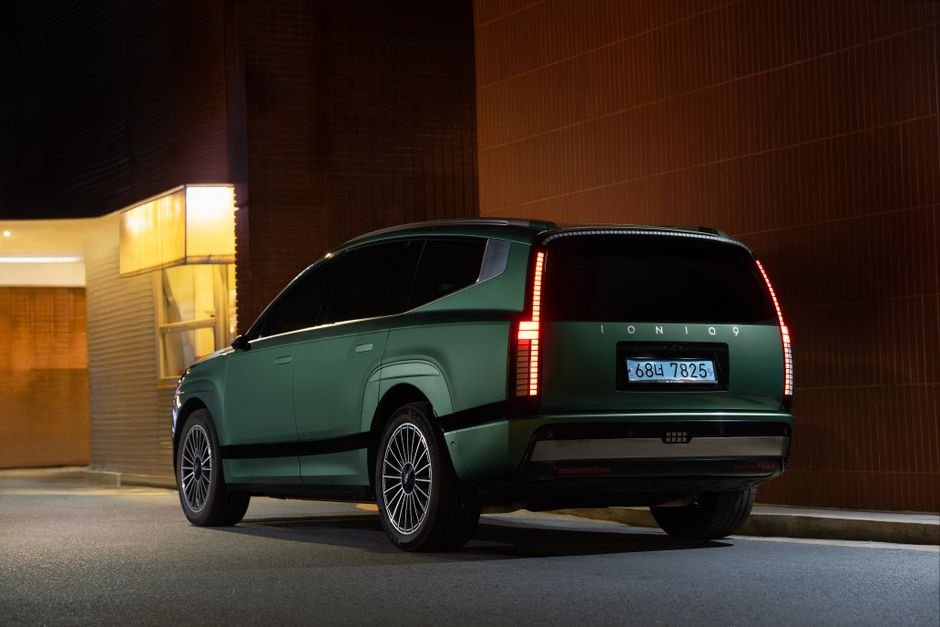
Yes, the Hyundai Ioniq 9 recall is real. It’s the second one this year. But no, it shouldn’t scare you off buying Hyundai’s new three-row electric SUV. Hyundai just told federal regulators that 5,360 units of the 2026 Ioniq 9 have a software bug in the second-row power seats. The bug can let the seats keep moving and applying force even after they hit a person or object.
What exactly is wrong with the Ioniq 9’s seats?
The problem sits in the software that controls the second-row power seats on higher trims. It’s supposed to detect contact during automated functions like power fold-and-stow. Sometimes it fails to recognize that contact has happened, and it keeps pushing anyway.
That creates a real pinch hazard. Hyundai specifically flags the risk to children seated in or standing near the rear seating area during seat adjustment.
It’s worth noting this isn’t a brand-new type of problem for Hyundai’s family SUVs. A similar seat-detection flaw led to a stop-sale and a 61,000-vehicle recall of the Palisade earlier this year, after a toddler was killed. Hyundai says the Ioniq 9 issue hasn’t caused any known injuries so far. The company clearly isn’t waiting to find out, though.
How many Ioniq 9 SUVs are actually affected?
The recall covers exactly 5,360 examples of the 2026 Hyundai Ioniq 9. It hits vehicles built with the Limited, Calligraphy, or Calligraphy Design trims. Those are the ones with second-row captain’s chairs and the fancier power-seat functions. Every affected unit was built at Hyundai’s Metaplant America factory in Georgia between March 2025 and early May 2026.
If your Ioniq 9 is a base S, SE, or SEL with the simple second-row bench, you’re not part of this one. The fix itself is easy. It’s revised anti-pinch software that Hyundai can push over the air through Bluelink. Owners who haven’t opted into updates can get it installed for free at any dealer.
Is this the Ioniq 9’s first recall?
No. This is actually the second recall for Hyundai’s brand-new flagship EV in its debut model year. Back in February 2026, Hyundai recalled certain 2025-2026 Ioniq 5 and 2026 Ioniq 9 vehicles for a different issue. An improperly tightened high-voltage battery bus bar could short-circuit and start a fire.
Two recalls in a launch year sounds rough. But it’s honestly pretty normal for a brand-new nameplate built at a brand-new factory. Here’s how the two campaigns stack up:
| Recall | Filed | Issue | Fix |
|---|---|---|---|
| Battery bus bar | Feb 2026 | Loose bolt, fire risk | Dealer inspection/tightening, free |
| Second-row seat | Sept 2026 | Pinch risk from failed detection | OTA or dealer software update, free |
Both are being handled at no cost to owners. Neither requires ripping apart the car. That’s the kind of recall you want to see. It’s a software fix, not a hardware replacement.
So is the Hyundai Ioniq 9 still worth buying?
Yes. A software patch for a seat-pinch risk, caught and fixed before anyone got hurt, is not a reason to walk away. This is otherwise one of the most impressive three-row EVs on sale. The Ioniq 9 still delivers the range, charging speed, and interior quality that make it worth the price.
The Ioniq 9 starts around $59,000. It tops out near $76,500 for the loaded Calligraphy Design trim. Every trim clears 300 miles of EPA range. Some configurations push past 335 miles. The 800-volt architecture lets it fast-charge from 10-80% in roughly 24 minutes at a 350-kW station. It also earned an IIHS Top Safety Pick+ rating for 2025, which matters a lot for a family hauler.
If you’re cross-shopping, the closest rival is the Kia EV9, which had its own recall earlier this year. Recalls in this segment aren’t unique to Hyundai. And if you’re wondering whether Hyundai’s EV lineup overall has a recall problem, the Ioniq 6 recall from last fall followed the same pattern. It was a free fix, with no injuries and no lasting damage to the car’s reputation.
Here’s what I’d actually do. If you’re shopping a Limited, Calligraphy, or Calligraphy Design trim right now, ask the dealer to confirm the software update has already been applied. It takes minutes, and it’s free. Don’t let it talk you out of the vehicle itself. For a deeper look at whether an EV purchase makes sense for your situation at all, our decision framework for buying an EV in 2026 is a good next stop.
Shoppers who are more price-sensitive should also keep an eye on the smaller Ioniq 5. Recent price cuts have made it a lot more attainable, if a three-row SUV is more room than you actually need.
FAQ
How do I know if my Ioniq 9 is part of this recall?
Check your trim level first. Only Limited, Calligraphy, and Calligraphy Design units built between March 2025 and May 2026 are affected. Hyundai is mailing notification letters starting November 9, 2026. You can also check your VIN on NHTSA’s recall lookup tool right now.
Do I need to stop using my second-row power seats?
Hyundai recommends caution until the fix is applied. Keep kids and objects clear of the seat and folding area while using power functions. Once the software update installs, either over the air or at a dealer, normal use is fine again.
Will this recall hurt the Ioniq 9’s resale value?
Unlikely. Software recalls tied to a quick, free fix rarely leave a lasting mark on resale value. That’s especially true for a vehicle this new with strong range and safety ratings otherwise intact.
Does the fix cost anything?
No. Recall repairs are always free by law. Many owners won’t even need a dealer visit, since the update can be delivered over the air through Bluelink.