
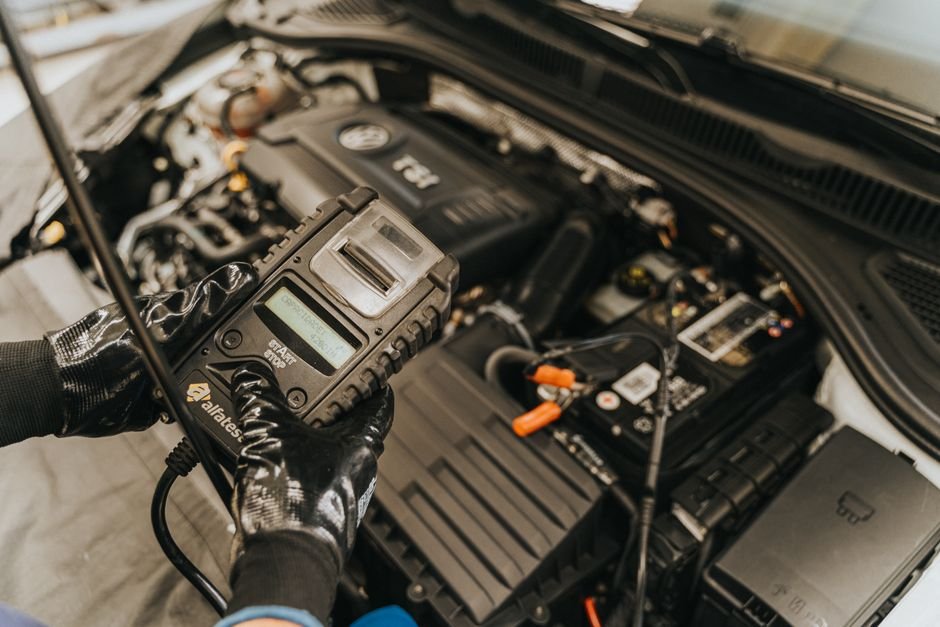
The fastest way to tell if it’s your alternator or battery is to jump-start the car: if it starts and runs fine but dies again after you turn it off, the battery is likely dead. If it dies again while driving, the alternator is probably failing.
Both problems share nearly identical symptoms — dim lights, slow cranking, a dead dashboard — which is why so many drivers replace the wrong part first. This guide walks through the exact tests mechanics use to isolate the real culprit, so you don’t waste money guessing.
Battery vs. Alternator: What Each One Actually Does
The battery stores electrical energy and delivers the initial jolt needed to start the engine. Once the engine is running, the alternator takes over, generating electricity to power everything from headlights to the infotainment screen while simultaneously recharging the battery.
A healthy electrical system depends on both components working together. When one fails, the other often gets blamed because the symptoms overlap so closely.
Key Warning Signs Before You Even Pop the Hood
Certain clues point more toward one component than the other. Pay attention to when the problem happens and how it behaves.
Signs That Point to the Battery
- The car struggles to start after sitting overnight but runs fine once going.
- Headlights are dim only when the engine is off or during cranking.
- The battery is more than 3–5 years old.
- You hear a single click or rapid clicking when turning the key.
- Corrosion is visible on the battery terminals.
Signs That Point to the Alternator
- The car starts fine but dies or stalls while driving.
- Headlights or dashboard lights dim or flicker as you accelerate or use accessories.
- You notice a burning rubber smell (a slipping serpentine belt) or hear a whining noise.
- The battery warning light stays on after the engine starts.
- Electrical accessories like power windows or the radio act sluggish.
Step-by-Step Diagnostic Tests You Can Do Yourself
Step 1: Visual Inspection
Pop the hood and check the battery terminals for corrosion, a white or bluish crust that can block current flow. Inspect the serpentine belt for cracks, glazing, or looseness, since a slipping belt can starve the alternator of the rotation it needs to generate power.
Step 2: The Jump-Start Test
Jump-start the vehicle using jumper cables or a portable jump box. If the car starts and runs normally, immediately disconnect the cables and let it idle.
If the engine stays running without the jumper cables connected, the alternator is likely working and the battery was simply drained. If it dies the moment you disconnect, that’s a strong signal the alternator isn’t recharging it.
Step 3: The Headlight Test
With the engine running, turn on the headlights. If they get noticeably brighter when you rev the engine, the alternator’s output is inconsistent, which typically means it’s failing.
A steady brightness at all RPMs is a good sign the alternator is doing its job.
Step 4: Multimeter Voltage Test
This is the most accurate DIY method and only requires a $10–$15 digital multimeter.
- Set the multimeter to DC volts (20V range).
- With the engine off, touch the red probe to the positive terminal and black probe to the negative terminal.
- A healthy, fully charged battery should read between 12.4V and 12.7V.
- Start the engine and test again. A properly working alternator should push the reading to between 13.7V and 14.7V.
If the resting voltage is low but jumps into the correct range once running, the battery was likely just weak or discharged. If the voltage barely rises above 12.7V with the engine running, the alternator isn’t charging properly.
Step 5: The Load Test
Turn on the headlights, blower motor, and rear defroster with the engine running, then check the voltage again. A functioning alternator should hold steady around 13.5V or higher even under this load.
If the voltage drops sharply below 13V with accessories on, the alternator may not have enough output capacity to keep up with demand.
Battery vs. Alternator Symptoms Comparison
| Symptom | Battery Issue | Alternator Issue |
|---|---|---|
| Car won’t start (cold) | Common | Rare |
| Dies while driving | Uncommon | Common |
| Dashboard battery light on | Sometimes | Almost always |
| Resting voltage | Below 12.4V | Normal (12.4–12.7V) |
| Running voltage | Rises to 13.7–14.7V | Stays under 13V |
| Clicking sound at start | Common | Rare |
| Burning smell/whining noise | No | Sometimes |
| Average replacement cost | $100–$250 | $400–$900 |
Other Culprits That Mimic Battery or Alternator Failure
A corroded ground strap, a blown fuse, or a failing serpentine belt tensioner can all produce symptoms that look like a dead battery or bad alternator. Loose or corroded terminal connections are one of the most overlooked causes of “phantom” electrical failures.
If your check engine light comes on but the car runs fine, that’s usually unrelated to charging system voltage, but it’s still worth ruling out since some sensors can trigger codes when voltage is unstable. Parasitic drains, like an interior light left on or a faulty module that stays powered, can also drain a battery overnight even when the alternator is perfectly healthy.
When to Take It to a Professional
If your multimeter readings are inconclusive or you don’t have access to one, most auto parts stores will test your battery and alternator for free using a load tester. This is the quickest way to get a definitive answer without guesswork.
A mechanic can also check the alternator’s diode output using an oscilloscope, which catches AC ripple issues a basic multimeter can’t detect. This matters because a bad diode can slowly cook a brand-new battery, making it look like a battery problem when the alternator is the real cause.
Preventing Future Electrical Failures
Routine car maintenance checks should include a look at battery terminals and belt condition every oil change. Batteries typically last 3–5 years, and alternators can run 80,000–150,000 miles, so tracking age and mileage helps you anticipate failure before you’re stranded.
If you’re shopping for a replacement vehicle and want to avoid inheriting someone else’s electrical headaches, understanding the difference between a used car and a certified pre-owned vehicle matters, since CPO inspections typically include charging system checks that private-party sales skip entirely.
Frequently Asked Questions
Can a bad alternator drain a good battery overnight?
Yes, but usually not directly. A failing alternator diode can allow the battery to discharge back through the charging system, or a worn voltage regulator can overcharge and damage the battery, shortening its life significantly.
How long can you drive on a bad alternator?
Typically anywhere from a few minutes to a couple of hours, depending on how depleted the battery already is and how many electrical accessories are running. Once the battery’s stored charge runs out, the engine will stall and won’t restart.
Is it cheaper to replace the battery or the alternator?
The battery is almost always cheaper, generally $100–$250 installed, compared to $400–$900 for an alternator including labor. This is exactly why accurate diagnosis matters — replacing the wrong part first wastes money and leaves the actual problem unresolved.