
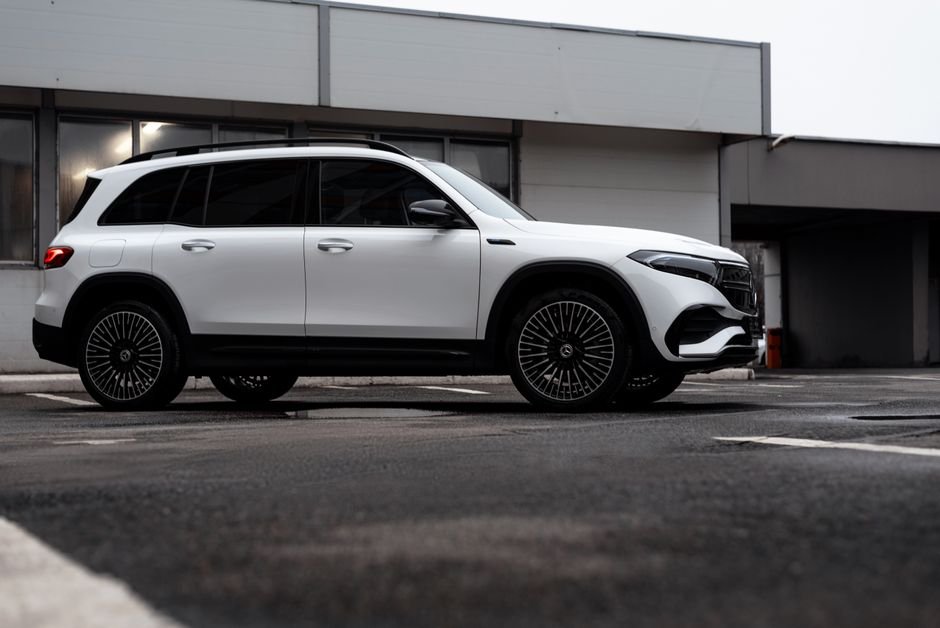
Porsche wants $10,100 more than Lucid does for a seat in its new electric SUV. That gap is the whole story here. The 2026 Cayenne Electric starts at $109,000. The Lucid Gravity Grand Touring now starts at $98,900. Both are three-row-adjacent luxury EVs chasing the same buyer. They get there in very different ways.
So is the Cayenne Electric vs Lucid Gravity price gap actually justified? Or are you just paying for the crest on the hood? Let’s look at what each SUV actually delivers for the money.
What do you actually get for the extra $10,100?
You get less range, less power, and less interior flexibility with the Porsche. But you also get Porsche’s suspension tuning, brand cachet, and a more focused driving feel. On paper, the Lucid wins the spec sheet by a wide margin.
The base Cayenne Electric makes 402 horsepower in normal driving, or 435 hp with Launch Control. It hits 0-60 in roughly 4.5 to 4.8 seconds. Top speed is 143 mph. The Lucid Gravity Grand Touring makes 828 horsepower. It hits 60 mph in 3.4 seconds and tops out at 155 mph. That’s not a close fight.
| Spec | Porsche Cayenne Electric (base) | Lucid Gravity Grand Touring |
|---|---|---|
| Starting price | $109,000 | $98,900 |
| Horsepower | 402–435 hp | 828 hp |
| 0-60 mph | ~4.5–4.8 sec | 3.4 sec |
| Top speed | 143 mph | 155 mph |
| Battery | 113 kWh | 123 kWh |
| EPA range | 317–322 miles | up to 450 miles |
| Towing capacity | 7,716 lbs (Coupe) | 6,000 lbs |
| Seating | 5 | up to 7 |
Does the Lucid Gravity really go 450 miles?
Yes. The EPA rates the Gravity Grand Touring at up to 450 miles of range. That makes it one of the longest-range electric SUVs sold in the U.S. right now. The Cayenne Electric lands closer to 317 to 322 miles with standard wheels.
That’s a real-world gap of over 100 miles in Lucid’s favor. It matters a lot if you actually road-trip your SUV instead of just commuting in it. Porsche’s own pre-production testing put the Cayenne closer to 330 miles on a steady highway cruise. That’s still well short of what Lucid claims for the Gravity.
Is Porsche’s driving experience worth paying more for?
Maybe, but only for a specific kind of buyer. If you care more about how a vehicle feels through a corner than how many miles it covers on a charge, the Cayenne Electric’s tighter chassis and steering feel genuinely different from the Gravity’s. For most everyday drivers, though, it’s a smaller factor than range or interior space.
Reviewers who’ve driven both note the Cayenne feels more structured and technical. The Gravity leans into a lounge-like, spacious cabin instead. It also comes with a panoramic glass roof standard on every trim. The Cayenne Electric doesn’t even include a sunroof standard at this price point, which stings given what you’re paying.
What about reliability and brand risk?
Lucid is still a young, unprofitable automaker. That’s not nothing when you’re spending six figures on a vehicle you’ll want serviced for a decade. Porsche has the dealer network and parts supply chain sorted. Even so, its EVs haven’t been drama-free — the ongoing Taycan battery fire lawsuit is a reminder of that.
Lucid has its own baggage too, including a fire-related recall on the Air sedan. It’s worth knowing about before you assume the newer brand is risk-free. If battery longevity is a top concern for you regardless of badge, check how these brands stack up against rivals in real-world used EV battery health data before you commit six figures.
So which one should you actually buy?
I’d take the Lucid Gravity Grand Touring. You get more range, more power, and more seats. You also pocket over $10,000. That’s not a marginal call — it’s a clear win on nearly every practical metric that matters day to day.
The only reason to pay the Porsche premium is if driving dynamics and badge genuinely matter more to you than range anxiety or resale uncertainty. If you’re on the fence about going electric at all in this price range, our EV decision framework for 2026 walks through how to weigh brand risk against real cost of ownership before you sign anything.
Neither the Cayenne Electric nor the Gravity currently qualifies for the federal EV tax credit at these price points, according to CarBuzz’s pricing breakdown. So the sticker price is close to what you’ll actually pay. That makes the $10,100 gap even harder to ignore.
FAQ
Is the Lucid Gravity cheaper than the Porsche Cayenne Electric?
Yes. The Gravity Grand Touring starts at $98,900, while the Cayenne Electric starts at $109,000 — a $10,100 difference before options or destination fees.
Which has better range, the Cayenne Electric or the Gravity?
The Lucid Gravity Grand Touring wins clearly, with an EPA rating up to 450 miles versus the Cayenne Electric’s 317 to 322 miles.
Does the Cayenne Electric have a third row like the Gravity?
No. The Cayenne Electric seats five, while the Lucid Gravity offers seating for up to seven passengers across three rows.
Is Lucid a safe long-term bet compared to Porsche?
Porsche has a longer track record and a much bigger dealer network. Lucid is newer and still working toward profitability. That’s a real consideration for long-term ownership and resale value.