
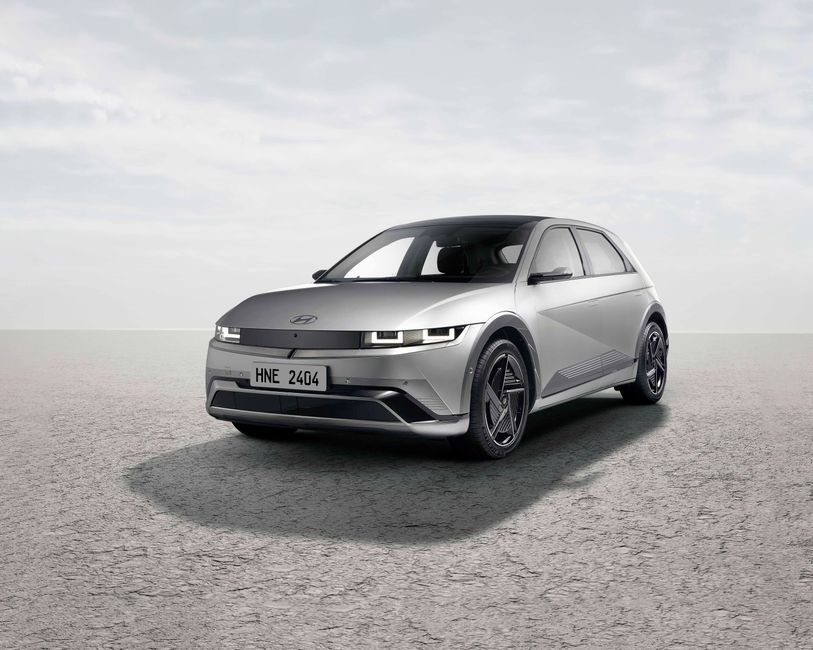
A 92% sales drop sounds like a car nobody wants anymore. In the case of the Chevy Equinox EV, it’s almost the opposite story. That gap between perception and reality is exactly why this is worth unpacking before you write the Equinox EV off.
GM sold just 1,905 Chevy Equinox EVs in the third quarter of 2026. That’s down from more than 25,000 units in the same quarter a year earlier. The 92% crash making headlines is real. But the reason has almost nothing to do with the car itself.
Why did Chevy Equinox EV sales crash 92%?
Chevy Equinox EV sales crashed 92% because shoppers rushed to buy before the $7,500 federal EV tax credit expired on September 30, 2025. That rush inflated last year’s numbers. Then the incentive disappeared entirely for 2026 buyers. It’s a tax-credit hangover, not a demand collapse.
Industry coverage backs this up directly. Those steep drops reflect a tough year-over-year comparison, since in the third quarter of 2025 shoppers accelerated EV purchases to take advantage of the credit before it ended. The Equinox EV wasn’t alone, either. GM’s Blazer EV fell 84.4%, and even the Hummer EV dropped nearly 73% in the same quarter.
The pattern makes sense once you look at who buys cheaper EVs versus luxury ones. The previous tax incentives benefited affordable car buyers most, since wealthier buyers don’t need the extra discount as much. That’s a big part of why Cadillac’s pricier EVs, the Lyriq, Optiq, Vistiq, and Escalade IQ, held up far better than Chevy’s budget-focused Equinox.
Is the Equinox EV still GM’s best-selling electric car?
Yes, barely. Through the first nine months of 2026, the Equinox EV still leads every other GM EV with 18,154 units sold. But that figure is down 65% from nearly 53,000 units over the same stretch last year.
So this isn’t a car that buyers have stopped choosing relative to its GM siblings. It’s a car that lost its single biggest selling point overnight. A $7,500 discount made a roughly $35,000 crossover feel a lot more like a $27,500 one.
What do you actually get for the money in 2026?
You still get one of the most practical electric crossovers on sale. It offers an EPA range up to 319 miles and a starting price around $35,000 before any state incentives. That combination of range and price is still rare outside of Tesla.
- Base price: Starts around $34,995-$35,000 depending on trim and model year
- Range: Up to 319 miles EPA-estimated on the front-wheel-drive configuration
- Federal tax credit: None—the $7,500 credit expired for all buyers after September 30, 2025
- State incentives: Still available in some states; Colorado, for example, offers up to $3,250 off the base 1LT trim
- Competition: Toyota bZ, Hyundai IONIQ 5, and the new Chevy Bolt are all fighting for the same budget-EV buyer
Should you still buy one with no tax credit on the table?
If you need a comfortable, roomy electric SUV with real road-trip range, yes, I’d still buy it. Just negotiate hard, since GM clearly needs to move metal. Without the credit, though, it’s competing on pure value against rivals that have newer tech.
GM is also facing real competition for that budget-EV dollar. GM is also falling behind rivals that have introduced new or updated versions of their top sellers, like Hyundai’s IONIQ 5 and Toyota’s bZ. That’s a fair critique. The current Equinox EV launched in 2024, and a next-generation version reportedly isn’t expected until late 2028 or 2029. You’re buying into a platform that’s aging while rivals refresh.
If raw price matters most to you, it’s also worth cross-shopping the cheaper Chevy Bolt against the Nissan Leaf. GM is clearly positioning the Bolt as its new entry-level EV play now that the Equinox EV sits a rung higher on price. And if you’re still weighing whether an EV makes financial sense at all without the federal credit, our full decision framework for buying an EV in 2026 walks through the math in detail.
| Model | Q3 2026 Sales | Change vs. Q3 2025 |
|---|---|---|
| Chevy Equinox EV | 1,905 | -92.4% |
| Chevy Blazer EV | N/A (part of lineup) | -84.4% |
| GM Hummer EV | N/A | -72.9% |
| Cadillac Optiq | 4,550 | -6.9% |
Notice the gap between Chevy’s budget EVs and Cadillac’s premium ones. The Optiq’s decline looks almost like a win next to the Equinox EV’s steeper drop. That gap tells you everything about which buyers actually needed that tax credit to pull the trigger.
What does this mean for pricing and deals right now?
GM has every incentive to discount the Equinox EV aggressively through dealer cash and lease deals. It can’t rely on the federal credit to move volume anymore. If you’re shopping now, expect more negotiating room than you’d have found a year ago when the car was flying off lots.
Leasing is also worth a hard look. Some lease structures can still route around the lack of a federal purchase credit, depending on current manufacturer programs. Before signing anything, check our EV total cost of ownership breakdown to see how charging costs, maintenance, and depreciation stack up against a comparable gas crossover over five years.
FAQ
Did GM stop making the Chevy Equinox EV?
No. GM has not discontinued the Equinox EV. It remains the company’s top-selling electric vehicle by year-to-date volume, even after the Q3 crash. A next-generation redesign isn’t expected until around 2028 or 2029.
Why did Equinox EV sales drop so much more than Cadillac’s EVs?
Cheaper EVs like the Equinox relied more heavily on the $7,500 federal tax credit to close the price gap with gas crossovers. Luxury buyers shopping Cadillac’s EVs were less price-sensitive. When the credit disappeared, budget EV buyers felt it far more directly.
Can I still get any tax credit for buying an Equinox EV in 2026?
The federal $7,500 credit is gone for good as of September 30, 2025. But some states still offer their own incentives. Colorado, for instance, offers up to $3,250 off the base Equinox EV trim through its own state program.
Is the Equinox EV a better buy than the Chevy Bolt or Toyota bZ?
The Equinox EV offers more interior room and longer range than the Bolt. That makes it the better pick for families or road trips, while the Bolt wins on price alone. The Toyota bZ is worth cross-shopping too, since it’s one of the few EVs actually gaining sales this year.