
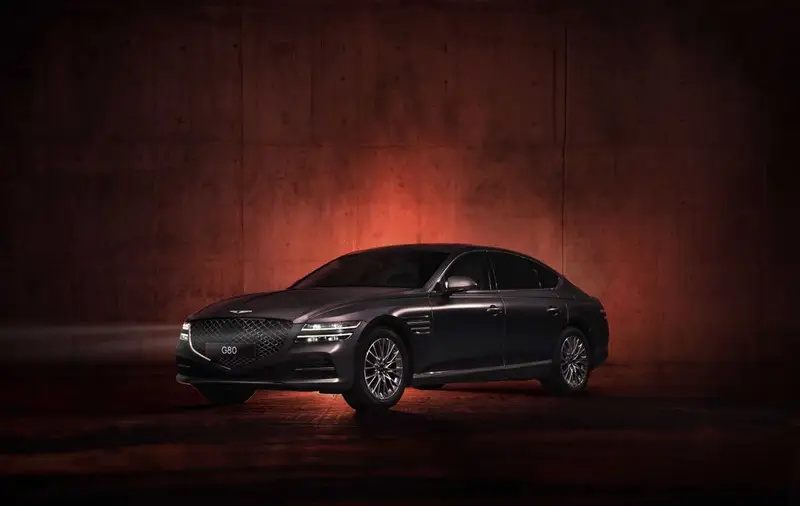
Hyundai just told nearly 95,000 Genesis owners to park outside, away from their house and other cars. The reason: their front seats could catch fire, and there’s no fix yet. The Genesis G80 fire recall covers 94,622 vehicles. That splits between 54,644 of the 2015-2016 Hyundai Genesis and 39,978 of the 2017-2020 Genesis G80. If you own one of these cars, or you’re eyeing a cheap used G80 right now, here’s what actually matters.
What’s actually wrong with these cars?
The front seat slide and height-adjustment switch can get knocked loose or damaged. When that happens, it can stay stuck in the “on” position. That keeps the seat motor running continuously, even after you’ve parked, locked up, and walked away. The overheated motor can then start a fire.
Hyundai says the problem traces back to a report it first learned of on December 31, 2021, through a safety complaint on a 2018 Genesis G80. A second case surfaced the following year. The company then spent 2024 and 2025 watching field reports that stayed low. A batch of thermal-event data from Korea arrived in July 2026. That pushed Hyundai’s safety office to approve the recall on October 1, 2026.
That’s nearly five years from first report to official recall. Not a great look, but also not unusual for how these investigations tend to drag on.
Which cars are affected, exactly?
Only vehicles with non-memory power seats are included. If your G80 has memory seat settings, you’re in the clear. Here’s the breakdown:
| Model | Model Years | Units Affected |
|---|---|---|
| Hyundai Genesis (sedan) | 2015–2016 | 54,644 |
| Genesis G80 | 2017–2020 | 39,978 |
Hyundai estimates only about 1% of the recalled population actually has the defect. The company has confirmed two alleged fire incidents in the U.S. so far. No crashes or injuries have been reported.
Is there a fix available right now?
No, not yet. Hyundai is still developing the remedy. Owner notification letters won’t go out until early December 2026, so the only thing you can do today is follow the interim safety advisory. That means parking outside and away from structures or other vehicles until the repair is ready.
You can check whether your specific car is affected by looking up your VIN on NHTSA’s recall site. VINs became searchable on October 13, 2026. Watch for a burning odor near the seat or a seat switch that stops responding. Those are the warning signs Hyundai flagged.
Should you still buy a used Genesis G80?
Yes, I’d still consider one. But only after confirming the recall is fixed, and only if you target the right model year. The G80’s luxury-for-less value proposition is real. First-generation cars now sell for roughly $16,000 to $25,000, a steep discount off original MSRPs north of $41,000.
That said, this isn’t the G80’s first recall rodeo. It’s also been through campaigns for turbocharger oil leaks and starter solenoid water intrusion. Reliability data shows 2017 and 2018 models racking up more electrical and steering complaints than the 2019-2020 cars. If you’re shopping used, lean toward a 2019 or later G80. Insist on seeing proof the seat-switch recall has been completed before you hand over a deposit.
- 2017 Genesis G80: averages around $15,500–$17,000 used; weakest reliability year, most electrical complaints
- 2018 Genesis G80: averages around $18,700–$19,400; still has memory/switch issues to watch for
- 2019 Genesis G80: averages around $21,700–$22,300; generally the sweet spot for reliability
- 2020 Genesis G80: averages around $25,000–$25,500; newest and priciest of the first generation
This recall is a reminder that even older Hyundai and Genesis products aren’t immune to the fire-risk wave hitting the industry lately. We’ve seen similar sagas play out with the Kia Telluride fire recall and the Kia Sorento fire recall. None of those turned out to be dealbreakers once the fix shipped. I expect this one will follow the same pattern.
If you’re cross-shopping a used G80 against something electrified instead, run the numbers first. Our used EV buying guide walks through how to avoid similar pitfalls when a recall or battery issue hides behind a tempting price tag.
What should current owners do today?
Park outside, away from your garage and other vehicles. Keep an eye out for the notification letter arriving by mail in early December 2026. Don’t wait on a dealer visit yet. There’s genuinely nothing to fix until Hyundai finalizes the remedy, so the park-outside advisory is your main protection for now.
FAQ
How do I know if my Genesis is part of this recall?
Enter your 17-digit VIN into NHTSA’s recall lookup tool or the Genesis owner portal. VINs became searchable on October 13, 2026, so you can check right now, even before the official mailed notice arrives.
Will the repair cost me anything?
No. Hyundai will perform the fix free of charge once it’s available, regardless of whether your warranty has expired.
Has anyone been hurt by this defect?
No. Hyundai has confirmed two alleged fire incidents tied to the issue. The company says there have been no reported crashes or injuries connected to it.
Does this recall affect the newer Genesis G80 (2021 and later)?
No. This campaign is limited to the 2015-2016 Hyundai Genesis and the 2017-2020 first-generation Genesis G80. The redesigned G80 that launched for 2021 uses a different platform. It isn’t part of this recall.