
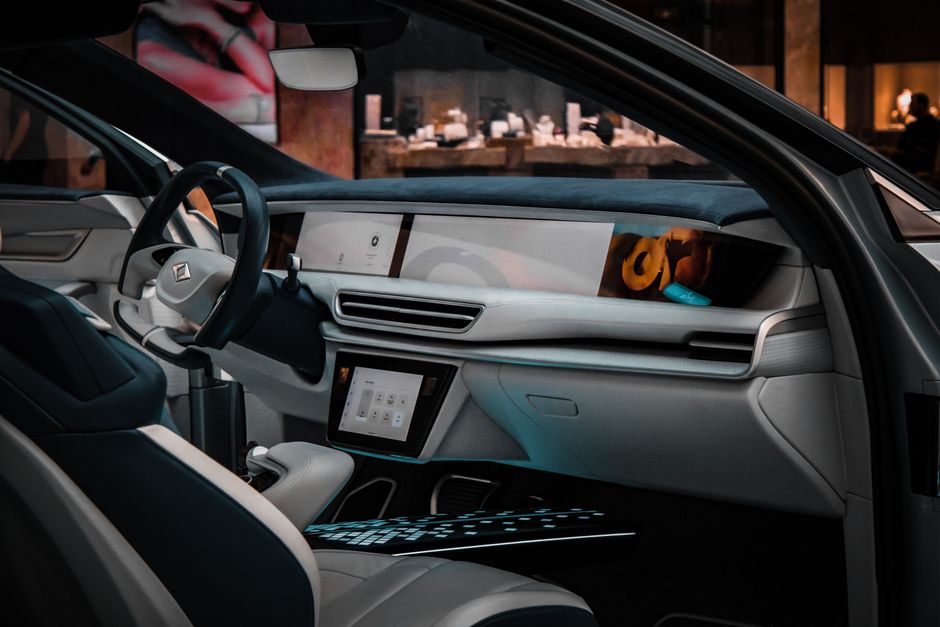
For over a century, every car sold in America has needed a steering wheel, a set of pedals, and a place for a human driver to sit. That assumption just got thrown out the window. Amazon’s Zoox has become the first company in U.S. history to win federal approval to charge passengers for rides in a purpose-built robotaxi that has none of those things — no wheel, no pedals, not even a driver’s seat.
The National Highway Traffic Safety Administration (NHTSA) announced the decision on July 30, 2026, granting Zoox a commercial exemption from federal vehicle safety standards that were written decades before anyone imagined a car without a human at the controls. It’s a milestone moment not just for Zoox, but for the entire self-driving industry.
What Actually Happened
Zoox has been giving free demonstration rides in its boxy, carriage-style vehicles since last year, but it was legally barred from charging for them. That’s changed now. As part of the newly granted exemption, the company was granted an exemption from federal rules that require human controls on motor vehicles. NHTSA Administrator Jonathan Morrison told Reuters that the systems in place on the Zoox vehicles exceed the equivalent performance requirements of a compliant vehicle.
Zoox’s vehicles look nothing like a typical car. They’re rectangular, carriage-style pods with rows of seats that face each other rather than both pointing forward, and they can travel up to 75 miles per hour. The exemption isn’t a blank check, though — it limits Zoox’s commercial fleet up to 2,500 vehicles annually for two years, and the company will also be subject to what the agency described as an “enhanced, adaptable oversight structure that can evolve as Zoox’s technology advances.” Regulators are also requiring extra reporting on incidents like crashes or vehicles stopping inappropriately on roads.
Where You Can Actually Ride One
Talk is one thing; actual paid rides are another. Zoox says its first paying customers will be in Las Vegas, where paid rides are expected to begin in August, with San Francisco to follow once California’s Department of Motor Vehicles and Public Utilities Commission sign off. Zoox is also actively testing in Austin, Miami, Dallas, Phoenix, Atlanta, Los Angeles, Seattle, and Washington, D.C., and the company has said Austin and Miami are next in line to open for public rides after testing wraps up. Given that the exemption is good for two years, expect the paid-ride map to fill in fast beyond just Nevada and California.
Why This Is a Bigger Deal Than It Sounds
This isn’t just a win for one company — it’s a crack in a regulatory wall that’s stood for decades. Cruise, the GM-backed robotaxi startup, tried to get its steering-wheel-free Origin shuttle approved for years and never made it before the company folded. Zoox is the first to break through, and it did so partly because the Department of Transportation expanded its Automated Vehicle Exemption Program this year to cover vehicles built domestically, not just imported ones.
The ripple effects are already visible. Alongside the Zoox-specific approval, NHTSA is funding a three-year, $5-million partnership with the SAE Industry Technologies Consortia to help build a single, unified national safety standard for autonomous vehicles, aiming to avoid the patchwork of state-by-state rules that has slowed the industry down. The agency is also overhauling its foundational AV guidelines, which date back to 2017, and streamlining how future companies apply for their own exemptions.
That matters because Zoox isn’t the only company waiting in line. Tesla’s Cybercab, which also ditches the steering wheel and pedals entirely, will need a similar exemption before it can carry paying passengers, and it’s currently being tested on Austin streets. Waymo, still the industry leader by scale, uses modified production vehicles that already have manual controls, so it hasn’t needed this kind of exemption — but the regulatory path Zoox just carved out could eventually apply to Waymo’s own purpose-built vehicle designs too.
Not Without Bumps in the Road
The approval isn’t a victory lap free of controversy. Regulators are still requiring Zoox to remove or cover any language suggesting its vehicles meet the specific federal safety standards it’s now exempted from, and the agency closed a long-running investigation into how Zoox had previously self-certified its vehicles’ safety. There have also been real-world hiccups, including an incident this summer where an unoccupied Zoox vehicle in Las Vegas drove into an active emergency scene before stopping, a reminder that even “approved” technology is still very much a work in progress.
What It Means for Everyday Drivers
You probably won’t be buying a steering-wheel-free car for your driveway anytime soon — NHTSA has been clear that these vehicles are being cleared for commercial ride-hailing fleets, not individual ownership. But the precedent matters. If regulators are comfortable letting a car with zero manual controls carry paying strangers on public roads, it signals that the era of “cars that need a human backup” may be entering its final stretch. For now, the next time you’re in Las Vegas, keep an eye out — you might just share the road with a driverless, wheel-less pod that’s finally allowed to bill you for the ride.