
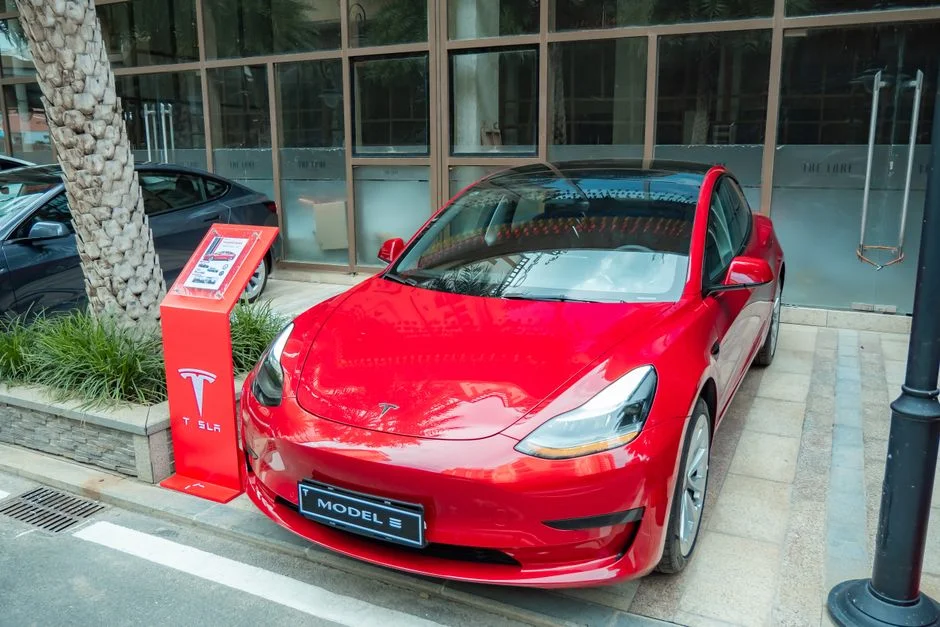
Yes, you can still buy a used Model 3 or Model Y even with the new headlight recall. But check the VIN first. Tesla is recalling 20,349 vehicles because their low-beam headlights blast out more light than federal law allows. There’s no fix ready yet.
If you’re shopping the used EV market right now, this Tesla headlight recall shouldn’t scare you off entirely. But it does change how you should shop.
What exactly is the Tesla headlight recall about?
The recall covers specific 2017-2023 Model 3 sedans and 2020-2023 Model Y SUVs. Their low-beam headlights exceed federal brightness limits in the upper corners of the beam pattern, which can glare oncoming drivers. It’s a hardware problem, not a software glitch. Tesla can’t just push an update to fix it.
The numbers break down cleanly. NHTSA’s filing covers 18,735 “pre-refresh” Model Y vehicles and 1,614 Model 3 cars, built with headlamp assemblies from supplier Marelli Automotive Lighting. In testing, the headlights measured as bright as 230.1 candela in zones where the federal spec caps out at 125 candela. That’s nearly double the legal limit.
This isn’t a brand-new discovery. The issue traces back to 2023, when a Canadian testing lab flagged the same headlights during routine review. Tesla then spent roughly two years arguing with regulators. This recall only became official in August 2026.
Why did Tesla fight this recall for so long?
Tesla tried to convince NHTSA the bright headlights were “inconsequential” to safety. It asked to skip the recall entirely. Federal regulators flatly rejected that request — which is exactly why owners are only now getting notified, years after the problem first surfaced.
Tesla petitioned NHTSA in April 2024, arguing a recall wasn’t necessary. It claimed the defect was “inconsequential as it relates to motor vehicle safety.” The agency didn’t buy it. By July 2026, it formally denied that petition, forcing Tesla’s hand.
That’s a pattern worth noting if you’re already wary of Tesla’s regulatory track record. It’s not the automaker’s only open issue right now, either. NHTSA also has an active investigation into roughly 1.2 million Tesla vehicles over suspension complaints. We’ve covered that in detail in our breakdown of that federal probe.
Is a used Model 3 or Model Y still a smart buy?
Generally, yes. This specific recall is narrow. It affects older headlight hardware Tesla already stopped using years ago, and Tesla says it isn’t aware of any crashes tied to the issue. The bigger question for used EV shoppers isn’t this recall alone — it’s whether you’re getting a fair price and a battery that will last.
Here’s the practical rundown for anyone cross-shopping a used Model 3 or Model Y:
| Detail | What to know |
|---|---|
| Vehicles affected | 18,735 Model Y (2020-2023), 1,614 Model 3 (2017-2023) |
| Cause | Low-beam headlights exceed federal brightness limits in outer upper zones |
| Fix | None yet — Tesla says a repair plan is still in development |
| Notification timeline | Owner letters mailed by September 15, 2026 |
| Known incidents | None reported — Tesla cites no crashes, injuries, or deaths |
One silver lining for buyers: Tesla might end up replacing the headlight assemblies instead of just recalibrating them. If so, affected owners could see a free upgrade to Tesla’s newer matrix headlights. Those perform noticeably better at night than the outgoing hardware.
How do you check if a used Tesla is affected?
Before you buy any used Model 3 or Model Y, run the VIN through NHTSA’s recall lookup tool. It takes about 30 seconds. It tells you instantly whether that specific car has open recalls, including this headlight campaign. Never take a seller’s word for it.
You can check any VIN directly at NHTSA’s official recall search page. If the car shows an open recall, ask the seller — or a Tesla service center — whether the repair has already been completed. Get that documented in writing before you close the deal.
This step matters even more with private-party used EV sales. There’s no dealer paperwork trail to fall back on. If you want a deeper walkthrough of the entire used-EV shopping process, including battery health, charging history, and how to avoid overpaying, check out our full guide on the used EV buying guide that could save you $10,000.
Does this change how Model 3 and Model Y compare to rivals?
Not really. This recall doesn’t touch the battery, the drivetrain, or overall reliability. It’s a headlight compliance issue that affects a small slice of older production years. If you’re weighing a used Model Y against something like a Rivian R2, the recall shouldn’t be a deciding factor on its own.
What should factor in is Tesla’s shrinking charging advantage and rising used-EV prices generally. We’ve covered both trends. See our look at why Tesla is no longer the best charging network in 2026 and our analysis of whether used EV prices are still worth paying in 2026.
FAQ
Does the Tesla headlight recall affect the Model Y refresh or newer Model 3?
No. The recall only covers pre-refresh Model Y units built between 2020 and 2023. It also covers Model 3 units from 2017 through 2023 that received the affected headlamp assembly. Current production models use different, compliant headlight hardware.
Will Tesla charge me to fix the headlights?
No. Recall repairs are always free of charge to the owner. That’s true regardless of whether Tesla ends up adjusting, recalibrating, or fully replacing the headlight assembly.
Can I still drive my Tesla if it’s under this recall?
Yes. Tesla and NHTSA have not issued a “stop drive” order. Tesla also says it isn’t aware of any crashes linked to the issue, so it’s safe to keep driving while you wait for your repair notice.
When will owners get notified?
Tesla notified its sales and service locations in early August 2026. Formal owner notification letters are expected to go out by September 15, 2026.