
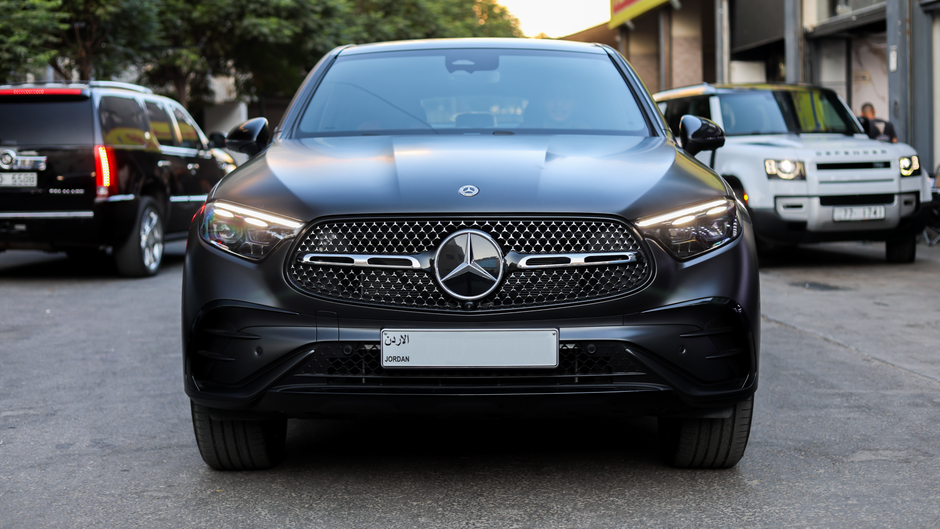
Yes, a used GLC or CLA is still worth buying in 2026. But only after you confirm the free fix has been done. Mercedes-Benz just recalled 310,667 vehicles in the U.S. A corroded door switch can quietly disable the feature that keeps a parked car from rolling away on its own. That’s a scary-sounding defect. It’s also a cheap, well-understood fix that shouldn’t scare off a smart used-car shopper.
What exactly is the Mercedes rollaway recall about?
The Mercedes rollaway recall covers a microswitch inside the driver’s door lock. It can corrode over time and stop detecting whether the door is open. That signal also tells the car’s Auto-Park feature to apply the electronic parking brake when you step out. A corroded switch means the brake may never engage, leaving the car free to roll.
Mercedes traced the root cause to housing material in the door lock. It wasn’t resistant enough to moisture. Over time, water can seep in and corrode the contacts. The switch simply stops reporting reality to the car’s computer. Mercedes says it logged 176 related field cases dating back to 2021. But it hasn’t confirmed a single actual rollaway incident in the U.S. so far. The company changed its supplier’s production process this past May. That means the defect can’t occur in newer builds.
Which GLC and CLA model years are affected?
The recall spans seven nameplates and model years from 2019 through 2026. That’s unusually broad for a single component fix. Here’s the breakdown for the models CarDoggo readers ask about most:
| Model | Affected Years |
|---|---|
| CLA | 2020–2021 |
| GLC | 2023–2024 |
| A-Class | 2019–2022 |
| C-Class | 2022–2023 |
| CLE | 2024 |
| GLA / GLB | 2020–2026 |
Not every car built in those model years is necessarily affected. The defect rate depends on which supplier batch of door locks ended up in each vehicle. That’s why checking your specific VIN matters more than just knowing the model year.
Is a used GLC or CLA still safe to buy right now?
It’s safe once the dealer has replaced the door lock, which Mercedes is doing at no cost regardless of warranty status. Until then, treat the parking brake the way you’d treat a manual handbrake on a hill. Verify it’s actually set before you walk away, especially on any kind of incline.
Dealers were notified of the campaign on July 31, 2026. VINs are already searchable through NHTSA’s recall lookup tool as of that date. You don’t have to wait for Mercedes’ owner letters, which aren’t scheduled to go out until September 18. If you’re shopping a used listing, ask the seller or dealer for the repair order. It should prove the door lock swap happened before you sign anything.
How do you check if a specific used GLC or CLA is affected?
Run the 17-digit VIN through NHTSA’s free recall database. Or call Mercedes-Benz customer service directly at 1-800-367-6372. It takes about thirty seconds. It tells you definitively whether that exact car, not just its model year, carries the defect. This recall is also Mercedes’ tenth of 2026 and its largest yet. It’s worth getting in the habit of checking any used Mercedes before you buy, not just this one. Our broader piece on why 2026 has been a record year for recalls walks through the process in more detail.
So is a used GLC or CLA still worth buying?
Yes. This recall is a fixable comfort-and-convenience part failure, not a flaw in the car’s engineering, brakes, or transmission. A used GLC still earns a strong reliability score from industry data. Pricing for a 1- to 5-year-old GLC runs roughly $24,000 to $59,000 depending on trim and mileage. That’s well below new-GLC pricing, which now starts around $50,800.
- Used GLC (2023–2024): Confirm the door lock recall is closed. Expect roughly $35,000–$50,000 for a lightly used example.
- Used CLA (2020–2021): Older recall population, so the fix has had more time to reach owners. Check VIN before buying.
- Any Mercedes on this list: A pre-purchase inspection should include verifying the parking brake actually engages when the driver’s door opens.
I wouldn’t walk away from a deal on either model over this alone. The fix is free and the parts are simple. Mercedes isn’t aware of an actual U.S. rollaway from this defect. Compare that to something like the Toyota Camry’s 508,000-vehicle recall, or a rollaway campaign tied to an actual transmission or brake hardware problem. This one looks relatively low-risk once repaired.
If you’re cross-shopping the CLA against something like a Tesla Model 3, it’s also worth reading our breakdown of how the CLA 250+ stacks up against the Model 3 before you decide which powertrain fits your budget better.
FAQ
Does the Mercedes rollaway recall affect every GLC and CLA?
No. Only 2023–2024 GLC and 2020–2021 CLA models built with a specific door lock supplier batch are affected. Several other Mercedes compact models from 2019 through 2026 are included too. Check your VIN on NHTSA’s site to confirm your exact car.
How much does the recall repair cost?
Nothing. Mercedes dealers will inspect and replace the driver’s door lock assembly free of charge. That applies regardless of whether the vehicle is still under warranty.
Has anyone actually experienced a rollaway from this defect?
Mercedes says it has logged 176 related field reports in the U.S. since 2021. All are tied to comfort functions. The company hasn’t confirmed an actual rollaway incident domestically as of the recall filing.
Should I avoid parking on a hill until my car is fixed?
It’s a smart precaution. Until the repair is done, manually confirm the electronic parking brake is engaged before exiting. Avoid parking on an incline if you can help it.