
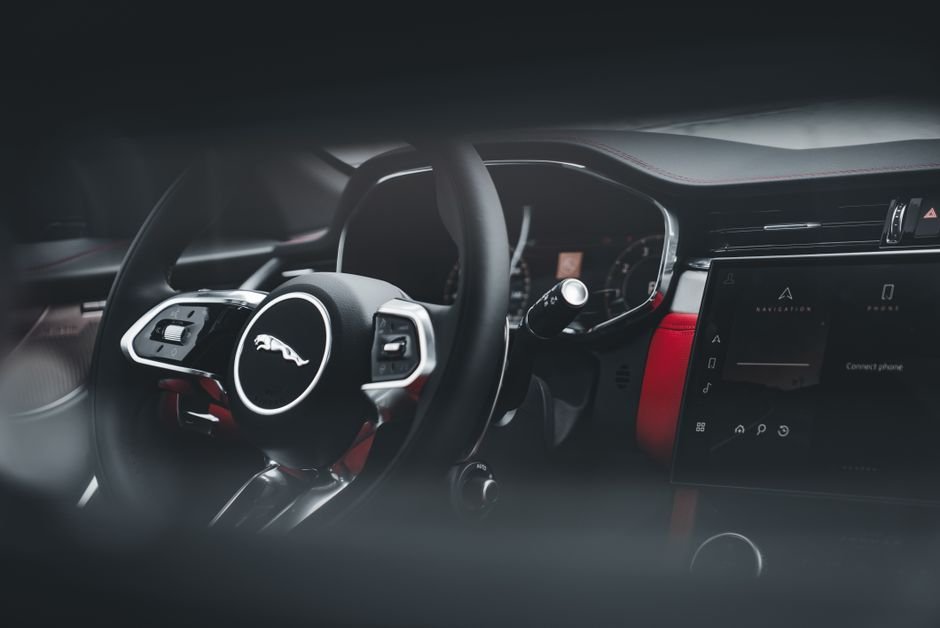
A used Jaguar I-Pace that stickered for $70,000 to $86,000 new can now be had for $15,000 to $23,000. That is not a typo. The used Jaguar I-Pace has become the fastest-depreciating vehicle in America. The reason isn’t just bad luck — it’s a battery recall saga with no permanent fix in sight.
How bad is Jaguar I-Pace depreciation, really?
It’s the worst of any car iSeeCars tracked. The I-Pace lost 72.2% of its value over five years. That’s the steepest drop of any vehicle in the study’s 800,000-car sample, more than three times the average car’s loss.
For scale, a typical five-year-old car loses about $17,395 off its sticker. The Jaguar I-Pace shed roughly $51,953. That’s nearly triple the average loss.
CarEdge pegs the number slightly differently but lands in the same neighborhood: a 71% loss over five years, leaving an average resale value around $21,598 on a car that started at nearly $74,000. Either way you slice it, this is the harshest depreciation curve in the industry. It’s worse than the BMW 7 Series. It’s worse than any other EV. It’s worse than any Jaguar before it.
What does a used Jaguar I-Pace actually cost right now?
As of September 2026, Kelley Blue Book shows national trade-in averages of roughly $15,200 for the base S trim. The SE trim averages $13,950. The HSE runs a bit higher at $16,950. Retail asking prices on marketplaces land higher, typically in the high teens to low $20,000s for early cars.
| Trim / Year | Original MSRP | Typical Used Price (2026) |
|---|---|---|
| 2019-2020 S | ~$70,000 | $15,000 – $18,000 |
| 2019-2020 SE | ~$76,000 | $14,000 – $19,500 |
| 2019-2020 HSE | ~$81,000 | $17,000 – $23,600 |
| 2023-2024 (any trim) | ~$72,000 | $28,000 – $30,000 |
That’s not a typical used-car discount. That’s a car losing two-thirds to three-quarters of its value fast. Many buyers are still making payments on a similar new vehicle when this happens.
Why has the I-Pace crashed so much harder than other used EVs?
Three things stacked on top of each other. A battery defect still lacks a permanent repair. The charging system feels outdated next to newer EVs. And Jaguar quietly ended I-Pace production. Buyers noticed. They’ve refused to pay up for it.
Jaguar Land Rover North America has now issued its fourth battery-related recall tied to the I-Pace’s high-voltage pack. It follows a string of earlier campaigns covering thermal overload risks in packs supplied by LG Energy Solution. The most recent action was filed with NHTSA in February 2026. It covers 2,278 model-year 2020-2021 vehicles built with cells that may have folded anode tabs. That’s a manufacturing flaw that can cause internal short circuits and, in rare cases, fire. You can check any VIN against open campaigns directly through NHTSA’s recall lookup before you buy.
The fix, for now, is a software patch. It caps charging at 90% of the battery’s capacity. That’s a real compromise on a car whose range was already modest by today’s standards. Jaguar has said a permanent hardware remedy is still in development. Owners have been advised to charge outside and away from buildings in the meantime.
Some owners are frustrated enough to push back hard. A petition with more than 2,000 verified signatures is now demanding a buyback or a guaranteed permanent fix on a set timeline. Jaguar has already run one buyback program covering roughly 2,760 affected vehicles. A class-action lawsuit alleging the company knew about the defect is moving forward in federal court. If any of this sounds familiar, it’s the same pattern we’ve seen with the Porsche Taycan’s battery fire lawsuit — a recall that keeps getting reopened because the underlying fix hasn’t landed yet.
Is a used Jaguar I-Pace a smart buy or a money pit?
I’d call it a smart buy only for a specific buyer. That’s someone who does their homework, buys a 2022-or-newer model outside the worst recall window, and treats the deep discount as compensation for real risk rather than free money. For anyone else, I’d walk away from the pre-2022 cars.
The 2022-and-later I-Pace models fall outside the affected battery production window. They reportedly show no elevated thermal overload pattern in Jaguar’s own data. That makes them a much saner starting point if you still want the badge and the bargain price.
Before you buy any pre-2022 I-Pace, at minimum:
- Run the VIN through NHTSA’s recall database and confirm every open campaign has been closed
- Ask the dealer or seller for proof the 90% charge-cap software update has been installed
- Get an independent battery health check, not just a dealer’s word
- Budget for Jaguar’s higher-than-average electrical repair costs — the 2020 model alone logged 38 NHTSA complaints, most tied to electrical faults
- Confirm the car isn’t part of an open class-action or buyback claim that could affect resale later
If any of that checklist makes you nervous, that’s the market telling you something. For a deeper rundown on how to vet a used EV’s battery, warranty coverage, and history before signing anything, our used EV buying guide walks through the exact questions to ask a seller. And if you’re weighing an I-Pace against total ownership costs over five years, run the numbers first. Our EV total cost of ownership guide breaks it down. Depreciation this steep changes the math more than most buyers expect.
FAQ
Is the Jaguar I-Pace still in production?
No. Jaguar built the I-Pace for one generation from 2018 through 2024. Production has ended as the brand shifts its entire lineup toward new electric models launching later this decade.
What causes the Jaguar I-Pace battery fire risk?
NHTSA filings point to folded anode tabs inside battery cells supplied by LG Energy Solution. These cells were produced before October 2020. The flaw can cause internal short circuits and thermal overload under certain conditions.
Should I avoid buying a used I-Pace entirely?
Not entirely, but stick to 2022 or newer models if you can. Jaguar’s own data shows no elevated risk pattern in that range. Always verify recall completion before you sign anything.
How does I-Pace depreciation compare to other used EVs?
It’s currently the steepest in the industry. The I-Pace lost more value in five years than any other vehicle tracked by iSeeCars. That’s worse than the Nissan Leaf, worse than luxury sedans, worse than any other EV on the market. If you’re cross-shopping cheaper EVs with steadier reputations, our breakdown of which Nissan Leaf years to avoid is a useful comparison point.