
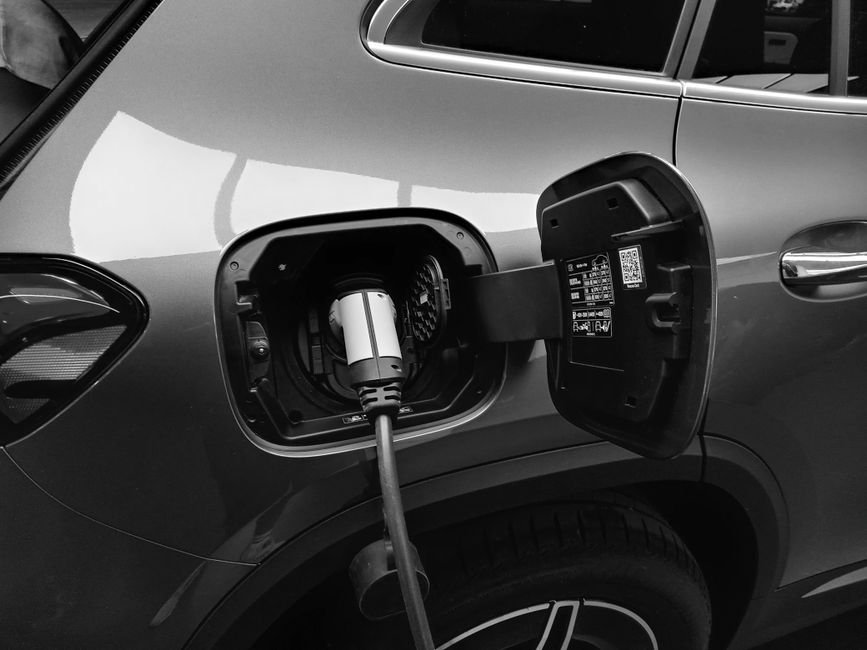
Gas is back above $4.40 a gallon nationally. It’s doing something the federal tax credit’s death couldn’t: pushing Americans back toward EVs. Call it the EV comeback nobody expected a year ago, when headlines were busy declaring electric cars dead in America.
September 2026 was the most expensive September at the pump in U.S. history. The national average landed at $4.33 a gallon. It’s since hovered between $4.38 and $4.43 through early October. That’s roughly 39% higher than this time last year. If you’re filling up a 14-gallon tank, that’s about $17 more per fill-up than twelve months ago.
Is this EV comeback actually happening, or just hype?
It’s real, though uneven. Used EV prices are rising instead of falling, which almost never happens with cars. Shopper research activity for electrified vehicles jumped noticeably the moment gas prices spiked earlier this year. New EV sales are still a small slice of the market. But the direction has clearly flipped from decline to growth.
Used EV prices climbed 5.1% between January and June 2026. They were up 7% year-to-date by mid-July. That’s an unusual trend, since used cars almost always depreciate. The average transaction price for a 3-year-old EV rose 6% in the first half of the year, from $31,429 to $33,303. Edmunds reported electrified-vehicle research jumped from 20.7% to 22.4% of all shopping activity in a single week back in early March. That spike hit right as gas prices first jumped.
On the new-car side, Cox Automotive analyst Stephanie Valdez Streaty expects 2026 to close out with EVs holding around a 6% share of the U.S. market. That’s modest. But it’s a real rebound from the post-tax-credit slump. Globally, the shift is even starker. Gasoline-powered cars fell below half of all new-car sales worldwide for the first time this year. High oil prices pushed buyers toward electrification almost everywhere — except, notably, the U.S.
Why are EVs suddenly looking cheaper than before?
Electricity costs haven’t spiked the way gasoline has. So the gap between fueling a gas car and charging an EV has widened fast. Add in a flood of off-lease EVs hitting used lots, and buyers now have more affordable inventory than at almost any point in the past few years.
Off-lease EV volume is projected to jump 185% this year. That’s a move from around 106,000 vehicles to roughly 300,000. That surge is exactly why we’ve been tracking which of those cars are actually worth grabbing in our guide to the 329,000 off-lease EVs hitting lots in 2026. More supply, combined with rising gas prices, is a rare one-two punch in the used buyer’s favor.
Gas vs. EV: what the price gap actually looks like right now
| Factor | Gas Car | EV |
|---|---|---|
| Cost to “fill up” (14-gal tank or equivalent charge) | ~$61 at $4.38/gal | $10–$18 at home, more at public fast chargers |
| Price trend, used market | Falling, as usual | Rising 5–7% YTD in 2026 |
| Federal tax credit | N/A | Expired September 2025 |
| New-vehicle market share (2026) | ~94% | ~5–6%, trending up |
Should you buy an EV now, or wait for prices to settle?
If you drive a lot and can charge at home, buy now. The math already favors you, and waiting just means more gas station visits. If you’re a light driver without home charging, the case is weaker. Waiting for more used inventory to hit the market still makes sense there.
The federal $7,500 tax credit is gone for good. So that incentive is no longer part of the equation either way. We broke down whether EVs are still worth it without that credit in our piece on the $7,500 EV tax credit dying a year ago. The short answer: high gas prices are doing a lot of the work the credit used to do.
Used EVs are an especially interesting play right now. Prices there have started matching, and in some cases undercutting, comparable gas cars. We covered that shift in detail when used EV prices caught up to gas car prices. Combine that with current fuel costs, and the ownership math tips further toward electric for anyone doing real mileage.
What should you actually look at before buying?
- Your daily mileage — the more you drive, the faster an EV’s fuel savings outweigh any upfront premium.
- Home charging access — a garage or driveway with an outlet changes the entire ownership experience.
- Battery health on used models — always get a battery report before buying a used EV.
- Insurance costs — some EVs cost noticeably more to insure than their gas counterparts.
- Regional gas prices — if you’re in California ($6.40/gallon) or Hawaii, the EV math is a slam dunk; in Indiana or Texas, it’s closer.
For a full breakdown of whether the numbers work for your specific situation, our real decision framework for buying an EV in 2026 walks through the math step by step. It doesn’t give a one-size-fits-all answer.
What about total cost of ownership, not just gas savings?
Gas savings alone don’t tell the whole story. Maintenance, insurance, depreciation, and electricity rates all factor into whether an EV actually saves you money over several years. Right now, most of those other factors are trending in the EV’s favor too, not just fuel costs.
Maintenance in particular tends to run cheaper for EVs. There’s no oil changes, exhaust system, or transmission to maintain. If you want the full math rather than the fuel-price snapshot, check our complete EV total cost of ownership breakdown for 2026, which accounts for everything beyond the pump.
My take: don’t buy an EV because gas is expensive this month. Buy one because the total math — fuel, maintenance, and a genuinely improved used market — finally lines up. Right now it does for a lot of drivers. You can verify the EIA’s own gas price trends directly on the U.S. Energy Information Administration’s gasoline and diesel price page before you commit.
FAQ
Will gas prices stay this high?
Nobody can say for certain. But the current spike is tied to an ongoing geopolitical conflict, not a temporary refinery issue. That means it could persist longer than a typical seasonal spike.
Is it cheaper to buy a used EV or a new one right now?
Used, in most cases. New EVs still carry a sticker-price premium and lost their federal tax credit. Used EV prices, though rising, remain well below new EV costs and now rival comparable used gas cars.
Do hybrids make more sense than full EVs with gas this high?
Hybrids are a solid middle ground if you don’t have home charging access or drive long distances regularly. They still cut fuel costs significantly without requiring any charging infrastructure.
Does charging at public stations erase the savings?
It shrinks them but rarely erases them entirely. Public fast charging costs more than home charging. Still, it’s typically cheaper per mile than gasoline at current prices.