
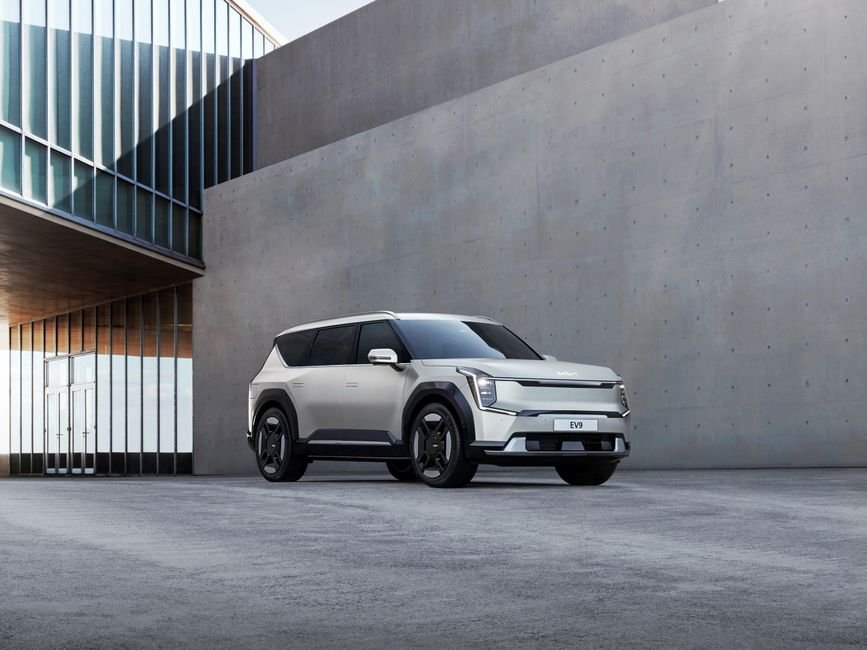
Kia just told federal regulators that 21,290 EV9 electric SUVs may not be smart enough to know a child is sitting in the front seat. That’s the heart of the new Kia EV9 recall. It’s a genuinely unsettling one, too, because it involves airbags and kids, not some obscure software glitch.
The good news: the fix is free and fast. Kia has already corrected the problem on the assembly line. The bad news: this is now one of several recalls to hit Kia’s flagship three-row EV in a short window. That pattern matters if you’re shopping one right now.
What exactly is wrong with the Kia EV9?
A small tube under the front passenger seat can get pinched. That confuses the sensor that’s supposed to detect a child or car seat and turn off the airbag. If a crash happens after that, the airbag could deploy anyway. Deploying an adult-sized airbag on a small child is exactly the injury risk automakers work to prevent.
The recall covers 2025 and 2026 model-year EV9s. All were built at Kia’s Georgia plant between May 2024 and mid-May 2026. The culprit is the Occupant Detection System’s mat and bladder tube, supplied by Adient. That tube can become pinched when the seat is raised to its highest position, and repeated adjustments make it worse over time. A pinched tube throws off the weight reading the airbag computer relies on.
Kia estimates only about 6% of the recalled SUVs actually have the damaged part. Every one of the 21,290 vehicles gets inspected anyway. If your EV9 has the defect, you’ll likely notice an airbag warning light or a seatbelt chime, even with nobody in the passenger seat.
Is my EV9 affected by the recall?
If you own a 2025 or 2026 EV9 built in the U.S., you’re in the recall population. Kia says affected units weren’t produced in strict VIN order, though. The safest move is calling your dealer directly rather than guessing from your build date.
- Vehicles affected: 21,290 units, 2025-2026 model years
- Built where: Kia’s Georgia plant only (Korean-built EV9s are not included)
- Build window: May 17, 2024 through May 13, 2026
- Estimated defect rate: around 6% of recalled vehicles
- Notification letters mailed: starting October 20, 2026
- Fix: free inspection, plus ODS mat and tube replacement if needed
You don’t have to wait for the letter. Kia says owners can call Customer Service ahead of time. You can also check your VIN once it’s active in the NHTSA recall database, which should happen a few weeks before letters go out.
Should you avoid the front seat with kids until it’s fixed?
Yes, at least for now, and Kia agrees. The automaker’s own guidance says children 13 and younger belong in the rear seat regardless. That’s especially true until your specific EV9 has been inspected. Kia hasn’t told owners to stop driving the vehicle otherwise, so this isn’t a park-it-in-the-driveway situation.
Is this the EV9’s first recall, or part of a pattern?
This is not an isolated incident. That’s the part potential buyers should weigh carefully. Kia’s family-hauling EV has racked up multiple separate recalls in less than two years on sale. They cover everything from loss-of-power issues to now this airbag sensor problem.
We’ve tracked this closely. That includes when Kia EV9 recalls hit seven separate campaigns, and again when two more landed within a single month. A three-row EV pitched at families shouldn’t be racking up this many airbag and safety-system fixes this fast. Each individual repair may be straightforward, but the pattern isn’t great.
Kia isn’t a one-model story here, either. The brand also had to reissue a fix for the Telluride’s fire risk after an earlier repair failed. We covered that in our Kia Telluride recall breakdown. Taken together, it’s a rough stretch for Kia’s larger family vehicles specifically.
So should you still buy a Kia EV9?
Buy new with confidence. Buy used with your eyes open. The fix here is quick, free, and targets the actual root cause instead of papering over it with a software patch. A properly repaired EV9 should be just as safe as any other three-row EV on sale.
The 2026 EV9 starts around $56,395 and tops out near $73,395 depending on trim. Kelley Blue Book still names it a repeat winner for three-row EVs in its class. That’s a strong case for the vehicle itself. My hesitation is entirely about Kia’s recall cadence lately, not the EV9’s driving experience or interior.
| Trim | Drivetrain | Starting Price | Est. Range |
|---|---|---|---|
| Light RWD | RWD | ~$56,395 | 230 miles |
| Light Long Range | RWD | mid-$50Ks-$60Ks | 305 miles |
| Wind AWD | AWD | low-$60Ks | 283 miles |
| Land AWD | AWD | mid-$60Ks | 283 miles |
| GT-Line AWD | AWD | ~$73,395 | 280 miles |
If you’re cross-shopping a used EV9, don’t skip the paperwork trail. Our used EV buying guide walks through how to confirm every open recall has been completed before you hand over a deposit.
FAQ
How do I check if my EV9 is part of this recall?
Call Kia Customer Service or your local dealer directly. The affected VINs weren’t built in a simple sequential range. Once NHTSA activates the campaign number in its database, you can also search your VIN there.
Does this recall affect the EV9’s overall safety rating?
Not directly. The defect is specific to the front passenger occupant detection system. It doesn’t touch the structural crash performance that determines a vehicle’s overall safety ratings.
Is the repair the same free fix Kia is offering on other recalls?
Yes. Like Kia’s other recent campaigns, dealers will inspect and repair affected EV9s at no charge. That includes replacing the ODS mat and bladder tube where necessary.
Are 2026 EV9s built after May 2026 affected?
No. Kia corrected the tube routing on the assembly line. EV9s built starting May 14, 2026 already have the proper fix from the factory.