
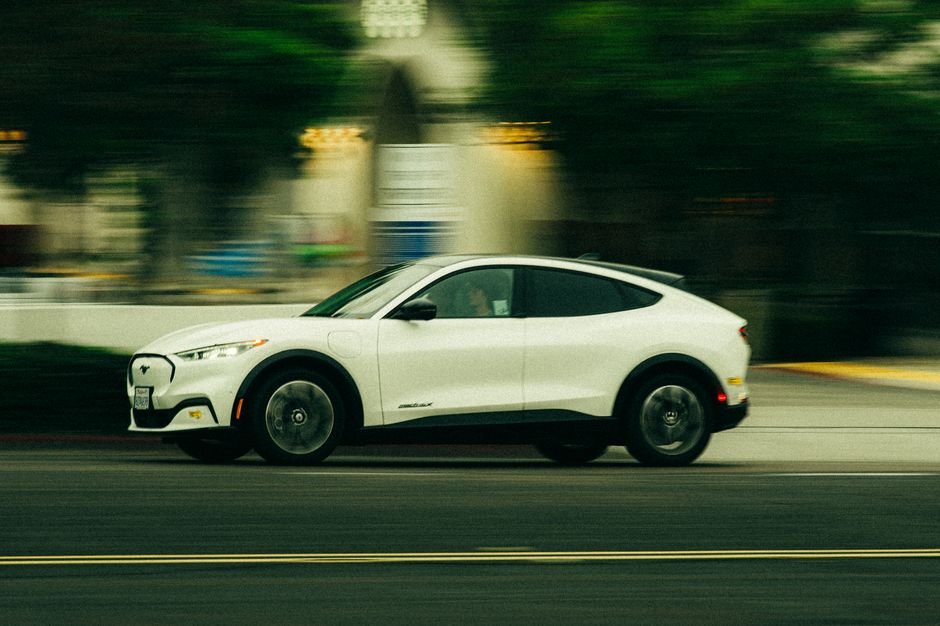
Insuring a Ford Mustang Mach-E will run you about $770 more a year than insuring the gas-powered Mustang it’s named after. That’s not internet forum talk. It’s the finding of Insurify’s 2026 EV Report, which pegged Mach-E full-coverage premiums at $3,197 a year versus $2,427 for the traditional gas Mustang. That’s a 32% gap. If you’re cross-shopping the two, that difference deserves a hard look before you sign anything.
How much more does the Mach-E actually cost to insure?
The short answer: about $64 a month more, or roughly $770 a year. That’s based on national averages. The gap narrows or widens depending on your state, driving record, and which Mach-E trim you’re buying. But 32% is the benchmark figure everyone’s citing right now.
Here’s how the numbers stack up against both the gas Mustang and the broader EV-versus-gas comparison:
| Vehicle | Avg. Annual Premium | Gap vs. Gas Equivalent |
|---|---|---|
| Ford Mustang Mach-E (EV) | $3,197 | +32% |
| Ford Mustang (gas) | $2,427 | baseline |
| All EVs, all model years | $3,159 | +42% |
| All gas cars, all model years | $2,218 | baseline |
| EVs, 2024 or newer only | $4,046 | +18% (vs. newer gas cars) |
Notice something interesting there. The Mach-E’s 32% premium is actually smaller than the industry-wide 42% EV surcharge. That’s not because Ford’s EV is cheap to fix. It’s because the gas Mustang isn’t cheap to insure either. Sports coupes carry their own risk penalty. That shrinks the apparent gap when you’re comparing a Mach-E to a Mustang instead of to a boring gas crossover.
Why does the Mach-E cost more to insure than the gas Mustang?
Repair costs are the main driver. EVs use specialized batteries, motors, and body components that cost more to fix. They also require technicians with specific training, and insurers price that risk into every policy.
A few concrete reasons show up again and again in the data:
- Battery repair economics: even minor collision damage near the battery pack can trigger an expensive diagnostic process. Insurers sometimes total a car rather than repair the pack.
- Fewer certified shops: not every body shop has the equipment or training to safely work on high-voltage EV components. That stretches repair timelines and claim costs.
- Higher replacement value: EVs generally carry higher sticker prices than comparable gas models. That higher value directly raises comprehensive and collision premiums.
If you’re already dealing with an older Mach-E, check whether your specific VIN is affected by the ongoing recall. We cover what that means for owners in our Mach-E battery recall breakdown.
Is the EV insurance gap actually shrinking?
Yes, and faster than most people realize. Compare only 2024-and-newer vehicles, and the EV insurance premium over gas drops to about 18%. EV rates have actually declined faster than new gas-car rates over the past year.
Newer gas vehicles are loaded with cameras, sensors, and driver-assist hardware too. That’s expensive to fix, and it’s quietly closing the gap from the other direction. Still, EV insurance costs overall have climbed 37.6% since 2023. That’s about 24% faster than gas-car increases over the same stretch. The trend line is favorable for EV owners. But the starting point is still higher.
Does the extra insurance wipe out the Mach-E’s fuel savings?
Not usually, but it eats into them. With gas averaging around $4.49 a gallon nationally this year, most Mach-E owners still come out ahead on fuel costs alone. That holds even after paying the insurance premium. The math gets tighter if you drive fewer miles or live somewhere gas is cheap.
For a full picture of how insurance, fuel, maintenance, and depreciation net out over years of ownership, check our EV total cost of ownership guide. It walks through the real numbers instead of relying on sticker price alone. Maintenance is actually where EVs tend to claw back savings. We break that down separately in our EV maintenance cost comparison.
So is the Mach-E worth the higher insurance bill?
I’d still buy it. A 32% insurance premium sounds alarming as a headline. But in real dollars it’s about $65 a month. That’s less than most people spend on takeout coffee, and far less than what you’d lose driving a car you don’t actually want.
Shop your quotes aggressively before you sign anything. Carrier-to-carrier pricing on the Mach-E swings by hundreds of dollars for identical coverage. If insurance cost is your single biggest hesitation, consider a used Mach-E from 2021 or 2022. It will typically insure for noticeably less than a brand-new one, since premiums scale with the vehicle’s replacement value. Our used EV buying guide covers exactly how to find those deals without inheriting someone else’s problems.
FAQ
Why is Mustang Mach-E insurance more expensive than the gas Mustang?
Mainly repair costs. The Mach-E’s battery pack, electric motor, and specialized components cost more to fix after a collision. Fewer shops are certified to work on them, which pushes insurer risk pricing higher.
Will Mach-E insurance keep getting cheaper?
Likely yes, gradually. The gap between EV and gas insurance has already narrowed from over 40% down to about 18% for newer model years. Insurers are gathering more repair data, and gas cars are picking up their own expensive tech.
Does the Mach-E’s insurance cost vary a lot by trim?
Yes. A base Select RWD trim insures for noticeably less than a GT Performance Edition. Higher-performance trims carry higher replacement values and, in some cases, higher risk ratings.
Is buying a used Mach-E a good way to lower insurance costs?
Generally, yes. Insurance premiums are tied closely to a vehicle’s market value. An older Mach-E with more mileage will typically cost less to insure than the same trim brand-new, on top of the lower purchase price.