
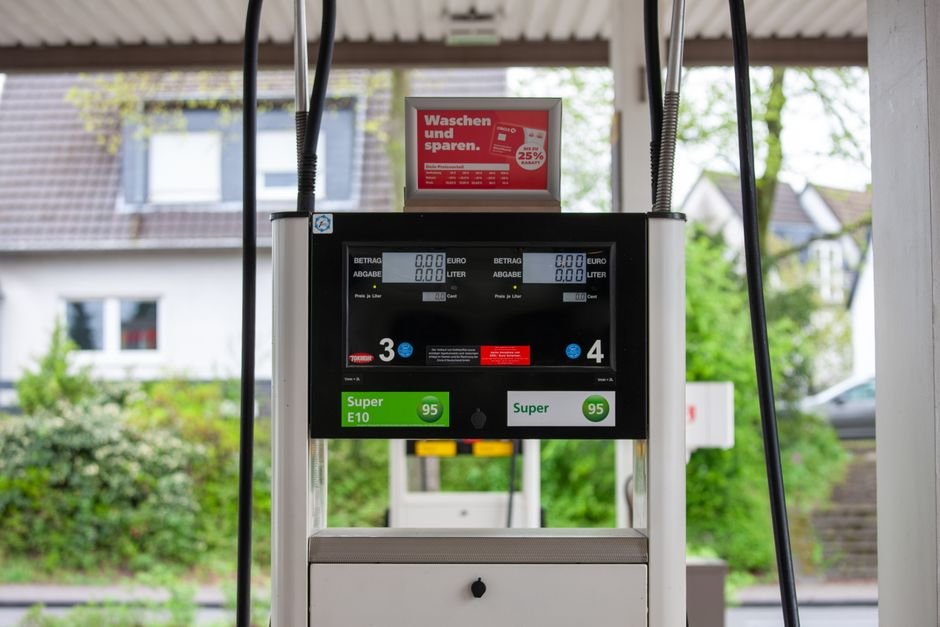
Yes, a used EV is worth it right now for most drivers who can charge at home. And the math got better this year, not worse. The national average for regular gasoline hit $4.44 a gallon in mid-September 2026, up sharply from a year ago.
That pain at the pump is doing something unusual to the used EV market. It’s pushing prices up instead of down. That’s a strange twist for a category that spent 2023 and 2024 in freefall. But it changes the calculation for anyone comparing a used gas car to a used EV this fall.
Why are gas prices spiking in 2026?
Gas prices climbed through the summer on tighter crude supply and refinery pressure. They’re still running well above last year’s levels. That’s true even after easing slightly from their spring peak. Diesel has been even worse, recently topping $6 a gallon in some trackers.
Depending on which tracker you check, the national average sits somewhere between $4.15 and $4.48 a gallon as of mid-September. California, Washington, and Hawaii all average north of $5.40. Texas, Indiana, and Mississippi remain the cheapest states to fill up. Either way, drivers everywhere are paying meaningfully more than they were a year ago.
Is a used EV worth it with gas this expensive?
For anyone driving a typical 12,000 miles a year with home charging access, yes. A used EV now saves real money on fuel. That’s often $1,000 to $1,500 annually compared to a similar gas car. The gap only widens as gas prices climb.
Run the numbers yourself. A 25-mpg gas car burns about 480 gallons a year at 12,000 miles. At $4.15 a gallon, that’s roughly $1,992 annually. A comparable EV averaging 3.5 miles per kWh needs about 3,430 kWh a year. At a typical home electricity rate, that lands closer to $500–$600 a year. That’s real money back in your pocket every single year you own the car.
| Cost category | Gas car (25 mpg) | Used EV (home charging) |
|---|---|---|
| Annual fuel/energy cost* | ~$1,992 | ~$550 |
| Avg. 3-year-old used price | Varies by model | ~$33,300 (up from $31,400 a year ago) |
| Avg. used listing (all EVs) | N/A | ~$35,900 |
| Sub-$25,000 used inventory share | Common | ~18% of listings |
*Based on 12,000 miles/year at $4.15/gal gas and typical home electricity rates.
Why are used EV prices going up instead of down?
Used EV prices climbed roughly 5–7% through the first half of 2026. That reverses years of steep depreciation. The main driver is simple: rising gas prices are pulling more shoppers toward electric options. Analysts point directly to fuel costs as the trigger.
Edmunds found that the average transaction price for 3-year-old EVs rose 6% in the first half of the year. Cox Automotive reported that 21 of the 25 highest-volume used EV models got more expensive from January through June. Not less. Edmunds’ Ivan Drury put it bluntly, saying expensive gasoline is “supercharging the EV demand.” Meanwhile, Cox Automotive data shows used EV sales jumped 20% in June year-over-year. New EV sales fell roughly 28% over the same stretch.
That’s a meaningful shift. It means the “used EVs are always a bargain” era isn’t quite as true as it was in 2023 and 2024. But it also signals real buyer confidence that these cars hold value and save money long-term.
Does it still matter if you can’t charge at home?
Honestly, yes. If you’re relying entirely on public fast charging, the savings shrink dramatically. Sometimes they disappear entirely. Public DC fast charging can run $0.35–$0.55 per kWh in many markets. That erases most of the fuel-cost advantage over a gas car.
If you live in an apartment or park on the street, weigh that reality first. Don’t assume a used EV is an automatic win. It’s still worth checking whether installing a home charger makes sense for your situation, even a basic outlet-based version. We broke down what that actually costs now in a separate piece.
Which used EVs should you actually consider buying?
Stick to mainstream models with strong real-world range. Look for a track record of holding up over time. Don’t just chase the cheapest listing you can find. Battery health varies a lot by brand, so check before you buy.
- Look at models with 230+ miles of real-world range and access to fast charging
- Favor 2022–2023 model years now flooding lots as leases end—see our breakdown of the 329,000 off-lease EVs hitting the market this year
- Check battery degradation reports before buying; some brands hold up far better than others, as we found when comparing used EV battery health across models
- Budget for tires and brakes differently than you would with a gas car
Want the full picture on whether an EV pencils out for your driving habits? Our EV total cost of ownership guide walks through insurance, maintenance, and resale on top of fuel. Before you commit to a specific listing, check our used EV buying guide. It covers the inspection steps that can save you thousands.
My take
I’d buy a used EV right now if I could charge at home. Full stop. Gas prices show no sign of dropping back toward $3 anytime soon. The used EV market has also matured. You’re no longer gambling on a dying battery or a car nobody wants to service.
The catch is timing your purchase around a specific model with proven range retention. Don’t just chase the lowest price tag on the lot. Get that part right, and the fuel savings alone can cover a meaningful chunk of your payment every month.
FAQ
How much can I actually save switching from gas to a used EV?
Most drivers charging at home save $1,000 to $1,500 a year on fuel alone. That depends on local electricity and gas prices. Savings grow as gas prices rise.
Are used EV prices going to keep rising in 2026?
Prices have risen for several months running, driven by gas costs and strong demand. But Cox Automotive notes month-to-month EV pricing hasn’t moved in a straight line historically.
Is it riskier to buy a used EV than a used gas car?
Not inherently. Battery health and charging access matter more than mileage alone. Get a battery health report and confirm charging options before buying.
Should I wait for prices to drop again before buying?
Used EV prices are currently rising, not falling. Waiting could mean paying more later, especially for popular mainstream models.