
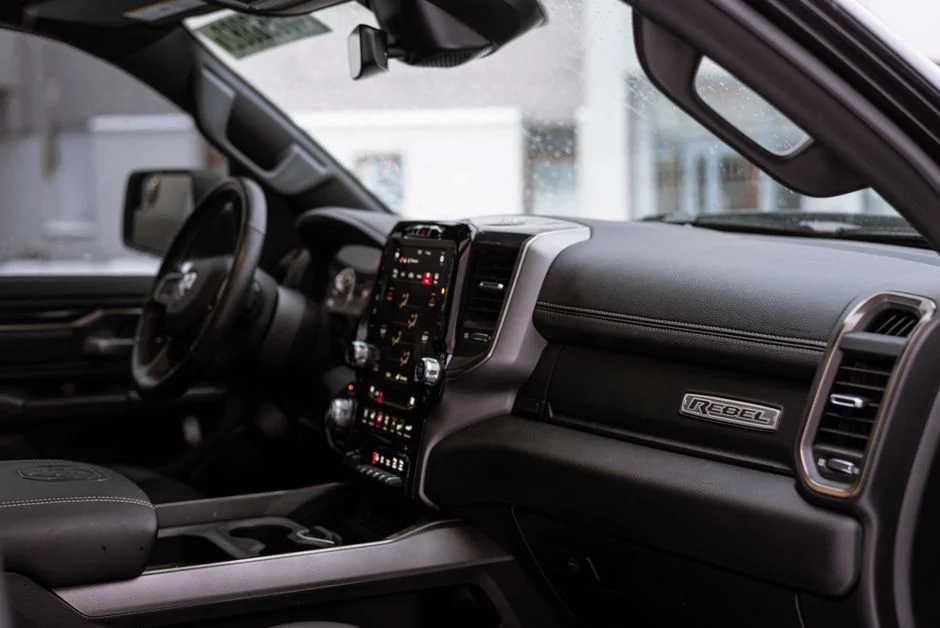
Ram killed its all-electric pickup outright. The plug-in hybrid that inherited its name now won’t reach dealers until 2027. That’s years later than originally promised, and it’s the short version of the Ram 1500 REV delay.
The full story is messier, though. And it matters a lot if you’re cross-shopping a new truck right now.
If you’ve been holding out for an electrified half-ton Ram, here’s what’s actually happening. Spoiler: buying a gas Ram 1500 today is probably the smarter move.
Wait, is the Ram 1500 REV an EV or a hybrid now?
It’s a plug-in hybrid, not the battery-electric truck Ram originally showed off in 2023. Stellantis canceled the fully electric version last September. Then it slapped the “REV” name onto what used to be called the Ramcharger instead.
The move confused pretty much everyone covering it. Stellantis officials confirmed the battery-powered 2026 Ram 1500 REV has been canceled. They said demand for full-size battery-electric trucks was slowing in North America. The range-extended Ramcharger, which uses a gas-powered V6 to recharge its battery, will go on sale as the newly-renamed Ram 1500 REV.
Why does the Ram 1500 REV delay keep happening?
Stellantis keeps pushing back the launch of the same electrified pickup under different names. It blames both quality issues and cooling EV demand. This is now the third or fourth timeline shift since the truck was first unveiled.
The original all-electric truck slipped from 2024 to 2025 to 2026 before getting canceled entirely. It debuted in concept form in early 2023. From there it was pushed back to 2025, then early 2026, then mid-2027, before finally being delayed to “never.”
Meanwhile the surviving EREV — the one now wearing the REV badge — has its own delay history. The Ram 1500 REV has been pushed to mid-April, according to a supplier memo reviewed by Automotive News. That’s after most recently targeting a mid-2026 launch.
A Stellantis spokesperson insists nothing is actually behind schedule internally. “Both Jeep and Ram are on track as planned. Jeep for this year and Ram for 2027,” the spokesperson said. Two supplier executives added that the delays are meant to support smoother launches.
Should you buy a gas Ram 1500 now instead of waiting?
Yes. A gas or mild-hybrid 2026 Ram 1500 is available today. It’s cheaper, it’s proven, and it doesn’t come with the risk of another delay announcement next quarter. Unless you specifically need the REV’s plug-in capability, there’s no good reason to wait.
Pricing tells the story on its own. Here’s how the current lineup stacks up against what we know so far about the electrified truck:
| Truck | Starting Price | Powertrain | Availability |
|---|---|---|---|
| 2026 Ram 1500 Tradesman | ~$42,025–$44,820 | 3.6L V6 mild hybrid, 305 hp | In dealer lots now |
| 2026 Ram 1500 (V8 return) | Mid-range trims | 5.7L HEMI V8, 395 hp | In dealer lots now |
| 2026 Ram 1500 Tungsten | ~$87,320–$89,095 | 3.0L Hurricane I6, up to 540 hp | In dealer lots now |
| 2027 Ram 1500 REV (EREV) | Not yet announced | 92-kWh battery + 3.6L V6 generator, up to 663 hp | Expected 2027 |
The least-expensive 2026 Ram 1500 arrives with a starting MSRP of about $44,775 including destination charge. Shoppers aren’t even paying full sticker. The average price paid is around $42,791, roughly 4.5% below MSRP.
If you want to squeeze a deal, our breakdown of Ram’s recent 15% off MSRP promotion is worth a look for what discounts have looked like recently.
What will the 2027 Ram 1500 REV actually offer?
Big power and huge total range, on paper. It pairs a large battery with a gas generator, so you never actually plug in unless you want to. It should also out-tow most electric trucks on the market.
The Pentastar 3.6-liter hybrid V6 delivers 663 total horsepower and 615 pound-feet of torque. It hits zero to 60 mph in 4.4 seconds. It can tow up to 14,000 pounds and carry over 2,600 pounds, powered by a 92-kilowatt-hour battery pack and 130-kilowatt generator.
It’s expected to use a large 70.8 kWh battery pack, providing 145 miles of pure EV driving range. The gas engine kicks in once the battery drops below a certain state of charge. Total range is projected around 690 miles between charging and refueling.
Nobody has official pricing yet. But expect it to land well above the gas-powered 1500’s range — likely somewhere in the $70,000-plus territory once it finally arrives. If you’re weighing an electrified truck against sticking with gas, our framework for deciding whether to buy an EV in 2026 walks through the math in more detail.
Is Ram giving up on electrification entirely?
No. Ram is betting everything on this one hybrid truck instead of splitting resources across a full BEV and an EREV. That’s a narrower bet, but it also means less risk of the brand stumbling on two half-finished electrified programs at once.
Stellantis has been juggling a lot of product timing lately. Ram isn’t the only nameplate affected. See our coverage of the 60 new vehicles Stellantis has promised across Jeep, Ram, and Dodge for the bigger picture.
If you’re drawn to Ram’s performance side rather than electrification, our look at vanishing Ram Rumble Bee allocations covers a different reason to act sooner rather than later.
FAQ
Is the Ram 1500 REV still an electric truck?
No. Ram canceled the fully electric version in 2025. It reused the REV name for its plug-in hybrid, formerly called the Ramcharger, which still uses a gas V6 as a generator.
When can I actually buy a Ram 1500 REV?
Current supplier timelines point to production starting around mid-April 2027. Stellantis publicly says the truck remains on track for a 2027 launch.
How much will the Ram 1500 REV cost?
Ram hasn’t announced official pricing. But given the battery size, V6 generator, and premium equipment, expect a starting price well above a comparable gas 1500 — likely in the $70,000-plus range.
Should I wait for the Ram 1500 REV or buy a gas truck now?
Buy the gas truck now if you need a vehicle soon. The REV has already slipped multiple times. Gas Ram 1500s are cheaper and widely available, and there’s no guarantee the 2027 target holds.