
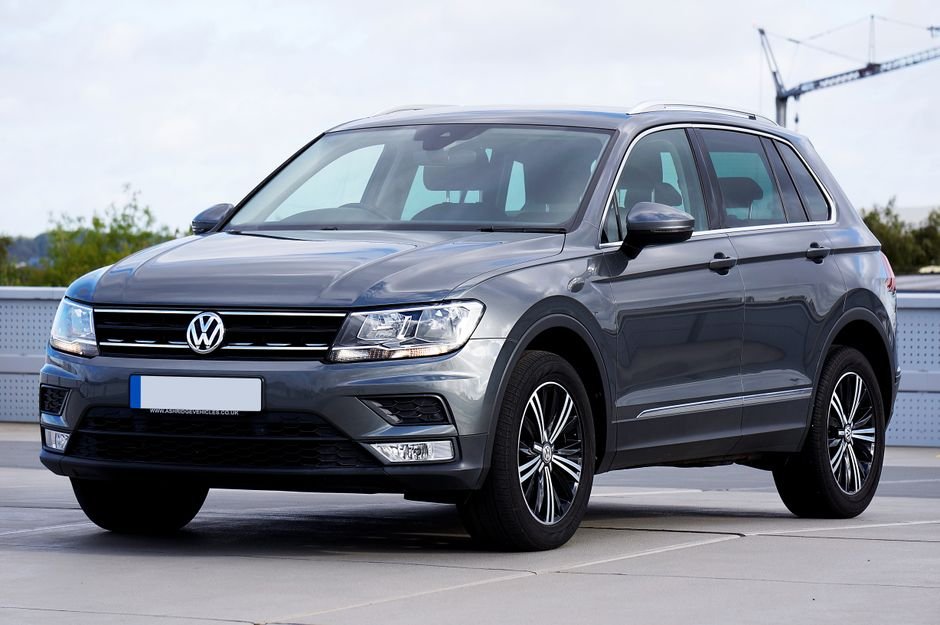
Three recalls in under a year for a freshly redesigned SUV is not a great look. But it’s also not automatically a dealbreaker. The all-new Tiguan, which Volkswagen completely redesigned for the 2025 model year, has now racked up three separate safety recalls. They cover everything from a loose rear tie rod bolt to airbags that can silently shut themselves off. If you’re cross-shopping this new Tiguan recall history against a purchase decision, here’s what actually happened and whether it should change your plans.
What is this new Tiguan recall actually about?
The third recall involves a wiring defect in the passenger airbag sensor. It can deactivate the front passenger airbag without warning. Volkswagen says a missing crimp at a connection point can cause the system to fail. The automaker is telling owners not to let anyone sit in that seat until it’s fixed.
According to the recall filing, Volkswagen is recalling 3,138 model-year 2025 Tiguan crossovers. They were built at its Puebla, Mexico plant between March 24 and May 12, 2025. The company says it is aware of 58 field claims related to the issue in the U.S. It traces the root cause to a crimping defect. A supplier fixed the problem in production back in April 2025. Owner notification letters were expected to go out by early 2026.
What were the first two Tiguan recalls?
Before the airbag issue, VW had already recalled the new Tiguan twice. One involved a rear tie rod bolt that could loosen. The other was a software glitch that could kill the engine mid-drive. Both affected far more vehicles than the airbag recall does.
Here’s the full rundown so far:
| Recall | Vehicles Affected | Defect | Risk |
|---|---|---|---|
| Tie rod bolt | 208,000+ (Tiguan, Atlas, Q3 combined) | Loose rear axle tie rod bolt | Loss of vehicle control |
| BCM software | 49,958 | Body control module can reset while driving | Engine stall, lost lights/camera |
| Airbag wiring | 3,138 | Crimping defect deactivates passenger airbag | Airbag won’t deploy in a crash |
The tie rod issue was part of a much larger campaign. It also swept in the Atlas and Audi Q3. We’ve covered that side of the story in detail already. The BCM software problem hit nearly 50,000 Tiguans. They were built between late March and late August 2025. It could cause the ignition to switch off unexpectedly, according to Volkswagen’s filing with NHTSA.
Is a new Tiguan recall pattern like this normal for a redesigned model?
Yes, actually. Brand-new platforms almost always generate more recalls in their first year. That doesn’t excuse it. But three recalls on a ground-up redesign isn’t as alarming as three recalls on a car that’s been unchanged for five years.
New body structures, new wiring harnesses, and new software all mean more places for a supplier to make a mistake. Early production runs are exactly when these kinds of wiring and calibration issues tend to surface. VW redesigned the Tiguan for 2025 on a new platform. It’s shared with other Volkswagen Group compact crossovers. All three recalls here trace back to specific, narrow production windows in 2025. This isn’t a systemic design flaw across the whole model line.
Should you actually buy a new Tiguan right now?
Yes, if the price is right. Just check the VIN first. All three defects have known fixes and free repairs. They also come from narrow production windows. That’s a very different situation than an unsolved design flaw with no remedy in sight.
The 2026 Tiguan starts at roughly $30,805 for the base S trim. It climbs toward the mid-$40,000s for the new SEL R-Line Turbo with 268 horsepower. That’s competitive pricing for a compact SUV with this much standard tech and interior quality. Before you sign anything, run the VIN on NHTSA’s recall lookup tool. Confirm any dealer stock has already had the fixes applied. Dealers are legally required to complete open recalls before selling a new car. Still, it’s smart to verify anyway.
If you’re weighing a new Tiguan against a used one from an earlier generation, it’s worth knowing something else. VW’s compact SUVs have had a rough recall stretch generally. We broke down the steering bolt recall’s impact on used Atlas and Q3 buyers in a separate piece. And if you’re cross-shopping VW’s electric lineup instead, our ID.4 battery recall breakdown covers a similar buy-or-wait question for that model.
For readers weighing whether a new gas SUV is even the smarter money move over an EV or used alternative, check our full decision framework for buying an EV in 2026. It’s a useful side-by-side to run before you commit either way.
What should you do if you already own one?
Don’t panic. But don’t ignore the letter either. If your Tiguan falls in the March–August 2025 build window, get the recall repairs scheduled as soon as VW notifies you. In the meantime, follow the airbag advisory. Keep the front passenger seat empty if you see a warning light.
All three fixes are free. They take a dealer visit of an hour or two. There’s no out-of-pocket cost regardless of your warranty status. That’s standard under federal recall law. Manufacturers cover 100% of the repair.
FAQ
How do I know if my Tiguan is part of any of these recalls?
Enter your 17-character VIN into NHTSA’s free recall lookup tool at nhtsa.gov. It will show every open recall tied to your specific vehicle, not just your model year in general.
Is it safe to drive a 2025 Tiguan before the recall repair is done?
For the airbag recall, Volkswagen specifically advises against letting anyone ride in the front passenger seat until the fix is complete. The tie rod and software recalls don’t carry the same seating restriction, but you should still get them scheduled promptly.
Will these recalls hurt the Tiguan’s resale value?
Probably not much, and definitely not long-term. Recalls with clear fixes and low complaint counts rarely leave a lasting dent once the repairs are documented in the vehicle history.
Does VW cover recall repairs even if I bought the car used?
Yes. Recall repairs are free to any owner, regardless of whether you’re the original buyer or bought the car secondhand. Mileage and warranty status don’t matter.