
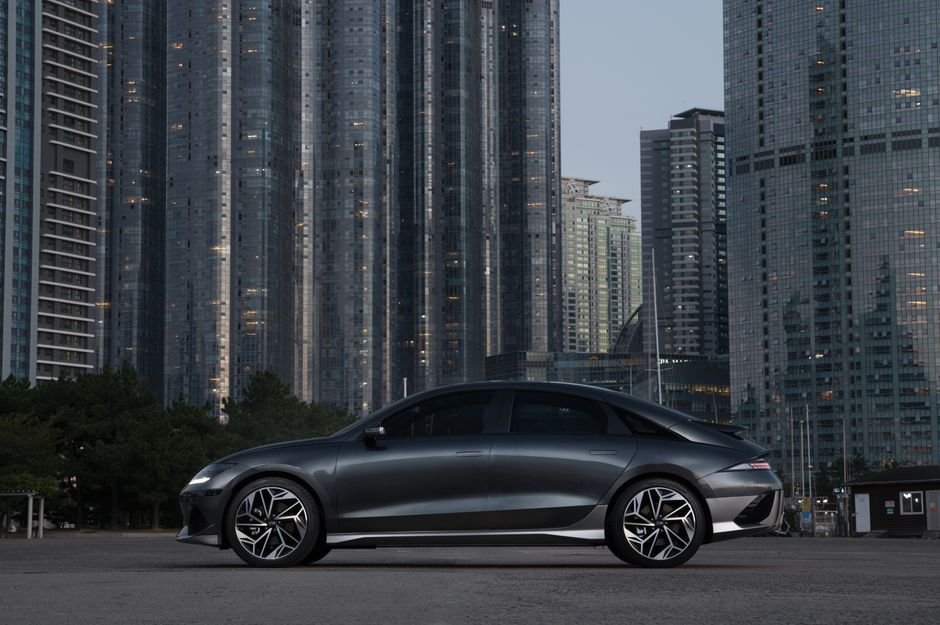
A Hyundai Ioniq 6 recall now covers more than 31,000 electric sedans. The fix costs nothing. It takes a dealer about ten minutes. That’s the short version. The longer version involves a piece of plastic that can peel off your car at highway speed, plus a string of earlier recalls worth a closer look before you sign anything.
What exactly does the Hyundai Ioniq 6 recall cover?
Hyundai is recalling 31,042 Ioniq 6 sedans from the 2023 through 2025 model years. The charging port door can come loose and detach while driving. Retaining hooks that hold the outer panel in place may not stay engaged, and at highway speeds the door can peel off entirely.
Hyundai filed the recall with NHTSA as campaign 25V606, internally numbered 282. According to Cars.com’s reporting on the recall, the involved vehicles’ charging port door and outer panel retaining hooks may not be sufficiently engaged, which could lead to the door detaching. Hyundai will notify owners starting in November. Dealers will apply an adhesive to the charge port door assembly for free.
It’s not a battery fire. It’s not a brake failure. Nothing here threatens the person actually driving the car. The real danger is to other motorists: a chunk of plastic flying loose in traffic is exactly the kind of road debris that causes multi-car pileups on a bad day.
Is this the Ioniq 6’s only recall?
No, and that’s the part worth paying attention to. The charging port door issue is the fourth or fifth significant recall for this model since launch. The exact count depends on how you tally campaigns shared with the Ioniq 5 and Genesis EVs.
| Recall | Model Years | Issue | Fix |
|---|---|---|---|
| Campaign 259 | 2024 | Differential gear bolts may loosen, causing drive power loss | Replace gear drive unit |
| Campaign 272 | 2023-2025 | ICCU damage stops 12V charging, can cut drive power | Inspect/replace ICCU, software update |
| Campaign 282 (25V606) | 2023-2025 | Charging port door may detach at speed | Adhesive applied to door assembly |
| Campaign 298/032G | 2023-2025 | Seat belt anchors may detach | Inspect, reinforce, or replace anchors |
The ICCU recall is the one I’d actually worry about if I owned an early Ioniq 6. A damaged unit can result in a loss of drive power, and that raises real crash risk. The seat belt anchor recall, mailed out earlier this year, is also more serious than a cosmetic door panel. Compared to some of the sprawling recalls we’ve covered, like the Toyota bZ recall affecting 21,000 EVs, the Ioniq 6’s issues are more numerous but individually less alarming.
Should you still buy a Hyundai Ioniq 6?
Yes, I’d still buy one. Just confirm every open recall has been completed first. The Ioniq 6 remains one of the most efficient, longest-range electric sedans you can buy. None of its recalls have produced widespread real-world failures.
The bigger wrinkle isn’t safety. It’s availability. Hyundai is dropping the standard Ioniq 6 sedan for the 2026 model year and keeping only the high-performance Ioniq 6 N. New-car shoppers are already down to picking through leftover 2024 and 2025 inventory. That’s not necessarily bad news for your wallet, though. Dealers tend to discount outgoing models aggressively, and Consumer Reports lists retail prices on 2023-2025 Ioniq 6 models already well below their original stickers.
If you’re shopping used, run the VIN through NHTSA’s lookup tool before you hand over a deposit. A car with all four recalls completed is a genuinely good deal on a genuinely good EV. One with open recalls isn’t a dealbreaker either, since the repairs are free. But it’s leverage to negotiate the price down or walk if the seller won’t budge. For a step-by-step approach to vetting a used EV before purchase, check out our full used EV buying guide.
How does the Ioniq 6’s battery hold up over time?
The Ioniq 6 shares its 800-volt E-GMP platform and battery packs with the Ioniq 5 and Kia EV6. Both have posted solid long-term battery health numbers in independent tracking. That shared hardware is a point in its favor against rivals with less proven packs.
We’ve dug into how different EV batteries age in our used EV battery health breakdown, and Hyundai’s E-GMP-based models consistently rank near the top. That matters more for resale value than any single door-panel recall does.
What should you do if you already own one?
Call your local Hyundai dealer or schedule service online. Mention recall number 282 if it’s the charging port issue. Owners with questions can also reach Hyundai directly at 855-371-9460. The adhesive fix takes minutes. There’s no charge regardless of your warranty status.
While you’re at the dealer, ask them to run your VIN against all four campaigns above. Hyundai’s recall notices don’t always arrive in a tidy bundle. It’s common for owners to have missed one buried between others.
FAQ
How many Hyundai Ioniq 6 vehicles are affected by this recall?
The charging port door recall covers 31,042 Ioniq 6 sedans from the 2023 through 2025 model years, filed under NHTSA campaign 25V606.
Is the charging port door recall dangerous?
It’s a road-debris risk rather than a direct danger to the driver. Detachment of the door panel while the car is in motion increases the risk of a road hazard and crash for surrounding vehicles, which is why NHTSA classified it as safety-related.
Does Hyundai still sell the Ioniq 6 in 2026?
Hyundai is discontinuing the standard Ioniq 6 sedan for 2026. It’s keeping only the high-performance Ioniq 6 N. Buyers looking for the regular version will be shopping leftover 2024-2025 stock or the used market.
How do I check if my Ioniq 6 has open recalls?
Enter your VIN on NHTSA.gov’s recall lookup tool, or call Hyundai customer service at 855-371-9460. All recall repairs, including the charging door fix, are performed free of charge regardless of mileage or warranty status.