
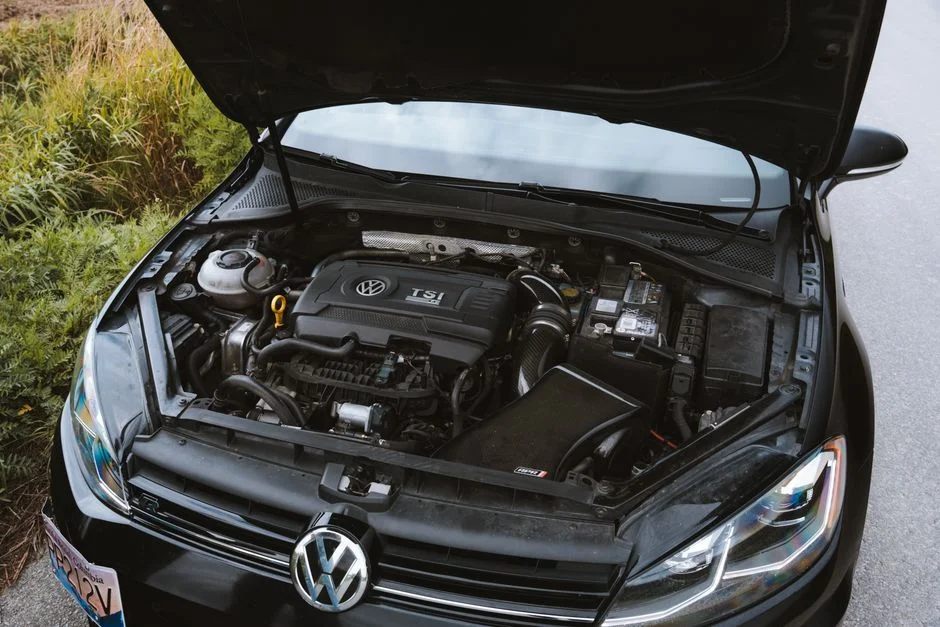
The VW Atlas fire recall sounds scary on paper. It covers 177,000 three-row family SUVs. Six fires have already been confirmed. But the actual fix takes a dealer less than an hour. It costs you nothing. That changes the calculus quite a bit if you’re shopping used or new right now.
Volkswagen recalled 177,493 Atlas and Atlas Cross Sport SUVs from the 2024 and 2025 model years. The company found that a decorative plastic engine cover could come loose. It can then melt against hot engine parts. VW first flagged a “thermal event” in the engine bay back in October 2023. Five more similar reports followed in mid-2024. That’s when the company’s Product Safety Committee ordered the recall in February 2025.
What’s actually causing the VW Atlas fire recall?
The problem is a purely cosmetic plastic cover over the engine. Technicians sometimes reinstall it incorrectly after routine service. If it shifts out of place, it can touch hot components like the exhaust or turbocharger. It can melt. In rare cases, it can ignite.
Volkswagen’s own filing describes the failure mode plainly: a loose engine cover that contacts hot surfaces in the engine compartment can melt, increasing the risk of a fire. The company says it’s aware of six such thermal cases tied to the defect. No injuries have been reported.
| Detail | Specifics |
|---|---|
| Vehicles affected | 115,310 Atlas (built June 16, 2023–Dec 12, 2024) and 62,183 Atlas Cross Sport (built June 16, 2023–Dec 9, 2024) |
| Model years | 2024 and 2025 |
| Defect | Improperly reinstalled plastic engine cover can shift and melt on hot exhaust/turbo surfaces |
| Warning sign | Burning smell from the engine bay, or a visibly misaligned cover |
| Fix | Dealer removes the cover entirely, free of charge, in under an hour |
| Reported injuries | None reported as of the recall filing |
Is the recall fix actually a big deal?
No, and that’s the key thing to understand here. The engine cover is purely decorative. It doesn’t affect performance. VW’s remedy is simply to remove it and toss it. There’s nothing to replace, adjust, or reprogram.
Vehicles built after December 4, 2024 already left the factory with a redesigned cover. Those were excluded from the recall entirely. If you’re looking at a used 2024 or early 2025 Atlas, check the build date and VIN against VW’s recall lookup. It takes two minutes and tells you exactly where the vehicle stands.
Has VW’s Atlas had other recall trouble lately?
Yes — this isn’t an isolated hiccup. It’s worth knowing the pattern before you sign. Beyond the engine-cover fire recall, VW issued a separate transmission recall on 2025 Atlas models the same month. Then in December 2025, a “do not drive” recall hit the redesigned 2026 Atlas, Atlas Cross Sport, and ID.4. The cause: incorrectly installed wheel bolts that could let a wheel detach.
That wheel bolt issue also swept up the electric ID.4, which VW is discontinuing. All three models share a production line in Chattanooga, Tennessee. A month later, VW disclosed yet another fire-risk recall. This one affected nearly 44,000 ID.4s over battery cell modules that could overheat.
None of these issues are technically connected to each other. But the frequency says something about quality control at that plant lately. It’s a reason to double-check any recent build’s recall status before you buy. It’s not a reason to write off the nameplate.
Should you still buy a VW Atlas in 2026?
I would, and I’d do it without much hesitation. A cosmetic part that gets removed for free isn’t in the same league as a battery fire or a wheel falling off. VW has already fixed the design flaw at the factory for anything built after December 2024.
The 2026 Atlas starts around $40,785 with destination for the base SE trim. A loaded SEL Premium R-Line climbs to roughly $54,000. That lands it in the middle of the three-row pack. It’s pricier than a Kia Sorento or Hyundai Santa Fe, but cheaper than a Toyota Highlander or GMC Acadia. It also offers some of the best third-row legroom in its class at 33.7 inches.
Consumer Reports predicts average reliability for the 2026 model. U.S. News currently ranks it a respectable #10 among midsize SUVs, with an 8.8-out-of-10 score. If you’ve cross-shopped against the Kia Telluride, which has had its own fire recall history, you already know something important. No three-row family hauler in this price range is entirely recall-free. The real question is always how the automaker handles the fix.
For this particular recall, VW handled it about as well as possible. It was cheap, fast, and permanent. Just make sure whichever Atlas you’re considering — new or used — has already had the work done. Ask the dealer to show you the completed recall paperwork before you drive off.
FAQ
How do I check if my Atlas is part of the recall?
Enter your VIN at the NHTSA recall lookup tool or on VW’s owner site. If your Atlas or Atlas Cross Sport was built between June 2023 and December 2024, it’s worth checking even if you haven’t gotten a notification letter yet.
Does the recall cost anything?
No. Volkswagen dealers remove the plastic engine cover free of charge. The repair typically takes under an hour.
Is it safe to drive an Atlas before getting the recall done?
VW hasn’t issued a “do not drive” warning for this particular fire recall, unlike its December 2025 wheel bolt recall. Still, if you notice a burning smell or see the engine cover sitting crooked, get it looked at right away.
Does this affect resale value?
Minimal, if any. Because the fix is free, quick, and permanent, most buyers and appraisers treat completed recalls as a non-issue rather than a red flag on a used Atlas.